

Holiday Retail Display Ideas: A Visual Merchandising Calendar for the 2026 Season
Holiday retail display ideas are seasonal window and in-store concepts built around one specific shopping moment, and the most reliable way to make them pay is to plan them on a calendar rather than in the week before the date. A visual merchandising calendar gives every retail node of the year a concept, a lead time, an install window, and a teardown date. Most seasonal installs need six to eight weeks of lead time to land well, which is why Halloween concepts are decided in early September, Black Friday is built in the first half of November, and Christmas is locked before Thanksgiving. This guide is the 2026 edition of that calendar, refreshed in October so it reflects where the season actually stands right now. It covers lead times by node, the three weeks that decide the quarter, the mannequin formats that carry each holiday, budget tiers, lighting settings, height and placement rules, and a scorecard for judging whether the display earned its keep.
What is a visual merchandising calendar, and why does it beat last-minute planning?
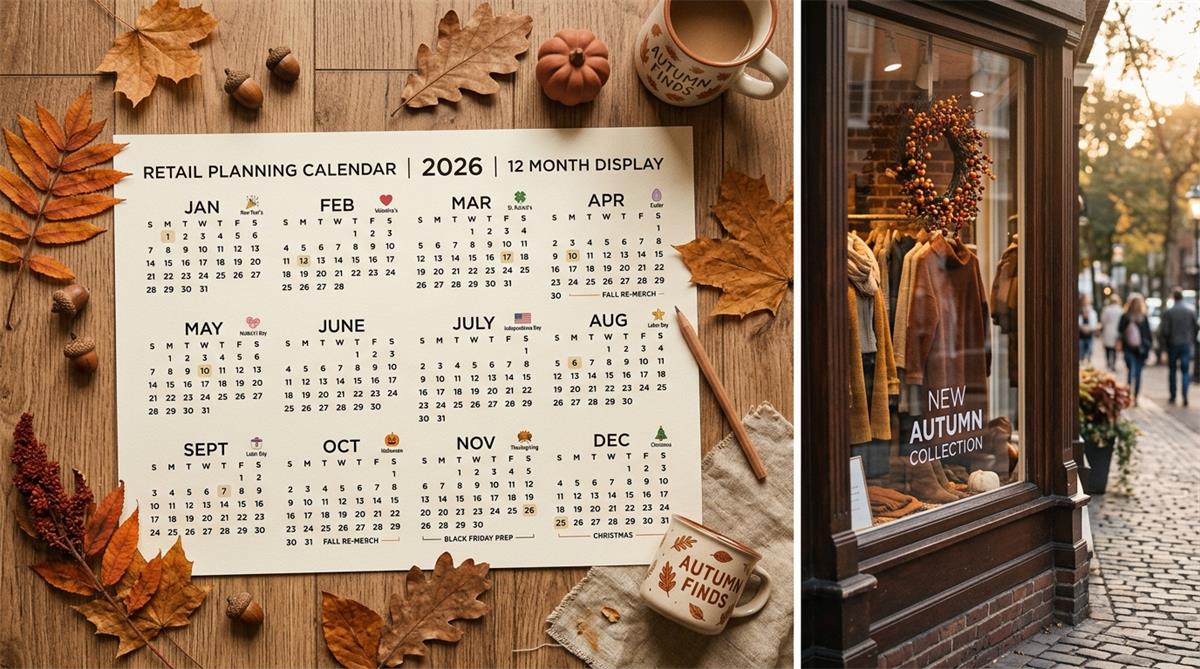
A visual merchandising calendar is a dated plan that assigns every selling moment of the year a concept, a lead time, an install window, a refresh date, and a teardown date. It turns seasonal work from a scramble into a schedule. Without one, most stores settle on a theme somewhere between one and two weeks before the date, which leaves no room for prop sourcing, no time to test a layout, and no display budget left after the merchandise buy.
The commercial argument is straightforward. Deloitte projects total U.S. holiday retail sales of $1.70 trillion to $1.71 trillion for November 2026 through January 2027, up 4.0% to 4.8% on the same period a year earlier, after a 2025 season that grew 4.1% to $1.63 trillion. Separately, NRF expects 2026 retail sales overall to grow 4.4% to $5.6 trillion. That money does not arrive evenly. It concentrates into roughly six weeks, which means the display is doing its heaviest work in the shortest window of the year. A calendar protects those weeks.
Timing also changes composition, not just scheduling. Halloween 2026 falls on a Saturday, so foot traffic builds across the final week instead of peaking on a single weeknight. Christmas 2026 falls on a Friday, which pulls the last heavy shopping weekend earlier. These are planning facts, not trivia, and they belong on the calendar before any props get ordered.
There is a measurement argument too. Seasonal windows get judged on a handful of days, so a weak install cannot be repaired in week three. Planning backward from the date is the only way to protect the days that actually pay.
How much lead time does each holiday display really need?
Lead time is the single number that decides whether a seasonal display looks designed or improvised. The ranges below come from what has to physically happen: concept approval, prop sourcing, production or printing, staff scheduling, install, and a live week to fix what looks wrong from the sidewalk.
| Retail node | 2026 date | Start planning | Install by | Realistic lead time |
|---|---|---|---|---|
| Back to school | Late July to late August | Early June | Mid-July | 6 to 8 weeks |
| Labor Day | September 7 | Early August | August 29 | 3 to 4 weeks |
| Halloween | October 31 (Saturday) | Early September | October 3 | 6 to 8 weeks |
| Thanksgiving | November 26 | Mid-October | November 12 | 4 to 5 weeks |
| Black Friday | November 27 | Mid-October | November 13 | 4 to 6 weeks |
| Cyber Monday | November 30 | Mid-October | November 20 | 4 to 6 weeks |
| Christmas | December 25 (Friday) | Late October | November 20 | 6 to 8 weeks |
| Valentine's Day | February 14, 2027 | Early January | January 30 | 4 to 6 weeks |
| Easter | Late March 2027 | Early February | Mid-March | 4 to 6 weeks |
Two nodes deserve more time than shops usually give them. Halloween needs the full six to eight weeks because costume and prop inventory sells out early and because the display has to survive three to four weeks of public life before the date arrives. Christmas needs the same window for a different reason: it is the longest-running display of the year, so the concept has to stay interesting for five to six weeks rather than five days.
One distinction is worth making before you copy any calendar you find online. Most published retail calendars are buying calendars or fiscal calendars. A 4-5-4 calendar tells finance when a period closes, and a merchandising calendar tells a buyer when to place the order. Neither tells a store when the glass gets dressed. The dates above are install dates, and they sit later than the buy dates on purpose, because the window should change after the stock lands, not before.
Where does the 2026 display calendar stand in October?
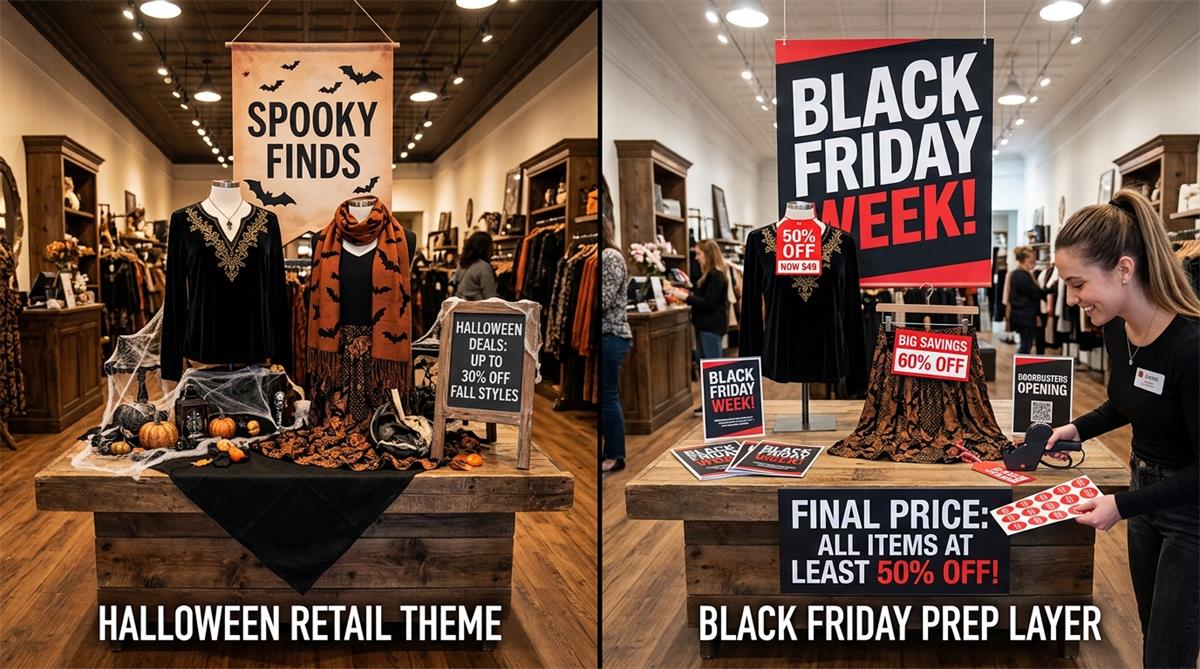
Mid-October is the compression point of the retail year. Three nodes land inside ten days, and the store is still running a Halloween window while the Christmas concept needs to be locked. For anyone searching for holiday retail display ideas at this point in the season, the useful question is not what to build next but what to keep, what to convert, and what to lock. The table below is the working version of where things stand on October 9, 2026, and what to do about it.
| Node | Status on October 9, 2026 | Action this week and next | Hard deadline |
|---|---|---|---|
| Halloween (Oct 31) | Install window closed; display should already be up | Maintain rather than rebuild: replace wilted or damaged props, re-aim the accent light, photograph the window for next year's reference | Teardown November 1 to 2 |
| Thanksgiving (Nov 26) | Not yet built; this is the gap node | Finalize a low-cost concept that bridges Halloween and Black Friday, or plan the handoff so the window does not sit empty | Install by November 12 |
| Black Friday (Nov 27) | Concept should be approved | Order signage and printed price pieces now; they are the slowest item in the chain | Install by November 13 |
| Cyber Monday (Nov 30) | Same window as Black Friday | Add a price layer rather than a new scene | Refresh November 20 |
| Christmas (Dec 25) | Concept must be locked this month | Lock the concept, order any custom pieces, and confirm the lighting plan before the prop budget is spent elsewhere | Install by November 20 |
| January clearance | Unplanned in most stores | Decide the neutral reset look now, while the baseline kit is being packed | Install December 27 to 30 |
| Valentine's Day (Feb 14, 2027) | Too early to build, not too early to plan | Note the prop order date and keep the reusable risers in service | Order props early January |
The practical reading of that table: do not try to serve Halloween and Black Friday with one window. Halloween wants drama and a single silhouette; Black Friday wants clarity, price, and speed. A window that attempts both reads as neither, and the ten days between them are the highest-traffic days of the quarter.
How do you plan a Halloween window display when the season starts in September?
Halloween is no longer a one-week holiday, and the 2026 data makes the shift measurable. NRF's 2026 survey, run with Prosper Insights & Analytics across 7,889 consumers, puts Halloween spending at $13.5 billion with an average of $115.14 per person. About 49% of shoppers start in September or earlier, up from 34% in 2016, and 42% of those early shoppers say they simply look forward to fall. A store that installs on October 24 is not early anymore, it is late for roughly half the demand.
The same survey reports two details that shape what belongs in the window. Decorations are the second-largest category at $4.3 billion, with 78% of shoppers buying them, and 47% of consumers say they use AI tools while planning, mostly to brainstorm themes and ask for recommendations during product research. Both point the same direction: the window is a discovery asset. It has to be photographable and describable in one sentence, because a share of your shoppers will meet the concept through a screen before they meet it through the glass.
Composition rules that survive a crowded field:
Commit to one silhouette. A dark ground with one lit form reads from across the street. Three lit forms against a patterned backdrop reads as noise.
Keep the palette to three colors. Dark base, one accent, one neutral. Contrast does the work that detail cannot do at distance.
Set the focal point at eye level or just above. Vignettes built between 48 and 60 inches sit inside the natural viewing band for an adult passerby.
Plan the teardown in the same meeting as the install. With October 31 on a Saturday, the display comes down the following Sunday or Monday, and the crew that installs it should be the crew that removes it.
If the season has already started and the window is still bare, refresh rather than rebuild. Swap the backdrop and the hero prop, keep the platforms, and reuse the lighting positions. That conversion takes an evening, not a week. Our Halloween retail display ideas guide covers the same sequence in more depth, and the fall window display ideas article handles the color transition that leads into it.
How do you hand off from Halloween to Black Friday to Christmas without losing a weekend?
The handoff is where most seasonal calendars break. A full teardown between each node costs two to three selling days of labor and often leaves the window empty on a high-traffic weekend. The better method is layered changeouts: keep the structure, swap the layer that carries the message.
Halloween to Black Friday is a hard reset on mood and a soft reset on structure. Strip the themed props, keep the risers and platforms, replace the backdrop. Black Friday windows should be legible in under two seconds, with fewer elements and larger type. Merchandise density goes up, prop density goes down. Our Black Friday visual merchandising breakdown covers the five-day traffic pattern in detail.
Black Friday to Christmas runs the other direction. Keep the platforms, warm the lighting temperature, and add depth rather than more product. By then the prop budget is spent, so the Christmas layer should lean on material and light: fabric, greenery, warm sources, and a reusable backdrop. The Christmas window display ideas guide walks through building that layer so it holds up for five weeks instead of one.
Stores that want the composition method behind layering, rather than the seasonal sequence, should read the window and in-store display ideas guide.
Which mannequins and display forms carry each holiday?
Different nodes need different formats, and using the same form all year is one quiet reason seasonal displays feel flat. A form that works for Halloween drama does not automatically work for Christmas gifting.
| Node | Best format | Evidence or reason it works | Styling note |
|---|---|---|---|
| Back to school | Kids and teen forms | Scale matches both shopper and buyer | Group in twos, keep the path clear |
| Early fall | Female full-body, relaxed pose | Carries layered looks without looking busy | Three to five tones maximum |
| Halloween | Abstract or egg-head full body | Abstract forms reduce detail competition with a themed set | One hero, dark ground, single accent color |
| Thanksgiving | Full body with props, no costume | Reads as hospitality rather than a costume moment | Keep the front third of the window open |
| Black Friday | Torso or dress form | Shows value without demanding a full story | Price and product lead, props minimal |
| Christmas | Mixed grouping (female, male, kids) | Gifting is bought across recipients | Build vignettes at 48 to 60 inches |
| Valentine's Day | Female or male form, seated option | Small scale suits a small holiday | Accessories do the work, not props |
| Spring and summer | Abstract forms, matte finish | Keeps the floor feeling light | Rotate every four weeks |
Two findings from a 2026 eye-tracking study help where the choice is genuinely close. Liang, Wang, Ghamari and Cao tested 14 window-display images in seven paired conditions with 99 valid eye-tracking samples and published the results in the Journal of Fashion Marketing and Management. Mannequins with heads held fixation longer than headless forms, realistic forms beat abstract forms on attention, and dynamic poses captured attention faster than static ones. Half-size and full-size forms showed no significant difference in visual attention. The practical reading: when the concept is a lifestyle story, a headed, realistically finished form earns more of the shopper's time; when the concept is silhouette-led drama, an abstract form is doing deliberate work rather than compromising.
If you are rebuilding the roster rather than styling one holiday, start with the types of mannequins for retail breakdown, then use the mannequin size chart to match proportions to your actual customer base. For selection across store formats, the boutique mannequin guide and the how to choose mannequins walkthrough cover pose, finish, and sizing decisions in sequence. The mannequin pose selection article handles the pose-to-merchandise match, and the mannequin stand bases explainer covers what a heavier Christmas vignette actually needs underneath it.
How high should mannequins and hero product sit to protect price perception?
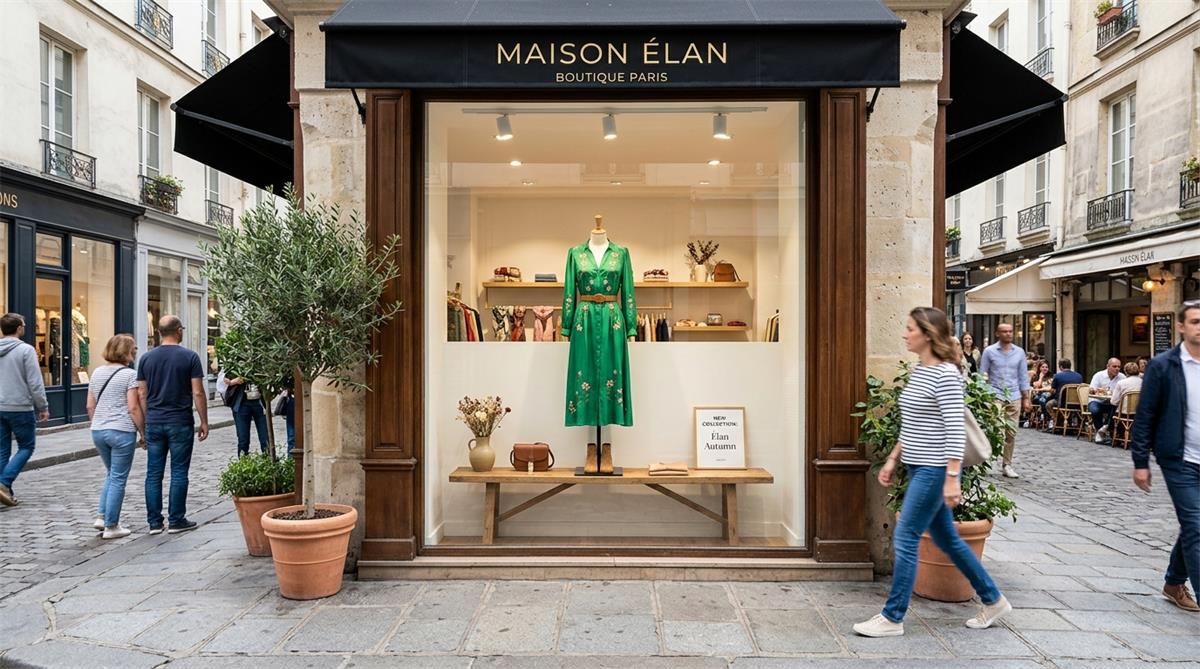
Height is usually treated as a composition question, but it also changes what shoppers think the product is worth. Eight controlled experiments with eye-tracking, published by Abhishek Borah and co-authors in Psychology & Marketing, found that the direction a shopper is moving primes where they look, and that this shifts the price they assign to a product with no price tag in sight. A shopper moving clockwise valued the same item $2.91 more when it sat on the lower shelf; a shopper moving counterclockwise valued it $2.74 more on the upper shelf.
| Traffic direction past the window | Where the hero should sit | Why | What to avoid |
|---|---|---|---|
| Left to right (clockwise past the glass) | Lower third, at or just below hip height | Gaze is primed downward along the direction of travel | Putting the hero on the top shelf where the eye never lands |
| Right to left (counterclockwise past the glass) | Upper third, chest height and above | Gaze drifts upward as the shopper approaches | Dropping the hero to a low platform |
| Both directions (corner site, mall corridor) | Center band, 40 to 55 inches | A single band survives either direction | Spreading hero pieces across the full height |
Three operating rules follow from the same research. First, decide the height after watching your own footpath for twenty minutes, not from a planogram. Second, attention works in two stages, so the first fixation and the dwell time each matter; a strong hero with a weak supporting layer loses the second stage. Third, time pressure dissolves the effect, so if shoppers pass your window at walking speed, add something that slows the approach, whether that is a deeper set, a warm light pool, or a prop that requires a second look.
Our dress form display ideas piece applies the same height logic to counter and end-cap displays, and the how to style a mannequin walkthrough covers the styling sequence around the hero.
How do you build a holiday display on a boutique budget?
Budget is the constraint that kills most seasonal plans, and it usually fails the same way: the merchandise buy absorbs everything, and the display gets whatever is left in the final week. Fixing that means treating display spend as its own line before the buy.
| Tier | Typical spend per node | What you get | Best for |
|---|---|---|---|
| Lean | Under $300 | Fabric, printed signage, reusable risers, one accent light | Single-window boutiques |
| Standard | $300 to $1,200 | Backdrop, themed props, two to three accent lights | Most independent stores |
| Statement | $1,200 and up | Custom build or new forms, programmed lighting, multi-window story | Flagship and high-street locations |
The highest-return line in every tier is lighting. A lean budget with one well-aimed accent light beats a standard budget with flat overhead wash, because light creates the focal point that makes the window readable. The second-highest return is a backdrop, because it changes the season without touching the merchandise.
Reuse is the third lever, and shoppers now reward it. In NRF's 2026 Halloween survey, 34% of consumers said they look for items they can reuse in future years, and among those who already own seasonal items, 73% repurpose decor and 52% repurpose costume pieces year to year. A display built from reusable pieces is not only cheaper in year three; it is consistent with how a meaningful share of your customers already shop. For the lifecycle case in more depth, see our piece on why sustainability in retail displays is about more than materials.
How should lighting change between Halloween and Christmas?
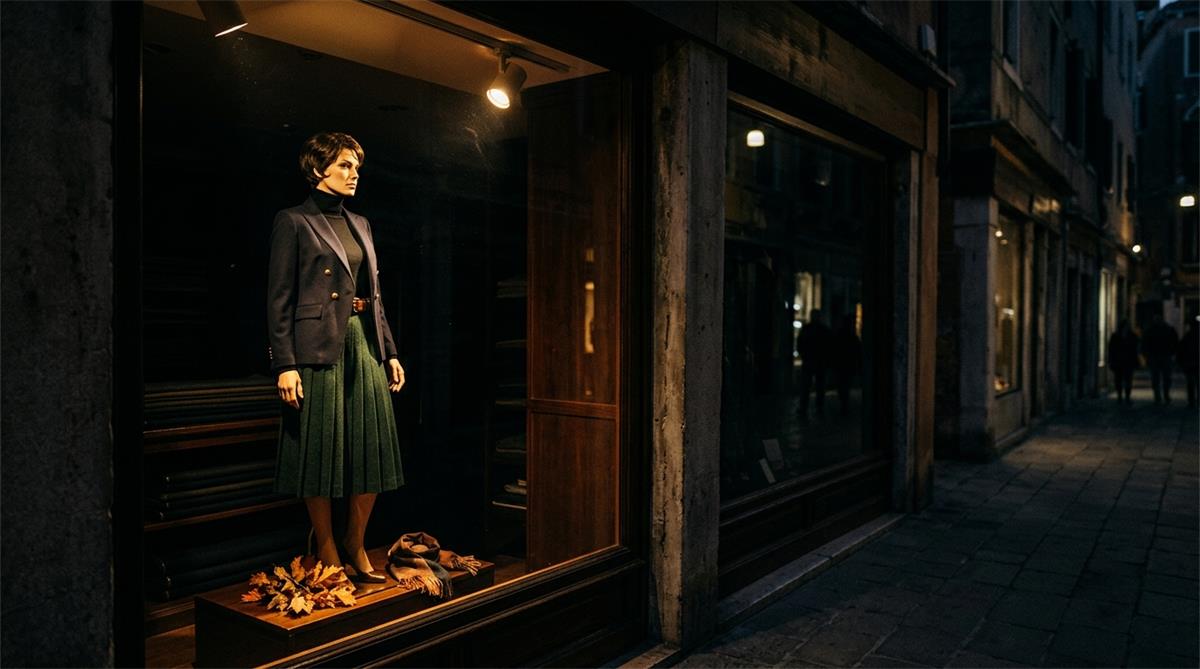
Lighting is the fastest lever a store has, and the one most often left on a single setting all year. Two numbers do most of the work: color temperature and beam angle.
| Node | Color temperature | Beam approach | Common mistake |
|---|---|---|---|
| Back to school | 4000K neutral | Even wash, high output | Warm light making uniforms look dull |
| Early fall | 3000 to 3500K warm | Key plus fill | Switching too early and clashing with summer stock |
| Halloween | 2700 to 3000K warm, low ambient | Tight accent on one form, deep shadow | Lighting the whole scene evenly and killing the drama |
| Thanksgiving | 2700 to 3000K warm | Soft key on the table or hero, low fill | Making the food-adjacent palette look cold |
| Black Friday | 4000K neutral, bright | Wide even coverage | Mood lighting that makes price tags hard to read |
| Christmas | 2700 to 3000K warm, layered | Key, fill, and sparkle accents | Cool white LEDs on warm holiday merchandise |
| Spring and summer | 4000K neutral, daylight balanced | Broad, bright | Keeping December warmth into March |
The pattern is simple. Warm light for emotional buying, neutral light for decision buying. Halloween and Christmas sell feeling, so they get warm and directional. Black Friday sells decisions, so it gets bright and even.
The eye-tracking research backs the warm-and-directional half of that rule. In the 2026 mannequin study, forms lit with spotlights and warm light held attention longer than those lit with diffused or cool light. If your budget only stretches to one change this season, change the aim and the temperature rather than adding fixtures. Our window display lighting guide covers layering, aiming, and day-to-night timing in full, and the retail color psychology piece covers how palette choices interact with the light you put on them.
How do you keep one holiday display from clashing with the next?
Clashing happens in the gaps, not the peaks. The week after Halloween and the week after Christmas are the two moments when stores leave transitional displays up too long, and a half-stripped window reads worse than an empty one.
The fix is a calendar rule, not a style rule: every node gets a teardown date set at install time, and that date holds even when the plan slips. Teardown should end in a neutral baseline, meaning clean platforms, a neutral backdrop, and the store's standard lighting setting. From a neutral baseline, the next concept takes hours instead of days. If your store has a two-sided window, the boutique window display ideas playbook covers how to run a lean baseline on one side while the hero scene changes on the other.
Storage is the other half. Props thrown into a back room come out broken, and broken props are why stores re-buy every year. Labeled bins by node, one photograph of the installed display taped to the bin, and a one-page packing list turn teardown into a 30-minute job instead of a half day.
How do you measure whether a holiday display paid for itself?
Seasonal displays get approved on feeling and renewed on numbers, so the stores that keep their display budget are the ones that can show what a window produced. Four metrics are enough, and none of them need expensive hardware. The benchmark column below deliberately compares you to your own baseline rather than to a published figure, for a reason explained underneath the table.
| Metric | How to measure it | What to compare against | What a miss tells you |
|---|---|---|---|
| Window pause rate | Count passersby and pauses in fixed 30-minute blocks | Your own rate from the same blocks two weeks earlier | The concept is not reading at distance |
| Foot traffic entering | Door counter or manual tally, install week versus prior week | Your own non-seasonal weeks, same weekdays | The window is not converting attention into entry |
| Conversion | Transactions divided by entries | Your own floor average for the same month | The window promises something the floor does not deliver |
| Average order value | Sales divided by transactions | Your own weeks without a hero window | The scene is crowded and devaluing the product |
The reason to measure against yourself is that most display statistics circulating online cannot be checked. Figures such as a fixed percentage lift in foot traffic from window displays, or a specific dwell-time benchmark, appear constantly across supplier blogs, and almost none of them publish a sample, a method, a control group, or a date. Treat those numbers as marketing, not as targets. The research that does hold up measures attention and perception rather than sales: the eye-tracking work above shows that headed and realistic forms hold gaze longer, that warm spotlighting outperforms flat lighting, and that vertical placement shifts perceived value by roughly $2.75 to $2.91 on the study items. Those findings change decisions you control. A borrowed sales percentage does not.
If you want a single number to start with, start with pause rate. It is the earliest signal, it costs one person with a clicker, and it separates a concept problem from a floor problem before the season ends.
What visual merchandising trends are shaping the 2026 holiday season?
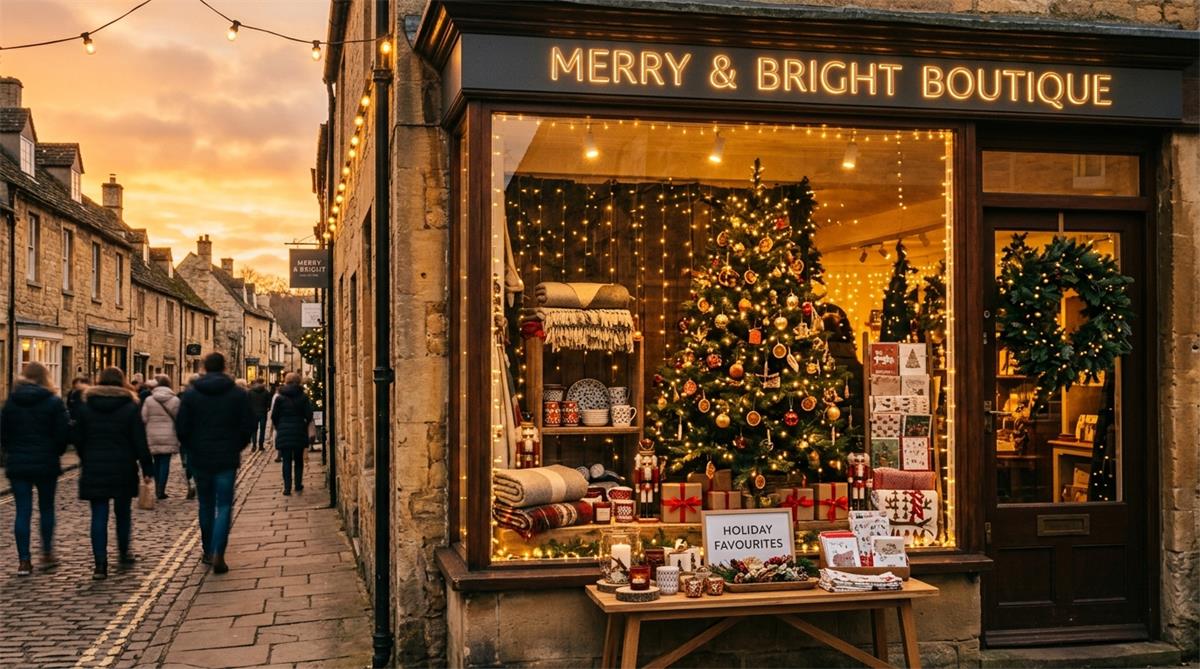
Four shifts are worth planning around this season, and each one changes how holiday retail display ideas should be scheduled.
Earlier starts, longer windows. NRF's 2026 data shows 49% of Halloween shoppers starting in September or earlier, up from 34% in 2016, with 42% of early shoppers citing enthusiasm for fall. A display that used to need two weeks of life now needs four. Calendars that assume a short run are underscheduling the asset.
AI-assisted discovery. 47% of Halloween shoppers say they use AI tools while planning, mainly to brainstorm themes and get recommendations during product research. A window that photographs well and can be described in a single sentence travels further than one that only works in person.
Moderate growth and value-seeking. Deloitte's holiday forecast of 4.0% to 4.8% growth is healthy but not a boom, and the firm describes consumers switching brands and using promotions to manage spend. Displays need to earn the entry with value clarity, not just atmosphere.
Modular over disposable. Reusable fixtures and reconfigurable risers have moved from nice-to-have to normal, partly for cost and partly because shoppers read a well-kept fixture as a signal about the brand.
How do you store and reuse holiday props so next year costs less?
Reuse is a system, not a habit. The stores that genuinely cut their seasonal budget by year three do four things consistently.
Photograph every install. One straight-on reference shot per node removes the guesswork next year.
Pack by node, not by material. One bin per holiday beats sorting by type, because install day is organized by holiday.
Log what broke. A short note on what failed tells you what to replace and what never to buy again.
Keep a neutral baseline kit. Platforms, risers, and one spare backdrop in a neutral tone let you reset between nodes in under an hour.
The payoff compounds. Year one is the expensive year. Year two costs consumables and replacement bulbs. Year three is close to free, which frees budget for the two things that actually move the needle: better lighting and better forms.
If this season is the one where you replace tired forms rather than work around them, the female, male, kids, and dress form ranges are the place to start, and the display prop collection covers the reusable risers and platforms the full-year calendar depends on. If you are planning a full year of holiday retail display ideas rather than one node, the mannequin props for window displays guide covers what to own and what to rent. To talk through a seasonal plan with the team, contact us or look at our sustainable display solutions for reusable fixture options.
About the Author
Brook Chen is a Visual Merchandising Specialist at awmannequins.com. With over 8 years of experience designing window and in-store displays for retail brands across the US, Canada, and Australia, she helps boutiques and stores translate seasonal concepts into store-ready merchandising.
Frequently Asked Questions
How far in advance should you plan holiday retail display ideas?
Plan six to eight weeks before the retail node for Halloween and Christmas, and four to six weeks for Thanksgiving, Black Friday, Valentine's Day, and Easter. That window covers concept approval, prop sourcing, production, install, and a live week to fix what looks wrong from the sidewalk.
When should a Halloween window display go up in 2026?
Install by early October, roughly four weeks before October 31. NRF's 2026 survey found 49% of shoppers start in September or earlier, up from 34% in 2016, so a display that appears in the last week of October misses a measurable share of the season. If you are already past that date, refresh the front layer and the lighting instead of rebuilding the whole scene.
How often should you change a retail window display?
Refresh at least every four weeks. Regular passersby stop registering a static window within a few weeks, and pause rate falls with it. Seasonal nodes can run longer or shorter, but four weeks should be the default between them.
How much should a small boutique budget for holiday displays?
Budget $300 to $1,200 per retail node for a standard independent store, with lighting taking priority. A lean budget under $300 still works if it goes to one well-aimed accent light and a reusable backdrop rather than to disposable themed props.
Do holiday displays actually increase sales?
Display research shows reliable effects on attention and perceived value rather than on shelf price. Eye-tracking studies find that headed, realistic forms hold gaze longer and that warm spotlighting outperforms diffused light, and a Psychology & Marketing study found that vertical placement changed perceived value by $2.74 to $2.91 on the tested items. Whether that converts into sales depends on your assortment, pricing, and staff, so the honest way to answer the question is to run a two-week before-and-after measurement of pause rate, entries, and conversion in your own store.