Types of Mannequins for Retail Display: How to Choose the Right Form for Your Store
A mannequin is a three-dimensional display figure used in retail to present clothing and accessories at human scale, turning a flat garment into a styled outfit a shopper can picture wearing. For boutique owners and visual merchandisers, choosing the right type is less about catalog count and more about matching form to store, merchandise, and message. This guide walks through the main types of mannequins, what each one does best, and how to build a mix that fits your floor and your budget.
Shoppers respond to what they see. Industry roundups of in-store behavior put the lift from window displays at about 23% more foot traffic, and tie mannequins to sales increases near 66% compared with garments left on hangers. The form you choose is a working asset, not a prop.
What Are the Main Types of Mannequins for Retail?
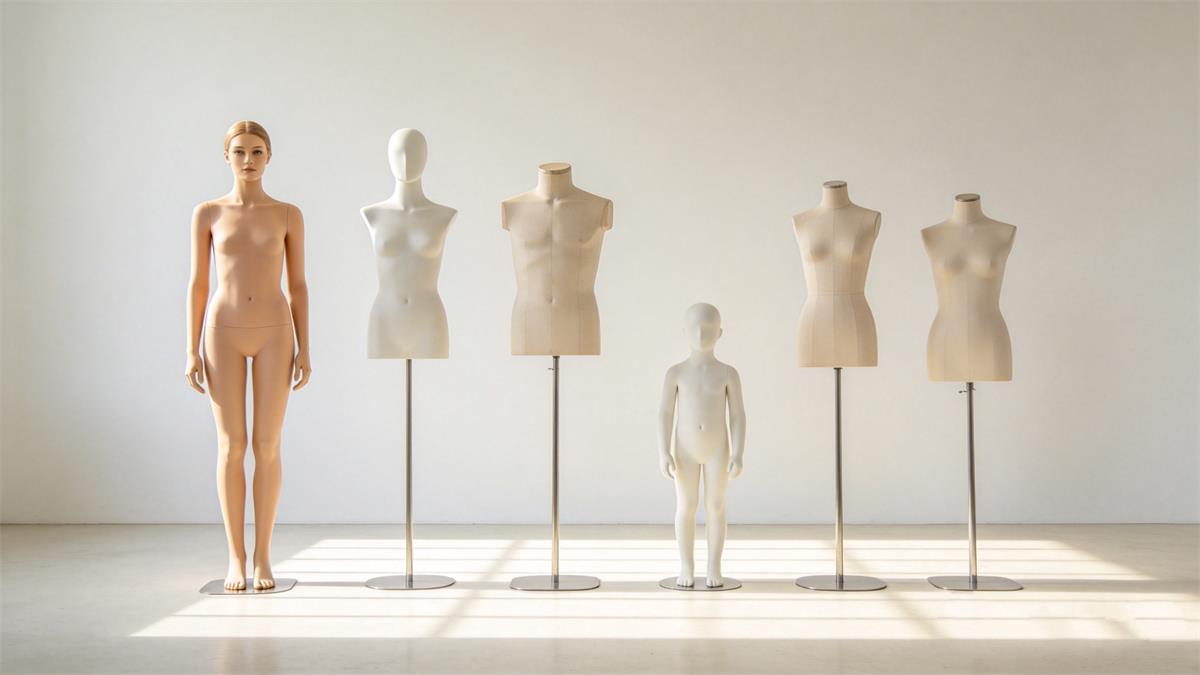
The retail world groups display forms into a handful of families. Knowing the families first makes every later decision faster.
| Family | What it presents | Best use |
|---|---|---|
| Full-body mannequin | Complete outfits at human scale | Window, entrance, hero collections |
| Torso or shirt form | Tops, jackets, single garments | Mid-floor tables, small spaces |
| Dress form | Fit, drape, fabric focus | Workroom-to-floor, boutique styling |
| Headless or abstract form | The garment, not the face | Minimalist, contemporary stores |
| Child or teen form | Kids and youth apparel | Family, children's boutiques |
| Specialty form (pregnant, plus, sport, ghost) | Specific garment or audience | Targeted campaigns, photography |
Most stores need two or three families, not all of them. A women's boutique often pairs a female full-body form with a dress form, while a children's shop leads with kids forms and adds a torso for accessories.
How Do Realistic, Abstract, and Headless Mannequins Differ?
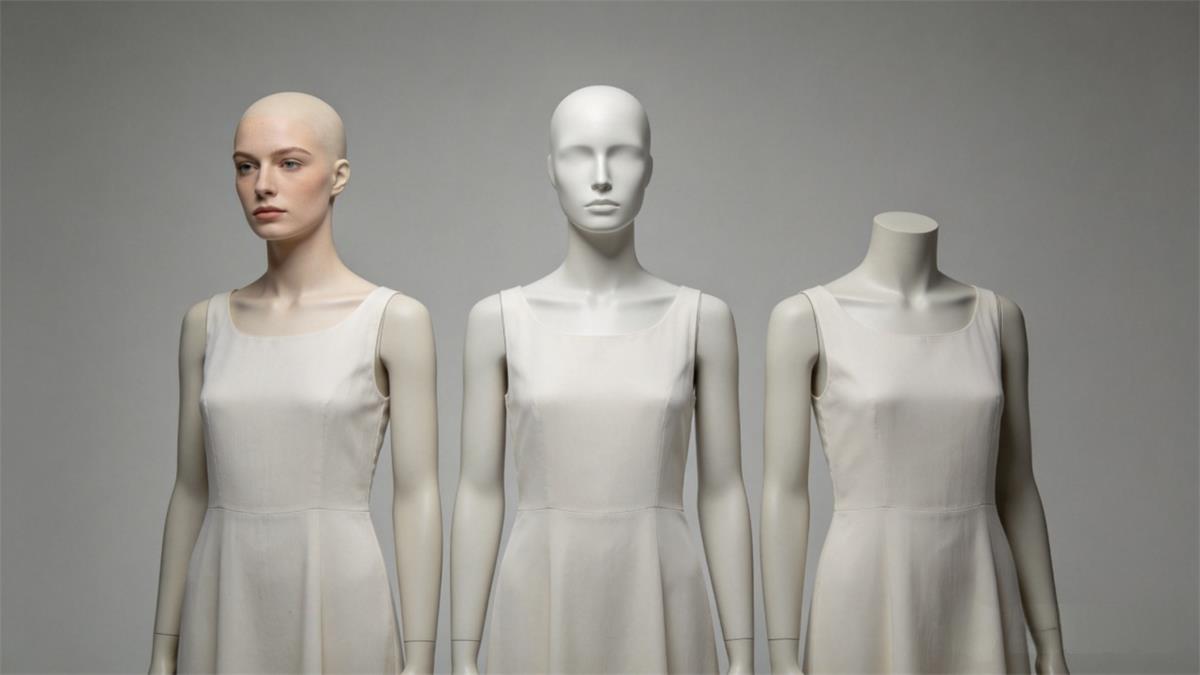
The biggest split in any type list is how much human detail the form shows. This choice shapes the mood of the whole display.
| Style | Face and detail | Best for | Watch out |
|---|---|---|---|
| Realistic | Lifelike face, natural proportions | Upscale, lifestyle, emotional brands | Can date; higher cost |
| Abstract | Simplified or featureless form | Minimalist, contemporary, editorial | Less relatable for some shoppers |
| Headless | No head, clean neckline | Focus on garment, flexible styling | Loses personality and story |
Realistic forms suit bridal, occasion, and premium apparel where the shopper wants to imagine themselves in the look. Abstract and headless forms keep attention on the clothes and fit clean, modern interiors. There is no wrong answer, only a match to your brand voice.
What Is the Difference Between a Mannequin and a Dress Form?
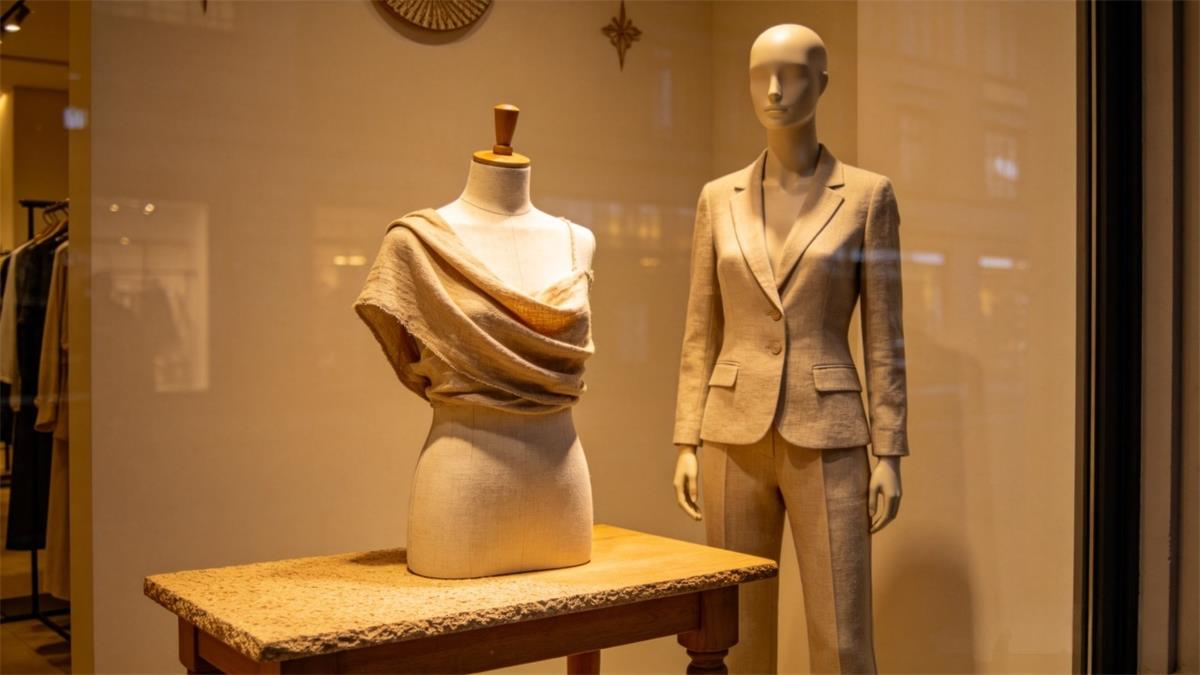
This is the question most new buyers ask first, and the answer changes what you buy.
| Attribute | Mannequin | Dress form |
|---|---|---|
| Shape | Full or partial human body | Torso, often with no arms or legs |
| Best for | Complete outfits, window impact | Fit, drape, fabric focus |
| Space | Needs floor or pedestal room | Compact, table or stand |
| Cost | Higher for full-body | Lower, flexible |
| Vibe | Lifestyle, hero moments | Workroom, tailored, intimate |
A dress form is the quieter sibling. It shows how a garment sits and moves without committing to a full figure, which is why tailors and small boutiques reach for it. A mannequin carries the look and the story. Many stores run both: forms for the window, dress forms for the styling table.
Which Mannequin Type Fits a Boutique, a Department Store, or a Pop-Up?

The right mix depends on your footprint and your traffic. A small boutique and a flagship need different answers.
| Retail format | Recommended type | Why |
|---|---|---|
| Small boutique | 1 to 2 female/male forms + 1 dress form | Limited floor, needs flexible hero pieces |
| Department store | Multiple full-body, abstract, and torso forms | High traffic, many categories, big windows |
| Pop-up | Lightweight torso and dress forms | Fast setup, easy transport, low storage |
| Kids or family store | Child and teen forms + a torso | Audience-matched presentation |
| Window-focused shop | Headless or realistic full-body | Maximum curb impact |
Start with the formats your space and stock actually support. A few well-chosen forms beat a row of mismatched figures that confuse the eye.
How Do You Match Mannequin Type to Your Merchandise?
Once the format is set, match the form to what you sell most. The garment should lead; the form should disappear behind it.
A flowing dress reads best on a female form with arms. A tailored jacket reads best on a structured male block. Activewear wants a sport or dynamic pose, and knitwear looks right on a relaxed, natural stance. If your line is mostly tops, a torso or shirt form shows the shoulder and drape without buying a full body.
Keep the form close to your real customer. A contemporary women's boutique does well with a size 8 to 10 female form; a bridal store may prefer a slim size 2 to 4 form with arms to show drape. The closer the form is to the person shopping, the more the clothes look like they fit.
What Materials Are Retail Mannequins Made From?
Material decides weight, durability, and the story your display tells. Three materials cover most retail use.
| Material | Look | Durability | Best for |
|---|---|---|---|
| Fiberglass | Smooth, premium finish | High, long service life | High-traffic, window, premium |
| Plastic | Light, cost-effective | Moderate | Temporary, budget, high-turnover |
| Wood or fabric-covered | Warm, tactile, soft | Moderate, can scuff | Intimate apparel, comfort brands |
Fiberglass leads the global display-forms market, accounting for roughly 46% of mannequin display forms by value in 2025, with retail stores making up about 70% of total demand. The market itself reached about $4.68 billion that year, and North America was the second-largest region at roughly $1.38 billion. Beyond the numbers, the material story is moving toward recyclable and modular builds as brands respond to sustainability pressure and regulations on single-use plastics. A linen-covered form or a reclaimed base reads as considered, and modular parts let a form serve several seasons instead of one.
Sustainable choices belong in the display as a quiet signal, not a headline. Show the material, skip the sermon.
How Can 3D Visualization Help You Plan a Mannequin Mix Before You Buy?
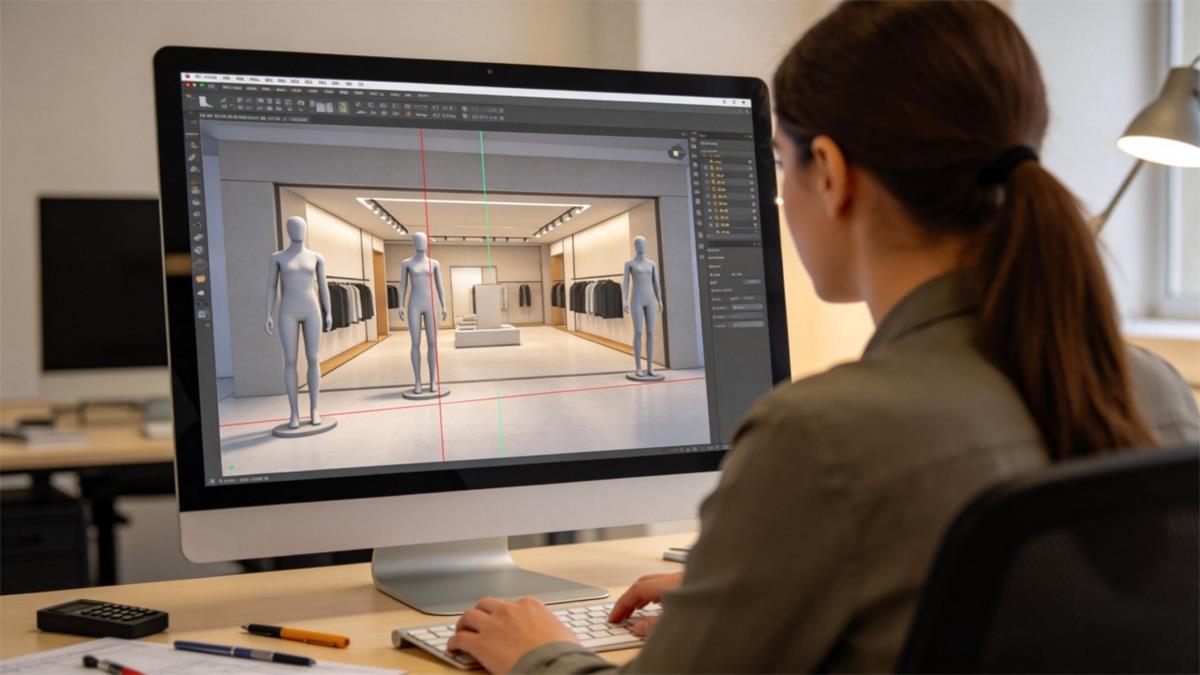
Buying forms is a long-term commitment, and a wrong mix sits on the floor for years. A growing number of retail teams now model their layout in 3D before purchase, placing virtual forms in a scaled store to test sightlines, spacing, and grouping. The practice turns a guess into a plan you can rotate and review.
In a typical visualization pipeline, the store footprint is drawn to scale, the candidate forms are dropped in at real heights and poses, and the view is rendered from the entrance, the window, and the main aisle. Lighting and sightlines become visible before a single form is shipped. Retail technology reports note that 3D virtual fitting and digital avatars are now a standard part of how apparel is planned, which makes a 3D preview of your own floor a natural extension of the same workflow.
The payoff is fewer returns and a tighter first order. You see the gap, the crowd point, and the dead corner, then buy only the forms that solve them.
How Often Should You Rotate or Refresh Your Mannequins?
Cadence keeps a display earning its space. Windows should change with each season and campaign, while in-store features can rotate every one to two weeks so regulars keep noticing.
Tie rotation to the retail calendar. Back-to-school peaks in August, Halloween lands at the end of October, Black Friday closes November, and Christmas drives December. The National Retail Federation forecast 2025 holiday sales between $1.01 trillion and $1.02 trillion, with the holidays making up roughly 19% of annual retail sales. That scale is why planning a display six to eight weeks ahead pays off: props, garments, and forms are ready before the rush, not during it.
Even outside the holidays, a monthly theme built around a color, a fabric, or a capsule gives the floor a reason to feel different on every visit.
How Much Does a Retail Mannequin Cost, and What Should You Budget?
Cost follows type, material, and finish. Budget forms start at the low end for basic torsos and plastic figures, while premium fiberglass full-body forms with realistic detailing sit higher. The smart move is to spend first on the few forms shoppers see most: the window hero and the entrance feature.
Plan around your most important display needs, then expand. A small boutique often does well with two quality full-body forms and one dress form, refreshed with modular parts and seasonal accessories, rather than a wall of low-cost figures that dilute the message. Treat forms as a multi-year asset. One durable fiberglass form used daily costs less per day than a low-cost replacement cycled every few seasons.
Use the scorecard below to check a finished plan before you order.
| Factor | Question to ask | Pass signal |
|---|---|---|
| Format fit | Does the type suit my floor size? | Forms fill key sightlines, not dead corners |
| Merchandise match | Does the form show my top seller? | Hero garment reads at a glance |
| Customer match | Is the form close to my real buyer? | Shopper sees themselves in the look |
| Material fit | Will it survive my traffic? | Fiberglass for windows, lighter for temp |
| 3D check | Did I preview the layout? | Sightlines and spacing verified |
| Budget | Did I fund the hero first? | Window and entrance covered before extras |
A plan that clears all six rows is ready to buy.
Frequently Asked Questions
How many types of mannequins are there?
Retail display forms fall into roughly six families: full-body mannequins, torso or shirt forms, dress forms, headless or abstract forms, child and teen forms, and specialty forms such as pregnant, plus-size, sport, and ghost mannequins. Most stores need two or three families rather than the full list. The right count depends on your floor size, merchandise, and how often you rotate displays.What is the difference between a mannequin and a dress form?
A mannequin is a full or partial human figure used to present complete outfits and create window impact, while a dress form is usually a torso that shows fit, drape, and fabric without a full body. Mannequins carry the lifestyle story; dress forms are the quieter, more intimate styling tool. Many stores use both, with mannequins in the window and dress forms on the styling table.How do I choose the right mannequin size for my store?
Match the form to your real customer, not to the sample you happen to own. A contemporary women's boutique works well with a size 8 to 10 female form, while a bridal or occasion store may prefer a slim size 2 to 4 form with arms to show drape. The closer the form is to the person shopping, the more the clothes look like they fit, which is why size choice matters as much as style.Should a small boutique use full-body or torso mannequins?
A small boutique usually does best with one or two full-body forms for window and entrance impact plus a dress form or torso for flexible styling on the floor. Full-body forms create the hero moment that pulls shoppers in, while torsos and dress forms show specific garments in tight spaces. Lead with the forms shoppers see first, then add compact forms as the floor allows.How much does a retail mannequin cost?
Cost follows type, material, and finish. Basic torsos and plastic figures start at the low end, while premium fiberglass full-body forms with realistic detailing sit higher. Spend first on the few forms shoppers see most, such as the window hero and entrance feature, and treat forms as a multi-year asset rather than a disposable purchase.About the Author
Charles Yang is a 3D Model Designer at awmannequins.com. With over 6 years of experience in retail fixture 3D modeling and product visualization, he supports retail brands and manufacturers with renders, virtual merchandising, and e-commerce-ready 3D assets.
Ready to build your display mix? Explore the female mannequins, male mannequins, kids mannequins, or the full dress form collection to find the forms that fit your store, your merchandise, and your season.