
Mannequin Size Chart: Standard Measurements and How to Match Forms to Your Real Customers
A boutique owner in Portland told me she bought four size-4 forms because that was what the catalog showed first. Her best-selling size was a 12. Every mannequin in her window was pinned at the back, and every shopper could see it.
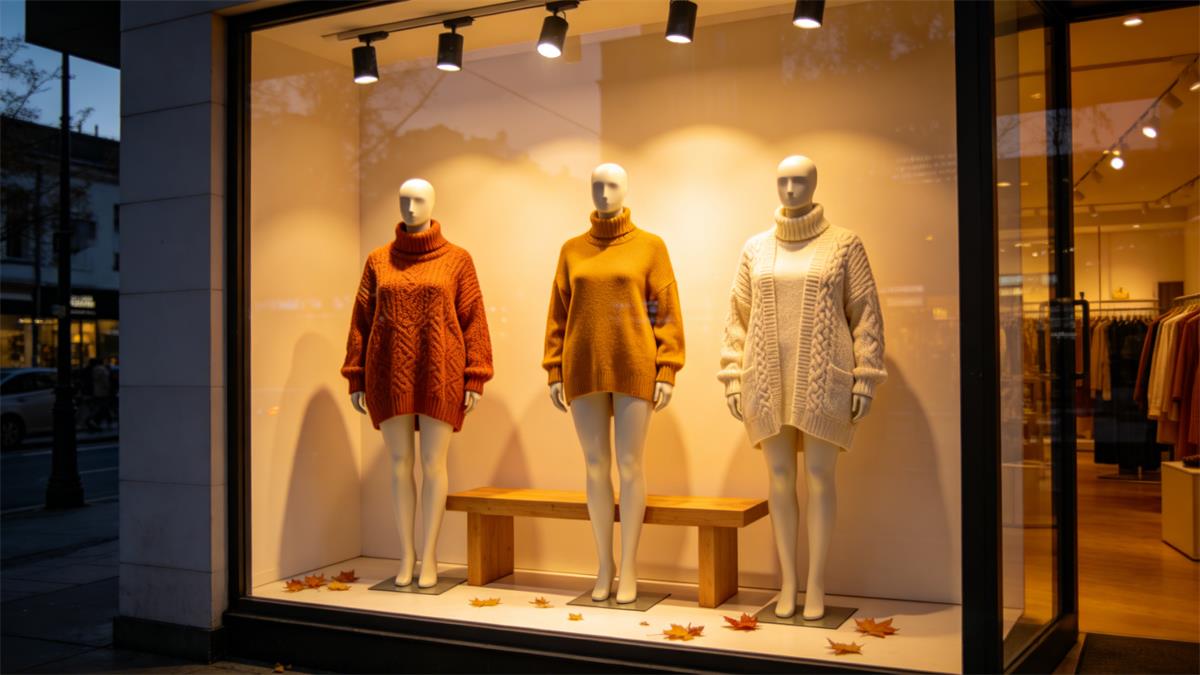
A mannequin size chart is a reference table that lists bust, waist, hip, and height dimensions for retail display forms, maps those dimensions to US clothing sizes, and lets a store match its forms to the garments it actually sells. It is not a body measurement standard. Clothing sizes come from ASTM International tables built on human anthropometric data, while mannequin sizes are sculpted product specs that vary from one supplier to the next. That distinction matters more than most buying guides admit: two forms both labeled "size 6" can differ by a full inch at the waist. The chart tells you what a form will hold. Your sales report tells you what it should hold. Read them together.
What is a mannequin size chart?
A mannequin size chart converts sculpture into numbers you can shop with.
Every display form is a fixed object. It has one bust measurement, one waist, one hip line, and no ability to breathe in. A size chart records those four or five dimensions so you can compare a form against the garments hanging on your floor before you spend money on it.
Three numbers do most of the work. Bust decides whether a structured jacket closes. Waist decides whether a fitted dress zips without a clamp. Hips decide whether a pencil skirt sits flat or rides up at the back. Height matters too, but height is a staging problem you can solve with a riser. Circumference is not.
Here is the practical read. If a form's waist is more than two inches under your sample garment's waist, the clothing will hang loose and read as sloppy from six feet away. If the form's waist is over the garment's waist, you will not get the piece closed at all. Two inches under is your working tolerance.
Measure your bestseller. Then shop the chart.
What are the standard female mannequin measurements?
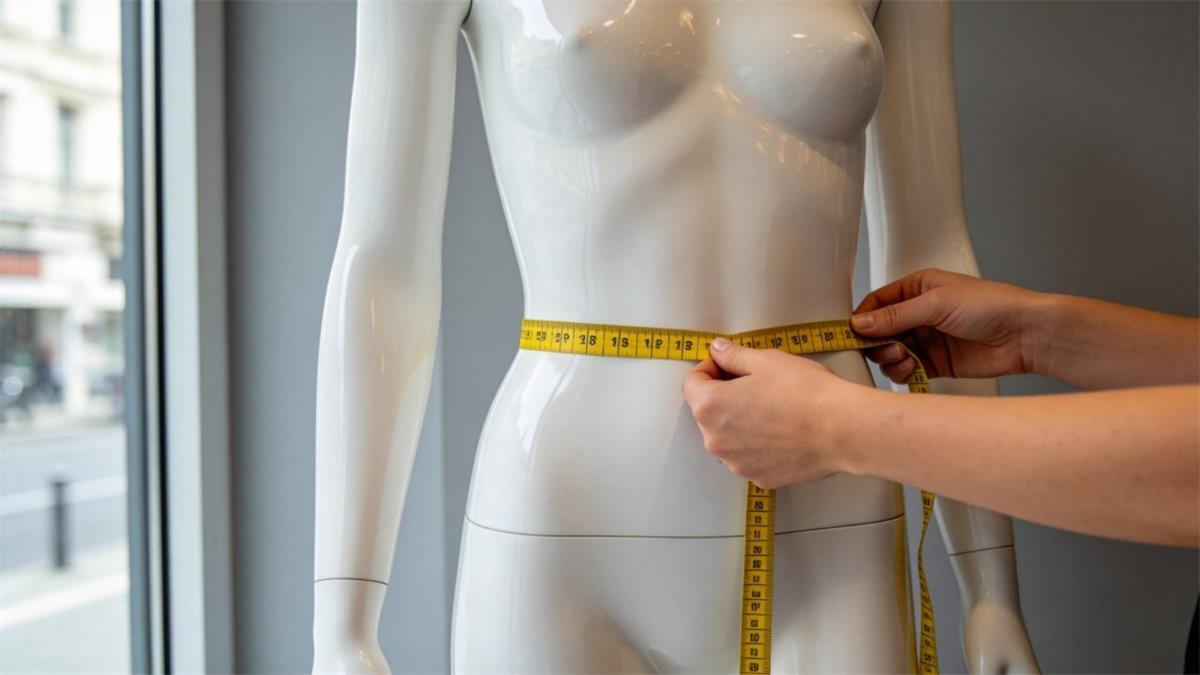
Standard female display mannequins in the US market cluster between a size 2 and a size 6, with bust around 34 inches and waist around 24 to 25 inches.
The table below covers the sizes most commonly stocked for retail display. Read down the waist column first, because waist is the dimension that fails most often when you dress a form. Treat every figure as a working range: sculpt varies by supplier, and a tolerance of roughly one inch either way is normal.
| US Size | Bust | Waist | Hips | Typical Height |
|---|---|---|---|---|
| 2 | 32-33 in (81-84 cm) | 23-24 in (58-61 cm) | 33-34 in (84-86 cm) | 5'9" - 6'0" |
| 4 | 34 in (86 cm) | 24-25 in (61-64 cm) | 34-35 in (86-89 cm) | 5'9" - 6'0" |
| 6 | 35-36 in (89-91 cm) | 26-27 in (66-69 cm) | 36-37 in (91-94 cm) | 5'9" - 6'0" |
| 8 | 36-37 in (91-94 cm) | 28 in (71 cm) | 38-39 in (97-99 cm) | 5'8" - 5'11" |
| 10 | 38 in (97 cm) | 30 in (76 cm) | 40 in (102 cm) | 5'8" - 5'11" |
| 12 | 40 in (102 cm) | 32-33 in (81-84 cm) | 42-43 in (107-109 cm) | 5'8" - 5'11" |
| 14-16 (curve) | 41-43 in (104-109 cm) | 33-35 in (84-89 cm) | 44-46 in (112-117 cm) | 5'9" - 6'0" |
| 18-20 (curve) | 45-47 in (114-119 cm) | 37-39 in (94-99 cm) | 48-50 in (122-127 cm) | 5'9" - 6'0" |
Notice the heights. Display forms run tall on purpose, often 5'9" to 6'0" before the base, because an elongated silhouette makes garments drape cleaner. That extra height is a styling decision baked into the sculpt, not a reflection of the size on the label.
One caution on curve forms. Sizes 14 through 20 are not simply scaled-up versions of a size 4. Weight distribution shifts, the waist-to-hip ratio changes, and a well-made curve form reflects that. A form that is just a size 4 enlarged will look wrong under clothing, and your customers will notice before you do.
What are the standard male and kids mannequin measurements?

The male display standard is a 40R: a 40-inch chest, 32-inch waist, and roughly a 33-inch inseam.
Menswear sizing is more stable than womenswear because it is built on a chest measurement rather than an arbitrary number. That makes the chart below easier to shop against. Check shoulder width alongside chest, since shoulders determine whether a jacket hangs square or collapses inward.
| Form Size | Chest | Waist | Hips | Shoulders | Inseam | Height |
|---|---|---|---|---|---|---|
| 36R (slim) | 36 in (91 cm) | 29 in (74 cm) | 36 in (91 cm) | 17.5 in (44 cm) | 32 in (81 cm) | 6'0" - 6'1" |
| 38R | 38 in (97 cm) | 30-31 in (76-79 cm) | 37-38 in (94-97 cm) | 18 in (46 cm) | 32-33 in (81-84 cm) | 6'0" - 6'1" |
| 40R (standard) | 40 in (102 cm) | 32 in (81 cm) | 39 in (99 cm) | 19 in (48 cm) | 33 in (84 cm) | 6'1" - 6'2" |
| 42R | 42 in (107 cm) | 34-35 in (86-89 cm) | 41 in (104 cm) | 19.5 in (50 cm) | 33 in (84 cm) | 6'1" - 6'2" |
| Big and tall | 46-50 in (117-127 cm) | 40-42 in (102-107 cm) | 45-46 in (114-117 cm) | 21 in (53 cm) | 32-33 in (81-84 cm) | 6'3" - 6'4" |
Kids forms work differently again. They are sold by age band, not by numeric size, because a child's proportions change faster than any size label can track. A four-year-old and a seven-year-old have different torso-to-leg ratios, and a garment styled on the wrong band looks off even when the chest measurement is close.
| Age Band | Height | Chest | Waist |
|---|---|---|---|
| 2-3 years | 35-41 in (90-104 cm) | 21-22 in (53-56 cm) | 20-21 in (51-53 cm) |
| 4-5 years | 42-45 in (107-114 cm) | 22-23 in (56-58 cm) | 21-22 in (53-56 cm) |
| 6-7 years | 47-50 in (119-127 cm) | 24 in (61 cm) | 22 in (56 cm) |
| 8-10 years | 51-55 in (130-140 cm) | 26-28 in (66-71 cm) | 23-25 in (58-64 cm) |
| 11-13 years | 57-62 in (145-157 cm) | 30-32 in (76-81 cm) | 25-27 in (64-69 cm) |
If you carry childrenswear across a wide age range, buy two bands rather than one middle form. A 6-7 alongside a 2-3 covers far more of your floor than a single 4-5 sitting in between, and the size contrast reads as intentional in a window.
Why doesn't mannequin sizing match what your customers wear?

Because the display standard was set by fashion sampling, not by shopper measurement.
Research published in the International Journal of Fashion Design, Technology and Education compared National Health and Nutrition Examination Survey body data against ASTM International clothing standards and found the average American woman wears a Misses size 16 to 18, not the size 14 the industry had assumed for years. Meanwhile the default display form stayed near a size 4. That is a wide gap, and it sits in your window every day.
| Measurement | Standard size-4 display form | Average US woman (Misses 16-18) | Gap |
|---|---|---|---|
| Bust | 34 in (86 cm) | 41-43 in (104-109 cm) | 7-9 in |
| Waist | 24-25 in (61-64 cm) | 34-36 in (86-91 cm) | 10-12 in |
| Hips | 34-35 in (86-89 cm) | 43-45 in (109-114 cm) | 9-11 in |
There is a commercial argument here, not only a cultural one. McKinsey's "Returning to Order" analysis found that roughly 70% of fashion returns come from poor fit or style mismatch rather than damage or fulfillment errors, and put apparel return rates around 24% to 30%. The National Retail Federation reported that US consumers returned about $850 billion of merchandise in 2025. When a shopper cannot picture a garment on a body resembling her own, she guesses. Guessing produces returns.
A form closer to your median customer does something a size 4 cannot. It shows the garment behaving the way it will behave on the person buying it.
Fit is a merchandising tool.
How do you choose the right mannequin size for your store?
Start with your sales data, not the catalog.
Pull twelve months of unit sales by size. The size that moves most units is your anchor form. Everything else is a supporting decision. Use the scorecard below to weigh the factors that actually change the answer.
| Criterion | What to check | Why it decides the size | Weight |
|---|---|---|---|
| Bestselling size | Units sold by size, last 12 months | Your anchor form should hold the size you sell most, so the window matches the rack | High |
| Garment structure | Tailored vs. draped in your core buy | Structured pieces need a form within 2 in of the garment waist; drapes forgive more | High |
| Size range carried | Narrow (S-L) vs. extended (XS-3X) | Extended ranges need at least two forms, or half your buy has no representation | High |
| Floor position | Window vs. interior vs. plinth | Window forms get judged from 15 feet, where silhouette beats detail | Medium |
| Sculpt quality at size | Waist-to-hip ratio on curve forms | A scaled-up small form distorts garments and undercuts the point of buying it | Medium |
| Reuse horizon | How often you rotate poses and finishes | A repaintable form used five years costs less per season than three cheap replacements | Medium |
For a single-location boutique, two forms usually beat three. An anchor at your bestselling size and a second form one size band above it covers most of your floor and gives you a size contrast that reads as deliberate rather than accidental.
That second form is where most stores hesitate, and it is usually the one that pays.
Ready to spec your own set? Browse female mannequins, male mannequins, and kids mannequins by size and pose.
What do you do when the garment doesn't fit the form?
You style around it, and you do it where the customer cannot see the work.
Every visual merchandiser has a clamp drawer. The craft is knowing which fixes hold up under window light and which ones collapse the moment someone stands close.
Fixes that work: back-clamping loose garments at the center seam, so the front reads clean and the adjustment hides in shadow. Padding a form with quilt batting at the bust or hip to fill a garment one size up. Rolling and pinning sleeve and hem excess inward rather than folding, since folds catch light and announce themselves.
Fixes that fail: side-clamping, which pulls the silhouette off-axis and looks wrong from any angle. Pinning through the fabric face on anything with a sheen. Forcing a zip on a form that is genuinely too large, which stresses the seam and can cost you the sale item.
There is a limit to all of it. If you are clamping every piece on a form, the form is the wrong size. Clamps are for the occasional cut that runs small, not for a permanent mismatch between your stock and your fixtures.
Buy the right size once. Clamp rarely.
Where do dress forms fit into the sizing conversation?
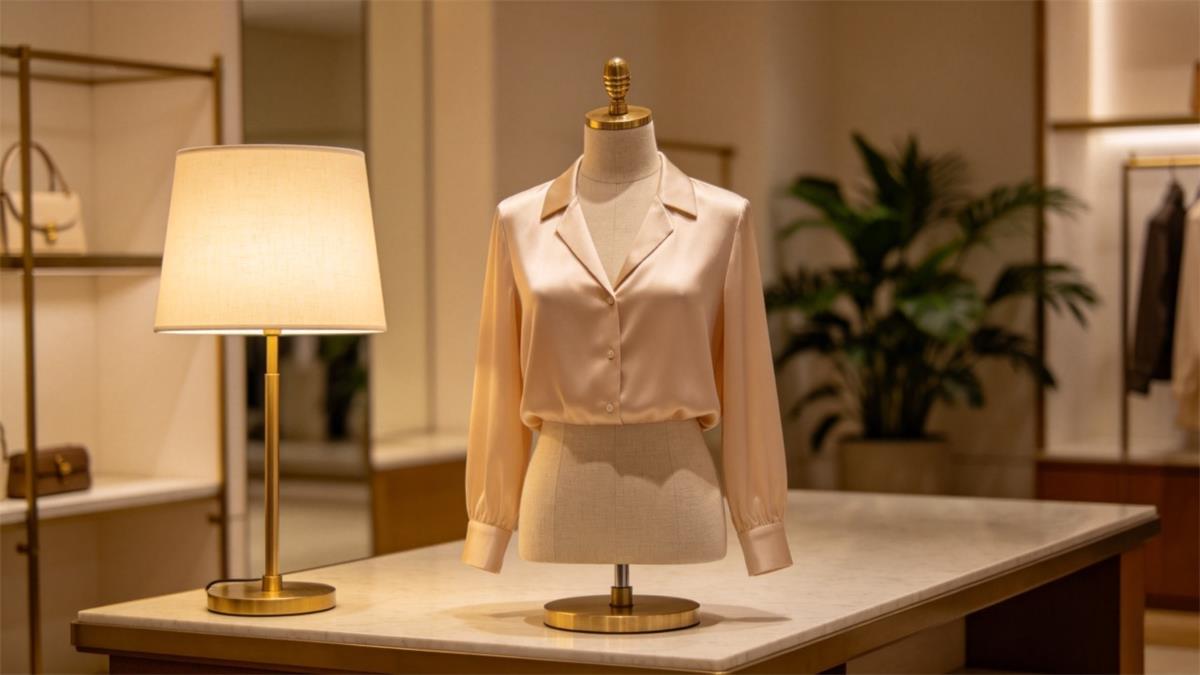
A dress form is a torso-only fabric-covered body used for pinning, draping, and soft display, and it solves a different problem than a full mannequin.
Full mannequins hold a complete look: shoes, hem, proportion, posture. Dress forms hold a garment. That makes them useful on a counter, in a fitting area, or on a plinth where you want a single blouse or jacket to carry a corner of the store without competing with a full figure.
Their sizing advantage is real. Many display dress forms are adjustable at the bust, waist, and hip, so one form can cover several sizes as your stock rotates. What they cannot do is show a full outfit, and they cannot carry a window on their own. A dress form in a street-facing window reads as unfinished from the sidewalk, because the eye expects legs and finds none.
Use them indoors. Use mannequins in the glass.
There is a sustainability angle worth mentioning here, since dress forms tend to outlive everything else in a store. A well-built form with a replaceable cover can stay in service for a decade, and refinishing a mannequin rather than replacing it keeps a large fiberglass or ABS object out of a landfill. Buying fewer, better forms is usually both the cheaper and the greener call. Explore dress forms if a soft display fits your floor plan better than a full figure.
What are the limits of any mannequin size chart?
No chart is a substitute for a spec sheet from the specific form you are buying.
Three things break the numbers. First, supplier variance: the same nominal size can differ by an inch or more between makers, and nobody publishes a shared standard. Second, pose: a walking or bent-leg form measures differently at the hip than a straight-standing one, even at an identical labeled size. Third, sculpt philosophy: some suppliers build athletic proportions with broader shoulders and narrower hips at the same nominal size, which changes how a jacket sits entirely.
There is also a limitation in the size-inclusivity argument itself, and it deserves an honest hearing. Adding a curve form does not automatically increase sales. If you display a size 16 garment and stock only up to a 12, you have advertised something you cannot sell, and that damages trust faster than a size-4 window ever would. The form has to match the buy. Representation without inventory is a broken promise.
Always request measured dimensions before ordering. Never buy from a size label alone.
Frequently Asked Questions
What is the standard mannequin size?
The standard female display mannequin is a US size 2 to 4, with roughly a 34-inch bust, 24 to 25-inch waist, and 34 to 35-inch hips, at a height of 5'9" to 6'0". The male standard is a 40R, meaning a 40-inch chest and 32-inch waist. These have been the default catalog sizes for decades, though extended sizing is now widely available.
What are the measurements of a size 8 mannequin?
A size 8 female display mannequin typically measures 36 to 37 inches at the bust, 28 inches at the waist, and 38 to 39 inches at the hips, with a height around 5'8" to 5'11". Expect about an inch of variance between suppliers, so confirm against the spec sheet before ordering.
Do mannequin sizes match clothing sizes?
Not reliably. Mannequin sizes are sculpted product specifications, while clothing sizes follow ASTM International tables and individual brand grading, which are not legally standardized in the US. A garment labeled size 6 may or may not fit a form labeled size 6. Compare actual bust, waist, and hip inches rather than trusting the size number.
What size mannequin should a boutique buy?
Buy the size you sell most, then add one form a size band above it. Pull twelve months of unit sales by size to find your anchor. A two-form set matched to your real sales spread outperforms a matched trio of size 4s in almost every independent store.
Why are plus-size mannequins more expensive?
Curve forms carry more material, need larger molds, and are produced in smaller runs than standard sizes, which raises the unit cost. They also require a distinct sculpt rather than a scaled-up standard body, so the tooling investment cannot be shared with the core range.
Related Reading
Ready to match a form to your real customers?
The Portland store I mentioned never changed her catalog order. She changed her forms. Her window now shows the size 12 she actually sells, and the back-pinning stopped the week the new forms arrived.
Pull your top size from last year's sales, then browse our female mannequins, male mannequins, kids mannequins, and dress forms by measured size, or contact our design team for proportions matched to your floor plan. Custom finishes and poses are available for brands that want a figure nobody else on the street has.
Measure your bestseller this week. Then match a form to it, not to a catalog thumbnail.