
Tel: +86-0769-33218711
E-Mail: info@ysydisplay.com
Add: A1#807, Tianan cyber building, Huangjin Road, Nancheng, Dongguan, China 523000.


Introduction
When people talk about sustainability in retail displays, the conversation often starts with materials.
Recycled plastics. FSC-certified wood. Biodegradable packaging.
All important topics.
But in day-to-day retail planning, sustainability rarely comes down to materials alone. In fact, many visual merchandising teams eventually realize something surprising: the environmental impact of a display often depends more on how long it is used than what it is made from.
A display that lasts five years is often far more sustainable than one replaced every season.
This shift in thinking is changing how brands approach sustainable retail displays. Instead of focusing only on eco-friendly materials, retail planners are beginning to look at lifecycles, refurbishment, and reuse.
And once you start thinking that way, visual merchandising decisions begin to look a little different.
Design Perspective
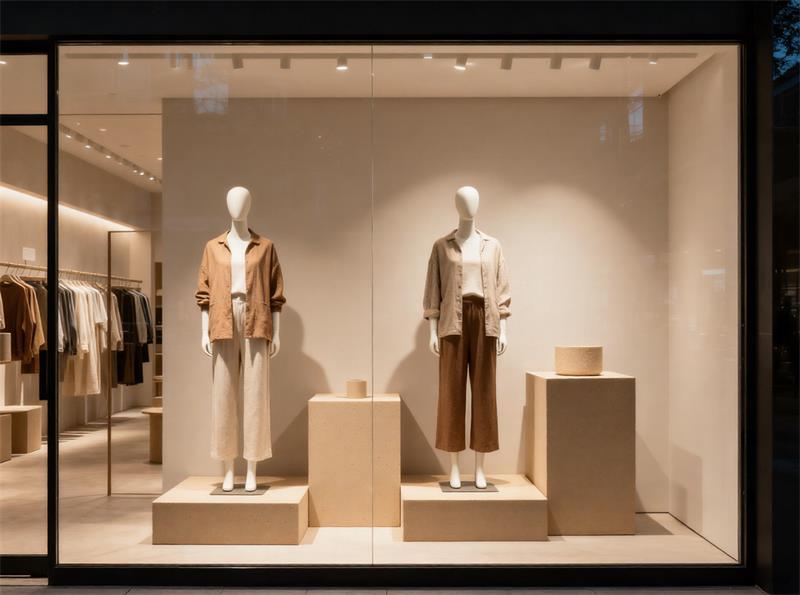
From a retail design perspective, sustainability in retail displays starts at the concept stage.
Designers ask a few simple questions early in the process:
Can this display system evolve over time?
Can parts be replaced instead of the whole structure?
Will it still look relevant next season?
This often depends on the brand.
Some brands change their visual identity frequently, while others maintain a consistent design language for years. The latter usually find it easier to implement sustainable visual merchandising strategies.
Minimalist display systems, for example, tend to age better than trend-driven ones. Neutral tones and simple forms can support multiple collections without feeling outdated.
This is easy to overlook during creative planning. But long-term flexibility is often the quiet foundation of retail display sustainability.
Display Strategy
Visual merchandising teams often think in seasons.
Spring, summer, autumn, holiday.
But sustainable strategies require thinking in years, not just campaigns.
Consider a common store scenario.
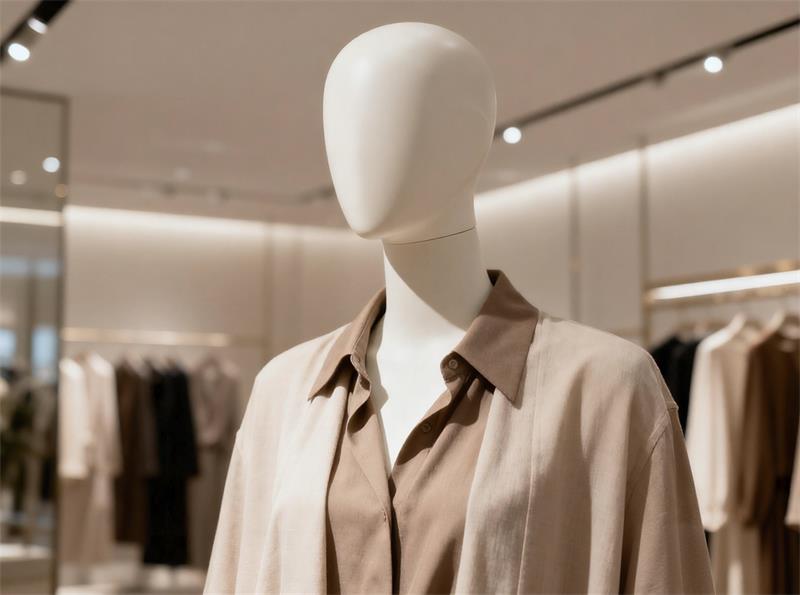
A fashion brand introduces a new collection across its retail network. The VM guide includes a window concept and a series of mannequin styling ideas.
Instead of replacing the entire display platform, the team updates the visual story through styling:
new outfits
different lighting angles
seasonal props
The structure of the display stays the same.
The story evolves.
This approach keeps the store visually fresh while reducing the need for constant replacement. In many cases, customers never notice the underlying display system remains unchanged.
Lighting changes the effect more than most people expect, and subtle adjustments can make familiar displays feel entirely new.
Store Environment
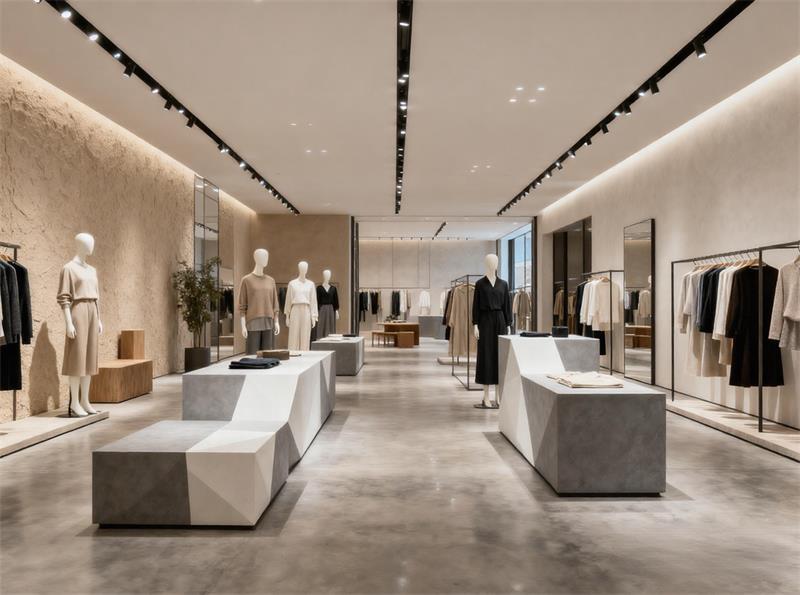
Every store has its own environment, and that environment plays a role in visual merchandising sustainability.
Stores in busy shopping districts experience heavy daily traffic. Displays may need to withstand frequent contact, quick styling updates, and constant visual exposure.
In quieter boutique locations, displays might remain untouched for longer periods.
Store layout makes a difference here.
Large flagship stores often support complex storytelling displays, while smaller locations require simpler setups that can be refreshed quickly.
Display height matters more than expected as well. Elevated displays may remain visible in crowded environments, which means they can continue performing effectively without frequent repositioning.
The physical environment of the store quietly shapes how long displays remain relevant.
Material Considerations
Materials are still part of the sustainability conversation.
But they are only one piece of the puzzle.
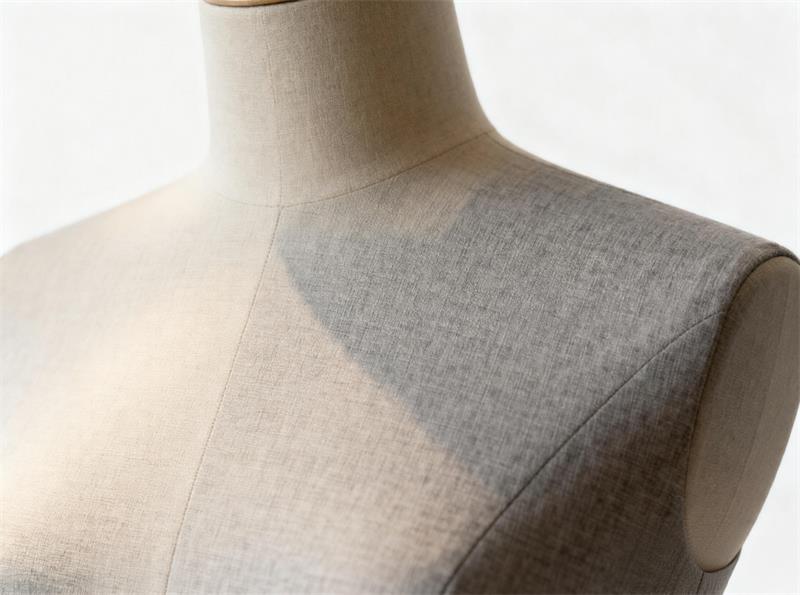
When visual teams choose display elements, they often look for materials that maintain their appearance over time. Mannequins, for example, need to withstand repeated styling and seasonal updates.
Some stores use fiberglass mannequins because their surfaces can hold finishes well and remain visually consistent over long periods. Durability in this context supports eco-friendly retail displays, since long-lasting display elements reduce replacement cycles.
But material choice alone doesn’t define sustainability.
A display made from sustainable material that gets discarded after one season still generates waste. Longevity usually matters more.
Sustainability
The real shift in sustainability in retail displays is the move toward lifecycle thinking.
Retail teams increasingly design displays that can be:
reused
refreshed
adapted
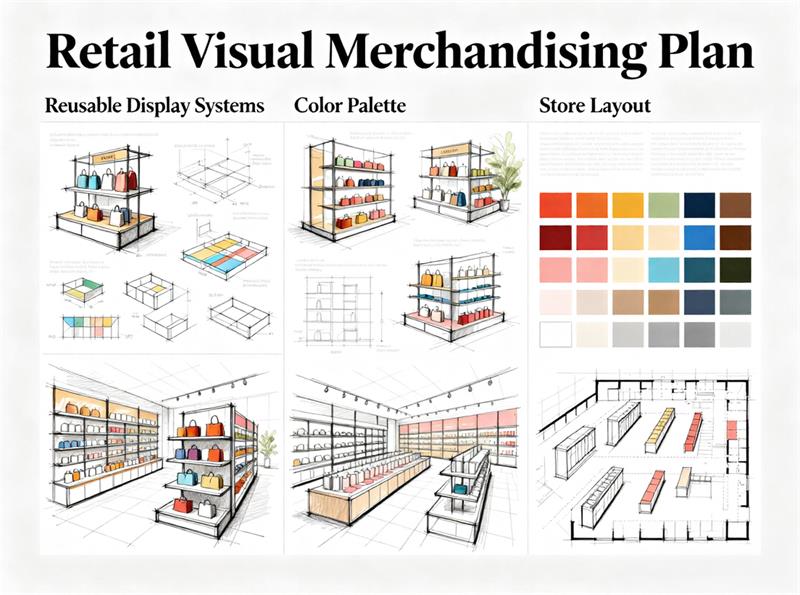
Instead of building entirely new displays each season, many brands keep their core structures in place and update visual layers around them.
A platform becomes a stage.
Styling, lighting, and product arrangement become the changing story.
This approach also simplifies operations across multiple stores. Display systems that are easy to refresh help visual merchandising teams update stores quickly without generating unnecessary waste.
Over time, these small efficiencies add up.
Practical Tips
Retail teams working on sustainable visual merchandising often find that a few simple practices make a big difference.
Design for reuse.
Display platforms and fixtures should work across multiple seasons.
Prioritize adaptable styling.
Changing outfits, props, or lighting can refresh a display without replacing the structure.
Document display systems.
Clear VM guides help stores maintain consistency while extending the lifespan of display elements.
Observe how customers interact with displays.
Sometimes a display lasts longer simply because it sits in the right place.
Choose durable visual elements.
Mannequins and platforms that remain visually consistent over time support long-term sustainability.
Conclusion
The conversation around sustainability in retail displays is evolving.
Materials still matter, of course. But the bigger opportunity lies in how displays are designed, used, and maintained over time.
When visual merchandising teams think in terms of lifecycles instead of seasons, displays become long-term assets rather than temporary installations.
The result is often better for the environment — and surprisingly, better for store design as well.
Displays that evolve gradually tend to feel more refined and intentional.
And for customers walking through the store, that sense of thoughtful continuity often makes the retail experience feel more authentic.
FAQ
What does sustainability in retail displays mean?
Sustainability in retail displays refers to designing and managing store displays in ways that reduce environmental impact, including long-term use, refurbishment, and reuse of display elements.
Why is sustainability in retail displays about more than materials?
Materials are only one factor. The lifespan of displays, the ability to refurbish them, and how frequently they are replaced often have a greater environmental impact.
How can retailers create sustainable retail displays?
Retailers can focus on reusable display systems, adaptable styling concepts, and long-lasting display elements that remain relevant across multiple seasons.
What role does visual merchandising play in sustainability?
Visual merchandising influences how displays are designed, updated, and reused. Strategic visual merchandising sustainability planning can significantly reduce waste across retail environments.
CONTACT US
ART WING Display Mannequin, a China manufacturer of high-end-mid mannequins.
We dedicated to innovative design and focus on producing high-quality display production.
QUICK LINKS
PRODUCTS
ABOUT ART WING
SERVICE

Tel: +86-0769-33218711
E-Mail: info@ysydisplay.com
Add: A1#807, Tianan cyber building, Huangjin Road, Nancheng, Dongguan, China 523000.
Copyright © 2026 DongGuan Art Wing Display Co., Ltd | All Rights Reserved
Hello, please leave your name and email here before chat online so that we won't miss your message and contact you smoothly.