How to Style a Mannequin for a Boutique That Sells
A passer-by gives your window about three seconds. In that slice of time they decide whether to keep walking or come inside. Styling the mannequin well is the simplest, most reliable way to win those three seconds, and it is the part most shop owners rush.
Styling a mannequin is the practice of dressing and posing a display form so the outfit reads as a finished look from across the street, not as a garment on a bare stand. It is not the same as building a window scene around props. The mannequin carries the clothes; everything else supports it. Get the form right and the story lands before the customer finishes their coffee. That focus is what turns a browsing foot into a buying foot.
What Does Styling a Mannequin Actually Mean?
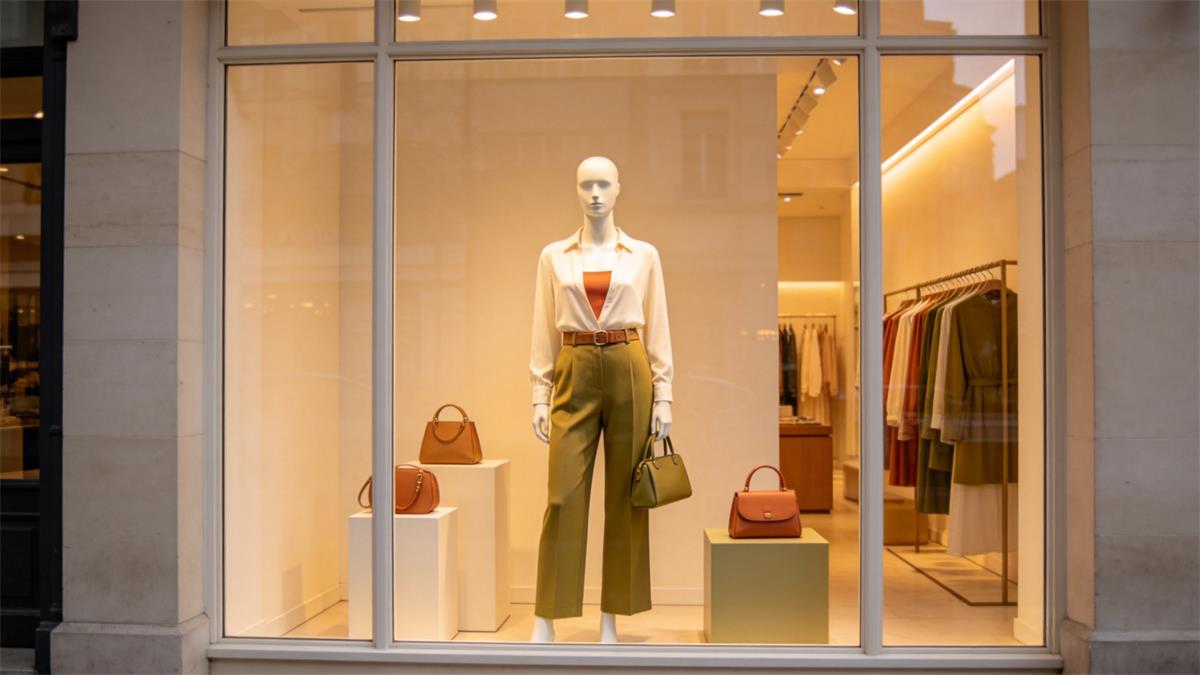
Styling a mannequin means making four choices on purpose: the color story, the pose, the garment layering, and the lighting. Most weak displays fail because one of these was left to chance.
A styled mannequin shows the garment the way a customer imagines wearing it. A bare form or a lazily dressed one shows the product, but not the life around it. The difference is the gap between "that's a nice jacket" and "I would wear that exact outfit." Your job is to close that gap.
Why Does Mannequin Styling Move the Sales Needle?
The numbers are not vague. Research compiled across retail studies shows that using mannequins in displays can lift sales by as much as 66 percent, and a well-built window display alone can raise foot traffic by about 23 percent Contravision. Eight in ten shoppers say they base buying decisions on what they see in store Contravision.
Those figures matter because they frame styling as a revenue task, not a decorating task. When you re-dress a form, you are changing what a stranger sees and decides in three seconds. The return on a half hour of styling work is measured in walk-ins and conversion, not likes.
How Do You Build a Color Story That Reads From the Sidewalk?
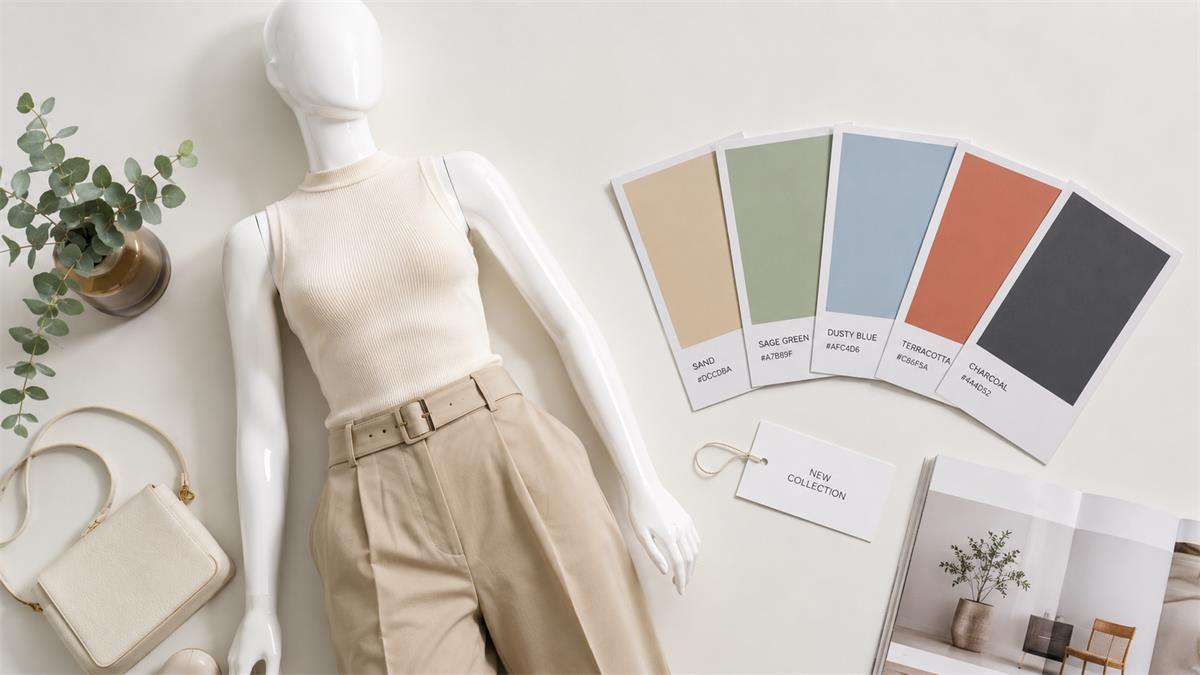
Pick three to five colors and stay loyal to them for the whole display. A tight palette is what makes a small boutique window look intentional instead of accidental. Start from the hero outfit on the mannequin, pull two garment colors, then add one contrasting accent for a prop or sign.
The table below turns that into a repeatable method. Use it as a starting point, then adjust to your own brand colors.
| Mood you want | Palette to use | Example outfit |
|---|---|---|
| Warm and natural | Cream, terracotta, olive | Knit top, linen trousers, raffia bag |
| Sharp and modern | Black, bone, one electric pop | Tailored blazer, white tee, red heel |
| Soft and romantic | Blush, ecru, muted gold | Slip dress, cardigan, pearl drop |
| Seasonal transition | Two carryover tones plus one new accent | Summer dress, ankle boot, autumn scarf |
Keep the background calm. A plain wall in your dominant color does more for a small window than a busy printed scene, because it lets the product and the mannequin carry the story. Shoppers process a display in seconds, so fewer competing hues means the message lands faster. If your window is the hero channel, our boutique window display ideas playbook goes deeper on layout and depth.
Which Mannequin Pose Fits the Story You Are Telling?
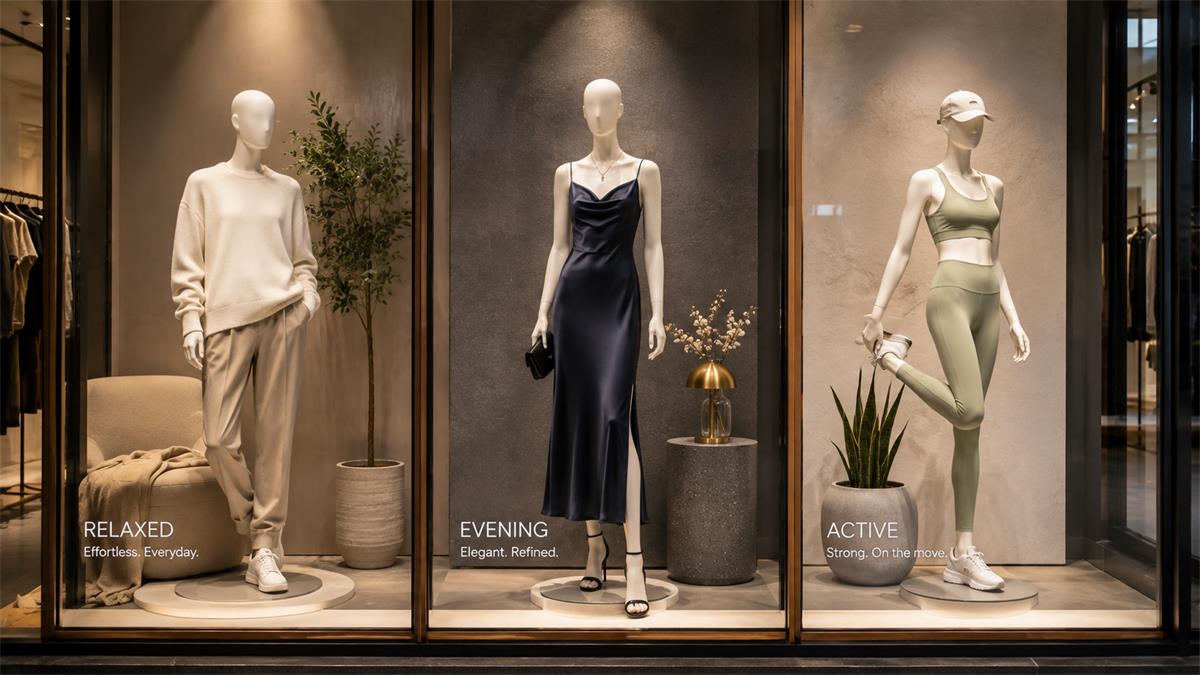
The pose is the body language of the look. A relaxed stance reads as everyday wear; a dynamic stance reads as active or evening wear. Match the pose to the outfit's job, not to whatever form was easiest to unbox.
| Story goal | Pose type | When to use it |
|---|---|---|
| Daily wear, approachable | Standing, weight on one hip | Casual tops, denim, everyday dress |
| Evening or occasion | Extended leg, turned shoulder | Cocktail dress, tailored suit |
| Active or sport | Mid-stride, arm raised | Athleisure, outerwear, performance wear |
| Editorial or brand hero | Seated or leaning | Campaign piece, statement coat |
A common mistake is using one dramatic pose for every outfit. It flattens the range of your stock and trains regulars to skip the window. Rotate poses as you rotate stories, and the same form starts to feel new each time.
How Do You Layer a Garment So It Looks Intentional?
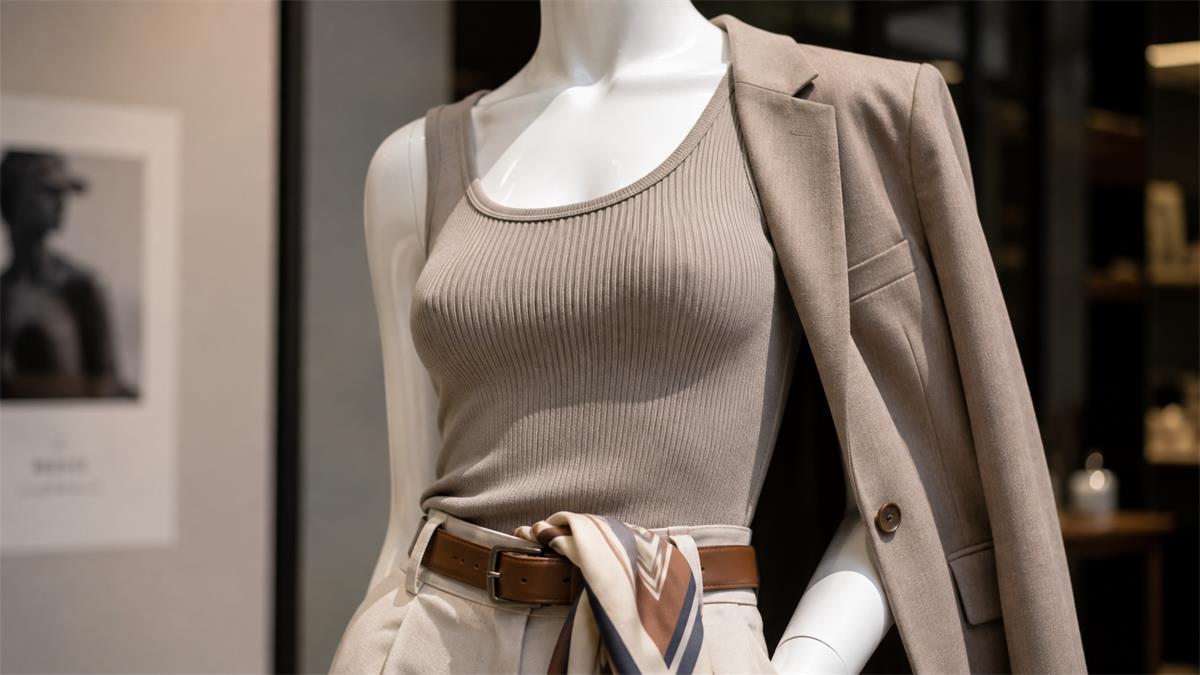
Layering is where amateur displays betray themselves. The fix is to show one garment doing a job, not five garments competing.
Start with the base piece fully styled, then add one layer with a visible reason: a jacket draped on the shoulder, a scarf threaded through a belt, a cardigan left open. Each added piece should change the silhouette or the temperature story. If a layer just sits there, take it off.
For boutiques with limited floor space, a dress form is often the better layering tool than a full body form, because it keeps the focus on the top half where most styling decisions happen. Our dress form guide covers which forms suit which stock.
What Accessories Actually Complete the Look?
Accessories are the fastest way to tell a story, and the fastest way to clutter a display. The rule is one hero accessory plus at most two supporting pieces.
| Accessory | Rule | Common mistake |
|---|---|---|
| Bag | Match the scale to the outfit, not the form | Oversized bag swallowing a delicate look |
| Shoes | Use the shoe to set the occasion | Sneakers under a formal gown with no intent |
| Scarf or hat | Pick the seasonal signal | Throwing on a winter hat in spring stock |
| Jewelry | One focal piece, rest minimal | Stacking until the neckline is lost |
The outfit should still read in a glance. If a shopper has to work out what the mannequin is wearing, the accessory has failed its job.
How Should You Light and Angle the Mannequin for Photos and Pinterest?

Lighting is the difference between a form that looks premium and one that looks flat. Shoppers perceive products in well-lit displays as about 20 percent more valuable, so the same jacket can feel lower in value under bad light Contravision.
Angle the hero mannequin about 12 inches from the glass, with supporting pieces set back 24 inches and backdrops at 36 inches. That shallow depth gives richness without clutter and keeps the focal point unmissable from the sidewalk. For Pinterest and LinkedIn, shoot the window straight on at golden hour or with a soft box, then crop to a 2:3 vertical. A single clean image of one well-styled form outperforms a busy collage every time. Pair this with our fall window display ideas for a full seasonal transition plan.
How Often Should You Re-Style a Mannequin?
Most boutiques should re-style every four to six weeks. That cadence keeps the window feeling current without burning your team's hours, and it lines up with how often regulars walk past.
Seasonal shifts are the obvious trigger, but you do not need a holiday to justify a change. A new delivery, a sold-out hero piece, or a slow Tuesday are all reasons to swap the story. The goal is a window that never goes stale, because a stale window stops getting looked at.
How Do You Score the Styling Before You Call It Done?
Use this short checklist on every form before the window goes live. A display passes only when all three rows read yes, because a near-miss still loses the three-second window.
| Check | Pass standard | Why it matters |
|---|---|---|
| Reads at 10 feet | The outfit and pose are clear from across the street | The window's only job is to stop a walking stranger |
| One clear story | A shopper names the look in a single phrase | Mixed messages make people keep walking |
| Shoppable link | The exact or similar pieces are reachable in store | Inspiration without a path to buy wastes the stop |
Can Sustainable Styling Be Part of the Story?
Yes, and quietly is the right way to do it. About 46 percent of consumers say they prefer shopping in stores that show sustainable mannequins, and over 58 percent of global fashion retailers are moving toward recyclable or biodegradable display forms Global Growth Insights.
You do not need to make sustainability the headline of the display. Let it show in the choice of form, in reusable props, and in a small sign rather than a loud claim. The data says the preference is real, but the styling should still lead with the outfit.
Ready to put these styling moves to work? Browse our female, male, and kids mannequins, or explore dress forms for top-half styling. Our team can help you match forms to your brand and your floor plan.
About the Author
Brook Chen is a Visual Merchandising Specialist at awmannequins.com. With over 8 years of experience designing window and in-store displays for retail brands across the US, Canada, and Australia, she helps boutiques and stores translate seasonal concepts into store-ready merchandising.
Frequently Asked Questions
How do you style a mannequin to look natural?
Dress the form the way a real person would wear the outfit, not the way a hanger would hold it. Shift weight to one hip, leave one layer unfastened, and let a sleeve or lapel fall naturally instead of pinning everything flat. The aim is a look a customer can picture themselves in, so avoid stiff symmetry and over-perfect arranging.
What clothes work best on a mannequin?
Structured pieces that hold their own shape work best: tailored jackets, woven dresses, knits, and denim. They show the silhouette without sagging or wrinkling under store light. Very thin knits, slippery satin, and bias-cut slips need careful pinning and often read better on a dress form than a full body mannequin.
How often should a mannequin be re-styled?
Most boutiques should re-style every four to six weeks to keep the window feeling current without overworking the team. You can change sooner for a new delivery, a sold-out hero piece, or a seasonal shift. The key is never letting the window go stale, because a stale display stops drawing second looks from regulars.
Should the mannequin match my boutique brand?
Yes. The form's finish, skin tone, and pose should echo your brand, not fight it. A minimalist store reads better with a matte abstract form, while a romantic boutique suits a realistic warm-toned figure. The mannequin is part of the brand story, so its look should feel like a member of your cast, not a random extra.
How is styling a window mannequin different from an in-store one?
A window mannequin is the hero seen from the street, so it needs a bold, simple story and strong lighting to read at distance. In-store forms work in clusters and should feel shoppable up close, with reachable sizes and coordinating pieces nearby. The window sells the walk-in; the floor sells the basket.