
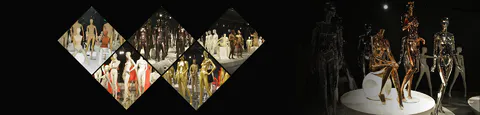
Dress Form Display Ideas That Sell: A Retail Styling Guide
A dress form display is a three-dimensional body form that retailers use to present garments, accessories, and styled looks inside a store or window. Unlike a full mannequin, a dress form usually stops at the torso or shows a simplified silhouette, which makes it a practical, space-saving way to show how clothes fit and move. For boutique owners and visual merchandisers, a well-styled dress form turns a single garment into a story and pulls shoppers toward the rack behind it.
Shoppers read a garment faster on a body shape than on a flat hanger. That simple fact is why forms and mannequins remain core retail tools even as e-commerce grows. The sections below walk through choosing the right form, styling it to sell, placing it in your layout, and previewing the result in 3D before you spend a dollar on stock.
What Is a Dress Form Display, and Why Use One in Retail?
A dress form display is a fixed or wheeled body form built to hold clothing at a realistic, photo-ready shape. Retailers use it for three jobs: showing fit, building a focal point, and testing how a look reads from the sidewalk.
The case for using one is straightforward:
Fit reads instantly. A shoulder line and waist read at a glance, so a shopper understands the garment without picking it up.
Small footprint. A torso form occupies a fraction of the floor space a full mannequin needs.
Fast re-styling. You can swap a look in minutes, which keeps the window fresh through the week.
Flexible placement. Use it in the window, on a pedestal, or on the sales floor near the matching rack.
The numbers back this up. Visual merchandising research shows 80% of shoppers base buying decisions on what they see in store, and well-executed window displays can lift foot traffic by 20 to 30% while boosting sales by up to 45%. One retail stat roundup puts the sales lift from mannequins and forms at 66%. The takeaway for a store owner is clear: a dressed form is not decoration, it is a selling tool.
How Do You Choose the Right Dress Form for Your Store?
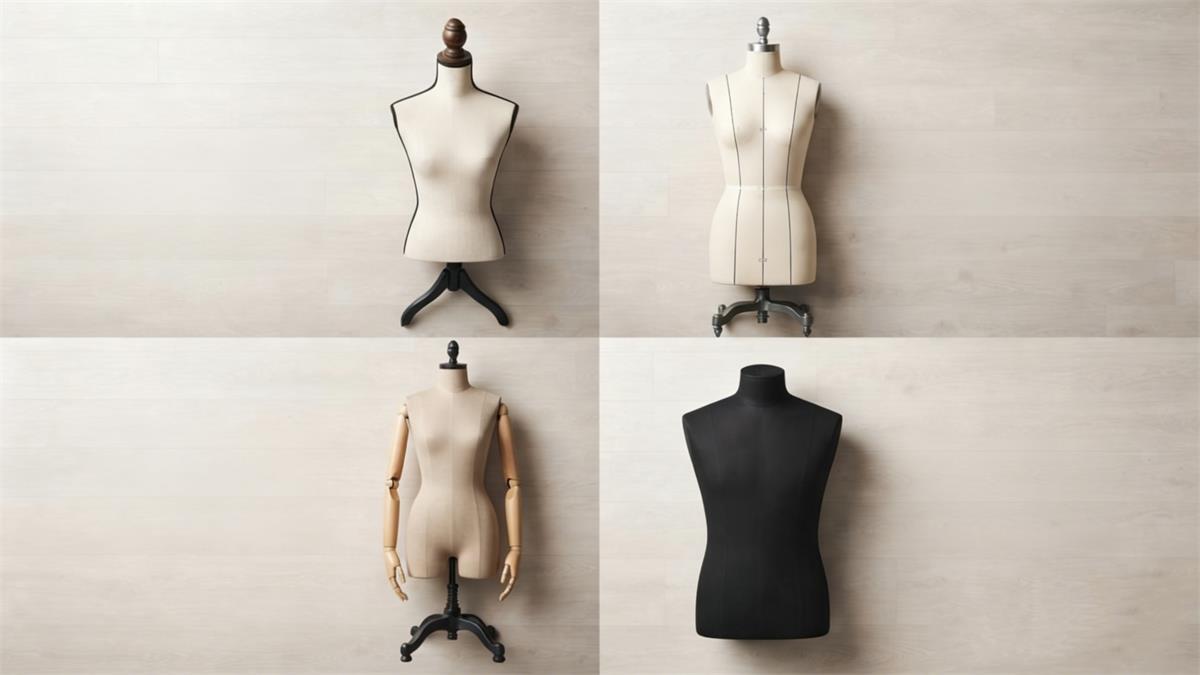
Start by matching the form type to the job. A sewing form built for the workroom is the wrong hero for a selling space, just as a bare torso form struggles to tell a full outfit story.
The table below compares the common retail forms.
| Type | Primary use | Retail styling fit | Notes |
|---|---|---|---|
| Display form | Showing finished garments | High, everyday styling | Padded, pinnable, photo-ready shape |
| Sewing form | Fitting and altering stock | Low in a selling space | Collapsible shoulders, built for the workroom |
| Pinnable form with arms | Layering tops and accessories | High for boutiques | Arms let you hang bags, scarves, jewelry |
| Torso form | Focusing on waist, chest, shoulders | Medium, detail focus | Smaller footprint, no legs |
A display form is the safe default for most stores because it presents finished clothing cleanly. Add arms when you want to show a full upper-body look with a crossbody bag or a scarf. Keep a sewing form in the back if your team alters on site, but do not put it on the floor as a hero piece.
Which Dress Form Size and Shape Should You Pick?
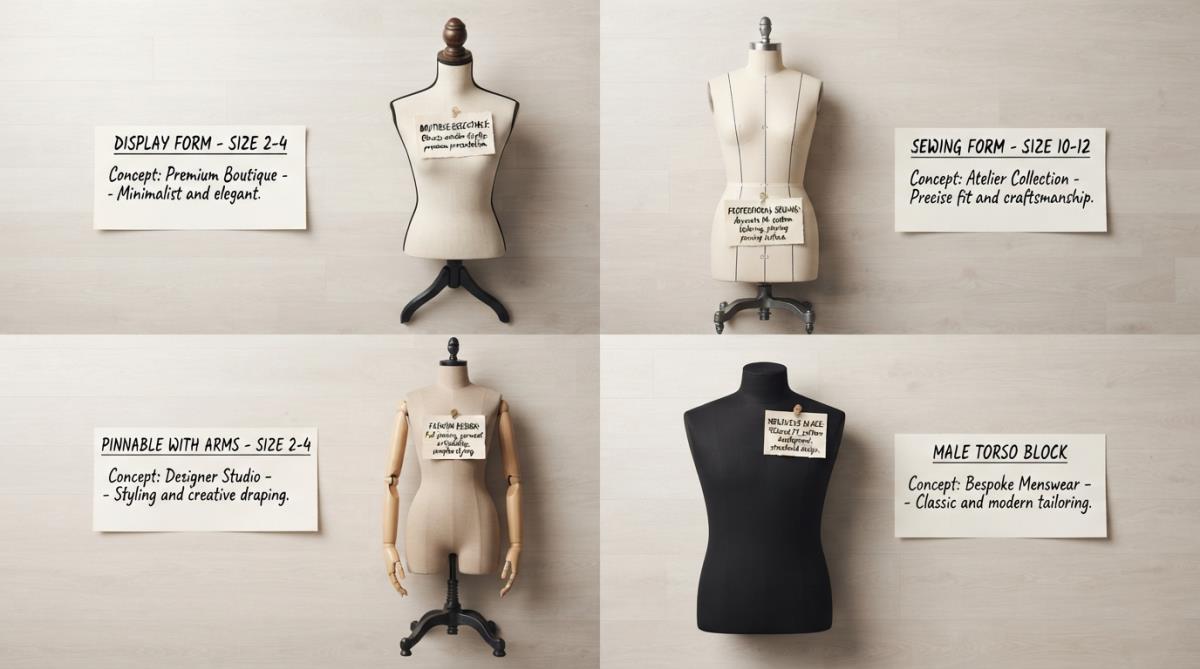
Match the form to your customer, not to the sample you happen to have on hand. A form that is two sizes smaller than your core buyer makes the clothes look like they fit no one.
Use the table to map your store concept to a form.
| Store concept | Recommended form | Why |
|---|---|---|
| Women's boutique, contemporary | Female size 10 to 12 display form | Mirrors the median ready-to-wear fit |
| Bridal or occasionwear | Female size 2 to 4 form with arms | Shows structure and drape on a slim line |
| Menswear | Male dress form, adjustable | Broad shoulder line reads as tailored |
| Kids or family store | Child display form | Completes a family styling story |
Size matters because the form sets the expectation for fit. Most retail dress forms ship in women's sizes 2 to 4 and 10 to 12, and in a men's tailored block, so pick the one closest to the customer you see most. An adjustable dial form helps if your buy spans several sizes, though it costs more and can look less natural up close.
When finish is part of the brief, a linen-covered form reads warmer and more considered than a bare foam body, which suits a boutique or a sustainable brand story. A chrome or black metal base reads modern and works in a minimal store. Browse the dress form collection to see how finish and base change the look.
How Should You Style a Dress Form Display to Attract Shoppers?
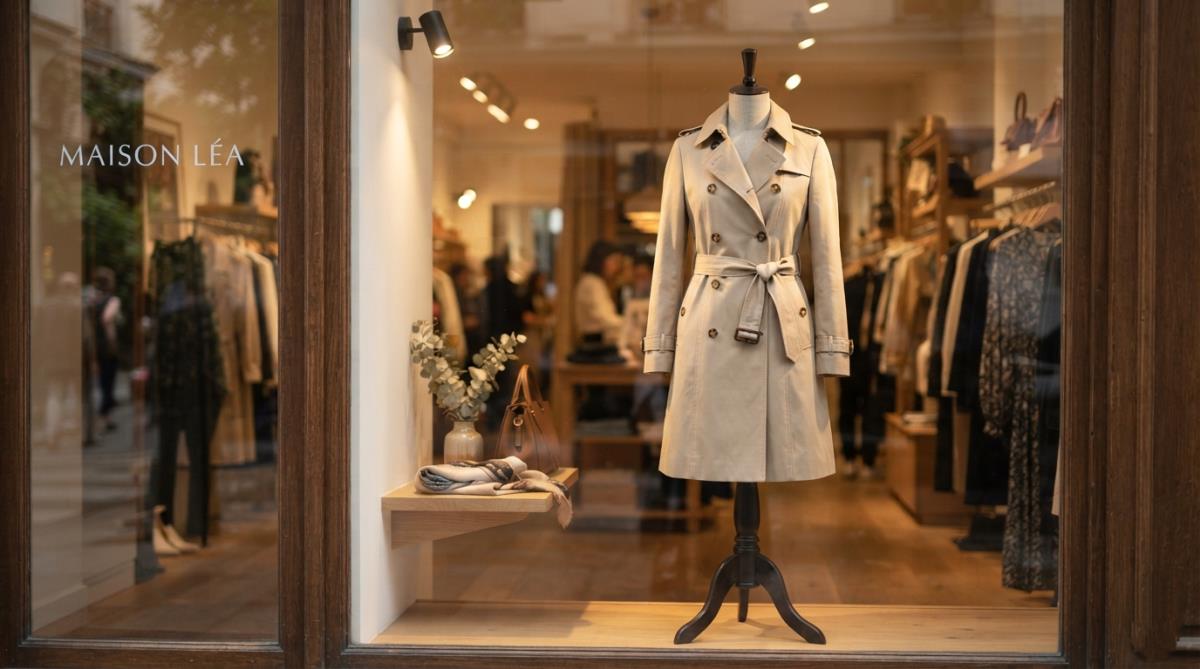
Styling is where a plain form becomes a reason to stop. Follow a simple loop: one hero garment, a tight color story, deliberate light, and a link to the rack.
Pick one hero. Build the rest of the form around a single strong piece, such as a coat, a dress, or a tailored jacket. Add one or two supporting items, not five. A crowded form confuses the eye and hides the product.
Light it with intent. A focused spotlight at roughly 45 degrees, in warm white around 3000 to 3500 Kelvin, makes fabric read as valuable. Well-lit displays raise the perceived value of a product by about 20% in merchandising studies, so lighting is not a detail, it is the sale.
Raise it to eye level. Products placed at eye level sell far better than products at the floor or overhead. Set the form on a pedestal so the key garment sits about 48 to 60 inches off the ground. That height also frames the form in the window for a passerby at 20 feet.
Rotate every one to two weeks. Regulars stop noticing a display they have seen for a month. A small swap, a new scarf, a different color card, keeps the window doing work.
Add one prop with a point. A single chair, a folded throw, or a framed sign can carry a theme without turning the form into a diorama. The prop should point back to the product, not compete with it.
Where Should You Place Dress Forms in Your Store Layout?
Placement decides whether the form sells or just sits there. Use the scorecard below to check each display before you call it done.
| Criterion | What to check | Good sign |
|---|---|---|
| Sightline from window | Can a passerby see the form at 20 feet? | Yes, framed by the glass |
| Eye-level hero | Is the key garment 48 to 60 inches off the floor? | Yes |
| Traffic flow | Does the form pull people inward, not block the path? | Yes, set back about 12 inches |
| Dedicated light | Is there a light on the form, not just ambient room light? | Yes |
| Story link | Does it point to a nearby rack? | Yes, within 3 feet |
A proven window trick is the three-layer depth: put the hero form about 12 inches from the glass, a supporting piece 24 inches back, and backdrop elements 36 inches back. That layering creates richness that stops foot traffic without crowding the glass.
Inside the store, set the form close to the matching category so the shopper who stops can reach the product in a few steps. A form showing a coat should stand next to the coat wall, not across the room by the checkout.
Can You Preview a Dress Form Display Before You Buy?
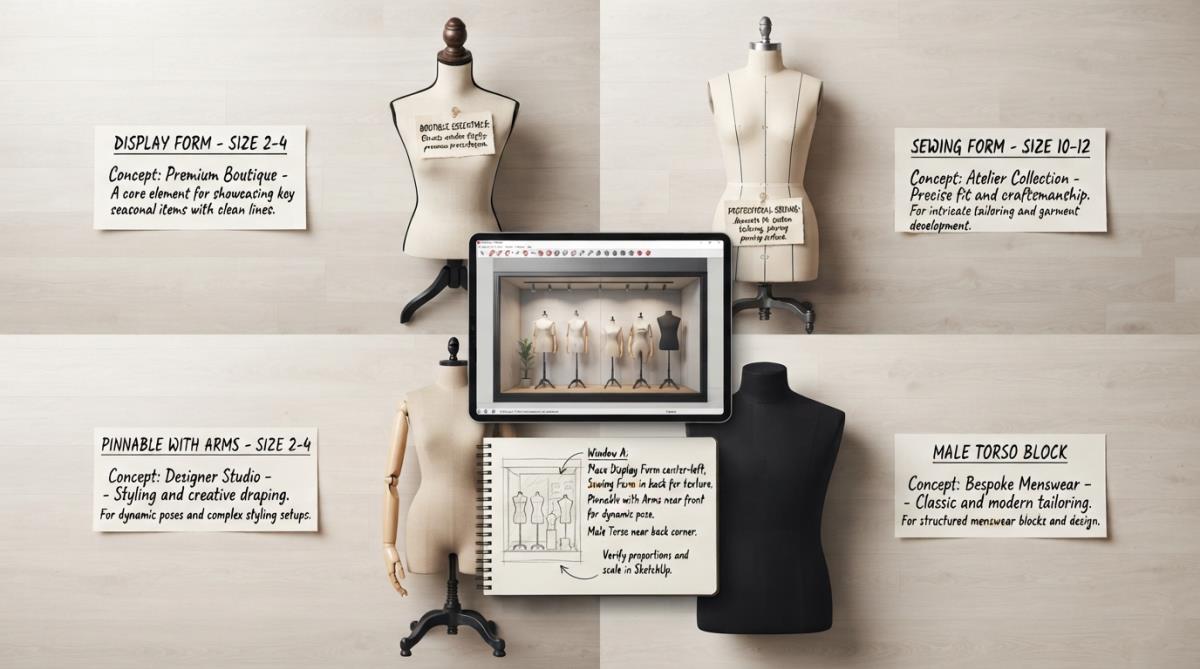
Yes, and doing so saves money. A dress form arrives in a fixed size, finish, and base, so a bad choice means a return or a form that never looks right. A quick 3D mock-up catches that before purchase.
Retailers can plan a window in 3D with free tools like SketchUp or with Blender and 3ds Max for higher-end renders. The mock-up shows form placement, sightlines from the sidewalk, and how the lighting balance reads. A team can swap a base, change a finish, or move the form two feet left in minutes, instead of re-shipping physical stock.
This matters most for multi-store brands that need one window concept rolled out across locations. A single validated render becomes the spec every store builds from, which keeps the look consistent and cuts the trial-and-error cost. For smaller boutiques, even a rough SketchUp block of the window helps confirm the form fits the sightline and the pedestal height hits eye level.
How Do Dress Form Displays Fit a Seasonal Retail Calendar?

Dress forms are low-cost to re-theme, which makes them useful across the retail year. Swap a scarf, a wreath prop, or a color card and the same form carries a new season.
The holiday period is the clearest example of scale. The National Retail Federation forecast 2025 November to December holiday sales between $1.01 trillion and $1.02 trillion, the first time the U.S. holiday season has passed $1 trillion, with consumers planning to spend about $890 per person. Stores that dress their forms to that calendar six to eight weeks ahead, for back-to-school, Halloween, Black Friday, and Christmas, capture the traffic while it is hot.
Build the rhythm from the posts already on this site: a back-to-school window plan for late summer, and a fall window guide for the turn into winter. A dress form is the constant; the theme is what rotates.
Are Sustainable Dress Form Displays Worth It?
For many stores, yes, as a brand-values note rather than a hard sell. Shopper sentiment is real: in a 2025 survey, 78% of consumers said sustainability is important in their purchase decisions, and 47% said they would pay between 5 and 9.9% more for sustainable options. The catch is trust. The same research found many shoppers doubt brand claims, so the display has to show the choice, not just state it.
A linen-covered form, a recycled or reclaimed base, and a modular build that survives store moves all read as considered. Keep this soft. Sustainable is a supporting note in a retail display article, not the search target, because the search demand for it as a primary phrase is thin. Show the materials, skip the lecture.
Frequently Asked Questions
What is the difference between a dress form and a mannequin?
A dress form is a body form that usually stops at the torso or shows a simplified silhouette, built to hold and shape garments. A mannequin is a fuller figure, often with head, arms, legs, and a pose, made to show a complete outfit on a selling floor or in a window. Use a dress form when you want a small, flexible display focused on fit and fabric, and a mannequin when you want to tell a full outfit story with a human pose.How do you style a dress form to look good in a store?
Start with one hero garment and build a tight color story around it, then light the form with a warm spotlight at about 45 degrees and raise it to eye level on a pedestal. Rotate the look every one to two weeks so regulars keep noticing it, and add a single prop that points back to the product. The goal is a clear story a shopper reads in two seconds, not a crowded scene.What dress form size should a boutique choose?
Pick the size closest to your core customer, not the sample you have. Most retail forms ship in women's sizes 2 to 4 and 10 to 12, and in a men's tailored block. A contemporary women's boutique does well with a size 10 to 12 form, while a bridal or occasion store may prefer a slim size 2 to 4 form with arms to show drape. Matching the form to the buyer makes the clothes look like they fit.Do dress form displays actually help sell clothes?
Yes. Visual merchandising studies show mannequins and forms can lift sales by about 66%, and well-executed window displays raise foot traffic by 20 to 30% while boosting sales by up to 45%. The form turns a single garment into a styled story that shoppers read faster than a hanger, which is why it stays a core retail tool even as online shopping grows.Can I preview a dress form display before buying the forms?
Yes. A 3D mock-up in SketchUp, Blender, or 3ds Max shows form placement, sidewalk sightlines, and lighting balance before you order. Because a form arrives in a fixed size, finish, and base, a render catches a bad choice early and lets a multi-store brand roll one validated window concept across locations without shipping physical stock back and forth.About the Author
Charles Yang is a 3D Model Designer at awmannequins.com. With over 6 years of experience in retail fixture 3D modeling and product visualization, he supports retail brands and manufacturers with renders, virtual merchandising, and e-commerce-ready 3D assets.
Ready to style your own display? Explore the female mannequins, male mannequins, kids mannequins, or the full dress form collection to find the form that fits your store and your season.