How to Choose the Right Boutique Mannequin for Your Store Type
A boutique mannequin is a display form picked to stand in for the customer your shop actually sells to, and the right choice depends more on your store type than on what looks impressive in a catalog. A bridal salon, a kids shop and a plus-size boutique are solving three different problems, and one generic form will quietly undersell all three. This guide walks through the form types, the size and pose decisions that follow from each boutique format, what each tier costs, and how to keep a single store from looking mismatched. For the full sizing, material and budget framework that sits behind these choices, start with the mannequin selection guide.
What is a boutique mannequin, and how is it different from a dress form?
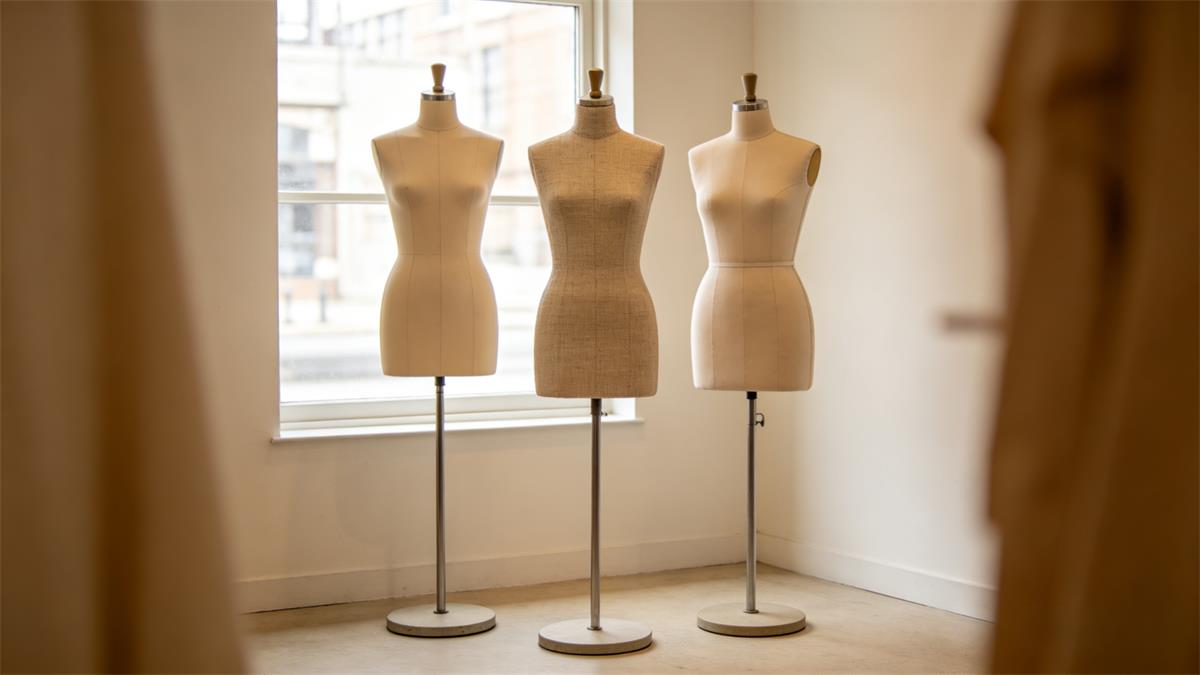
A boutique mannequin is a full or partial human figure used to present merchandise in a shop, chosen to match the body the store dresses. The word covers several forms that get mixed up in buying conversations, and the differences matter once you start spending money.
Shopify's 2026 retailer guide draws the line cleanly with designer and Parsons instructor Kathlin Argiro and visual presentation consultant Dimitri Koumbis. Mannequins mimic the detail of the human body and can be highly stylized. Dress forms are technical draping tools with thicker padding and collapsible shoulders, heavier by design. Body forms look similar to dress forms but are lighter, less padded, come in more material options, cost less, and exist only to display merchandise (Shopify, May 2026).
| Form type | What it is | Best boutique use | What it tells a shopper | Typical cost |
|---|---|---|---|---|
| Full-body mannequin | Complete figure, often with face, arms and legs | Womenswear, bridal and menswear windows | "This is what the outfit looks like on a person" | $150 to $1,500+ |
| Body form | Headless torso on a stand, light and lightly padded | Small floors, accessory walls, tight aisles | Fabric, drape and fit | $200 to $700+ |
| Dress form | Heavily padded torso with collapsible shoulders | Ateliers, tailoring, made-to-measure shops | Craft, fitting and alteration expertise | $70 to $300 for a bust or torso |
| Child or teen form | Scaled figure with age-correct proportions | Kidswear, dancewear, uniforms | Family shopping, age fit | Varies by height band |
Cost figures in this table come from Shopify's 2026 guide. They are wide on purpose: material, realism and poseability move the number more than size does.
Why should a boutique mannequin match the type of store you run?
Because the form is a stand-in for your customer, and shoppers read it in about two seconds.
The commercial case for getting this right has not gone away with online shopping. There were 112,860 clothing and clothing accessories store establishments in the US as of Q4 2025, employing 1,156,400 people (Retail Dogma, citing US Bureau of Labor Statistics). Physical stores still carry the category, and the display is the first thing a passerby decodes.
Shoppers also keep turning up in person during the biggest apparel moments. NRF and Prosper Insights found that K-12 families planned to spend a record $43.3 billion on back-to-school in 2026, with $250.29 per student going to clothing and accessories, and 39% of shoppers naming clothing stores as a destination (NRF, July 2026). A form that misrepresents your range during that window is a wasted display.
Consistency is the second half of the argument. Koumbis puts it bluntly: retailers should stay consistent in their displays to present a cohesive message, and while mixing mannequin types is not forbidden, it often reads as amateur and messy. That rule does not mean every form must be identical. It means every form should belong to the same visual family.
Which mannequin suits a women's contemporary boutique?

Lead with one full-body female form in a size that reflects what you sell most of, not the smallest size on the rack.
Most womenswear independents do best with a US 6 to 8 in the window and a second form in a size 10 to 12 inside the store. The smaller size photographs well and reads as sample-perfect, which is exactly the trap: if your bestselling denim is a 28, a size 2 form makes the fit look like a guess. Check your own sell-through before you order, using the mannequin size chart to convert garment sizes into bust, waist and hip numbers.
Pose matters more than most owners expect. A relaxed standing pose with one arm slightly forward shows a sleeve and a handbag at the same time, and it survives outfit changes better than a dramatic runway pose. Save the dramatic one for a single hero window you change four times a year rather than weekly. If you want the styling side of this, the how to style a mannequin walkthrough covers dressing order and pinning.
What does a bridal or formalwear boutique need from a form?

A bridal boutique needs posture and stillness, because the gown is doing the talking.
Choose a form with a long neck line and a quiet stance, and size up to a US 8 to 10 rather than down. Sample gowns are clipped on real bodies all day; a tiny form makes every dress look like it needs more pinning than it does. A torso with internal skirt support works well in a narrow salon, and it lets you stack two looks in the floor space one full figure would take.
Finish is the detail that separates a bridal display from a prom display. A soft matte ivory or warm neutral reads as expensive under warm light, and it will not fight a white gown. Keep the base simple and hidden, and give the form room: a gown with a train needs twice the clearance of a cocktail dress, and there is no visual fix for a train folded up against glass.
How do you choose forms for a plus-size or inclusive boutique?
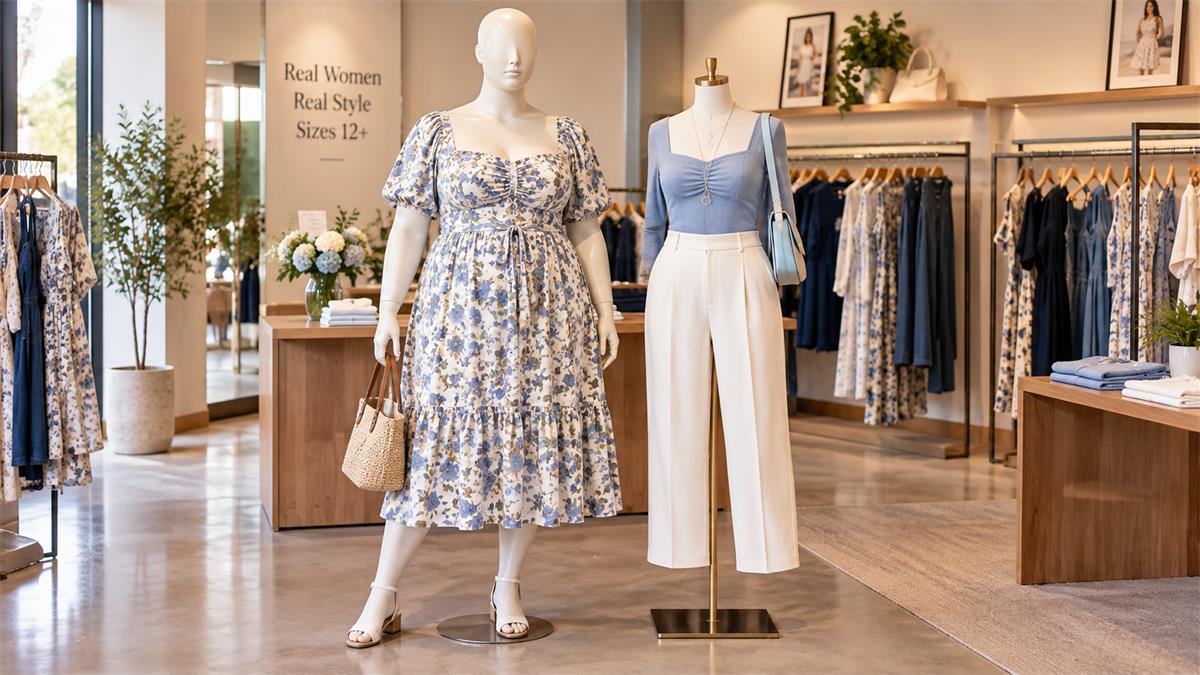
Buy a true plus-size form, and buy 1X and 2X before anything else.
The market data supports that order. Style Arcade's 2025 analysis of the plus-size market reports the average woman's size in the US sitting between 16 and 18, up from 14 a decade earlier, with 1XL and 2XL capturing the largest share of plus-size clothing sales and North America holding about 44% of global plus-size revenue (Style Arcade, August 2025).
The mistake to avoid is padding a straight-size form and calling it inclusive. Proportions shift with size: bust, waist and hip ratios do not scale in a straight line, so a padded size 8 gives a shopper the wrong read on where a garment will sit. A real plus form also keeps your extended range out of a separate corner. If plus sizes live on one form at the back while straight sizes hold the window, the store has told those customers something, and it is not a good thing.
What about kids, menswear and accessories-led shops?
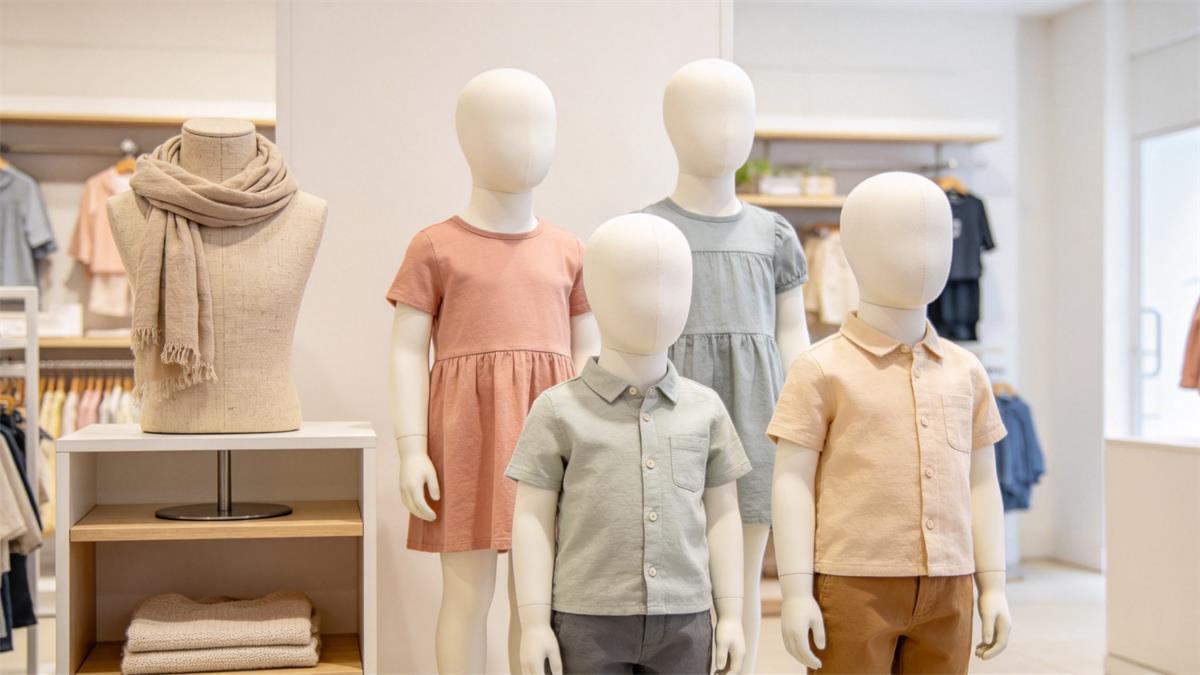
These three store types share one rule: the form is smaller, simpler and easier to damage than owners assume.
Kids and teen shops
Stock two or three height bands rather than one. A 3-year-old form next to a 10-year-old form lets a parent see the size range at a glance, and it moves more than one styled look. Choose a washable matte finish, because sticky hands at eye level are a real maintenance load. Keep the pose active and the base weighted.
Menswear and tailoring
Menswear reads best on a quiet male form in a chest 38 to 40, hands relaxed or in pockets. Tailoring shops get more from a suit form or a dress form than from a fashion figure, since the selling point is construction and fit. If you are deciding between the two, the types of mannequins for retail breakdown covers where each one earns its floor space.
Jewelry and accessories
Skip the full figure. A neck form, a hand form or a linen bust form shows a necklace or a scarf with less competition, and it costs a fraction of a full body. This is also the one store type where a cluster of three small bust forms at different heights beats a single expensive piece.
How much should a boutique mannequin cost?
Expect to spend $150 to $1,500 or more per full-body mannequin, and match the tier to how long the form will stay on the floor.
| Tier | What you get | Spend per form | Where it makes sense |
|---|---|---|---|
| Entry | Molded form, fixed pose, standard finish, basic base | $150 to $400 | Pop-ups, market stalls, back-of-store racks |
| Mid | Full body with better proportions, poseable arms, matte finish, weighted base | $400 to $900 | Most independents, weekly outfit changes, main window |
| Premium | Custom sculpt, articulated joints, specific skin tone, branded base | $900 to $1,500+ | Flagship windows, brand-defining displays, long-term installs |
Shopify's cost guidance puts mannequins at roughly $150 to $1,500+, bust or torso forms at $70 to $300, and full body forms at $200 to $700 or more depending on bases, arms and stands. The practical advice from Koumbis is worth repeating: mannequins can blow past a budget faster than forms, because the number of style and material options is much larger.
Two costs sit outside the unit price. Bases and stands are frequently quoted separately, and shipping on a full-body form is real money on a bulky item. Ask for a landed number before you compare two quotes.
How do you stop one store from looking mismatched?
Pick one visual family and hold it for at least a season.
Three decisions lock the family in place: finish, skin tone and pose energy. Choose a finish (matte, satin or painted), keep skin tones within a related range rather than four unrelated ones, and keep pose energy consistent, so a relaxed store does not have one athletic figure mid-stride. Koumbis's consistency point applies here directly, and department stores are the useful counterexample: they run many mannequin styles, but each one belongs to a specific department, and the departments do not intermix.
Use this scorecard before you place an order. If a form fails two or more rows, it will fight the rest of the store.
| Check | Pass condition | Your answer |
|---|---|---|
| Customer match | Size and proportions reflect your top three selling sizes | |
| Merchandise fit | Shoulders, bust and hip let your core product sit as intended | |
| Family fit | Finish, tone and pose energy match the existing forms | |
| Floor fit | Clearance around the form is at least 60 cm on the busy side | |
| Maintenance | Finish can be cleaned with what your staff already uses | |
| Longevity | The look will still read current in 18 months |
When should you order and refresh forms?
Order six to eight weeks before you need the form on the floor, and refresh the display more often than you replace the form.
The buying calendar keeps moving earlier. NRF found 62% of back-to-school shoppers had already started by early July 2026, and 54% said they shopped major June sales events for school purchases. If your store sells into that season, the form has to be dressed and lit before the traffic arrives, not during it. For the month-by-month version of this planning, the holiday display calendar lays out the full year.
Replacing a form is a separate decision from restyling one. Most shops get more from four outfit changes a season than from a new figure every year, and resting a form off the floor for a few weeks reduces scuffing and finish wear. When a form really is done, fashion schools, community theater groups and consignment resellers will usually take it, which keeps a bulky object out of a dumpster and puts your name in front of students who will be specifying displays in a few years.
Ready to match a form to your floor?
Start with the category that fits your store type, then narrow by size and finish. Browse female mannequins, male mannequins, kids mannequins or dress forms, or talk to our team about sizing and finish for a specific window. If you would rather see the whole framework first, the mannequin selection guide covers material, budget and supplier questions in one place.
About the Author
Charles Yang is a 3D Model Designer at awmannequins.com. With over 6 years of experience in retail fixture 3D modeling and product visualization, he supports retail brands and manufacturers with renders, virtual merchandising, and e-commerce-ready 3D assets.
Frequently Asked Questions
What size mannequin should a boutique buy?
Buy the size you sell most of, not the smallest size you stock. For many womenswear independents that is a US 6 to 8 in the window with a 10 to 12 inside. Check sell-through by size before ordering, then convert those garment sizes into bust, waist and hip measurements so the form matches the product rather than the sample rack.
Should a small boutique choose a mannequin or a dress form?
Choose a body form or a dress form if the floor is tight or the budget is under about $400, and a full-body mannequin if you want shoppers to read a complete outfit. Dress forms also double as a working tool for fittings and alterations, and they never go out of style the way a highly stylized figure does.
How many mannequins does a small boutique need?
Three is usually enough: one in the window, one at the entrance or in the main sightline, and one inside near the fitting rooms. Odd numbers group better than even ones, and a third form gives you somewhere to build a second look without emptying the window.
Do plus-size mannequins change how a store performs?
They change how merchandise reads to the shopper standing in front of it. With the average US woman's size reported between 16 and 18, a straight-size form dressed in extended sizes gives the wrong read on fit and drape. A true plus form puts the range on the same visual footing as everything else in the store.
When should I order new forms for the holiday season?
Six to eight weeks before the display goes up. Custom finishes, specific skin tones and branded bases all add lead time, and the shopping itself keeps starting earlier: 62% of back-to-school shoppers had begun by early July 2026. A form that arrives in late November has missed the season it was bought for.