

Fall Window Display Ideas: How to Style Mannequins for a Storefront That Sells [2026]
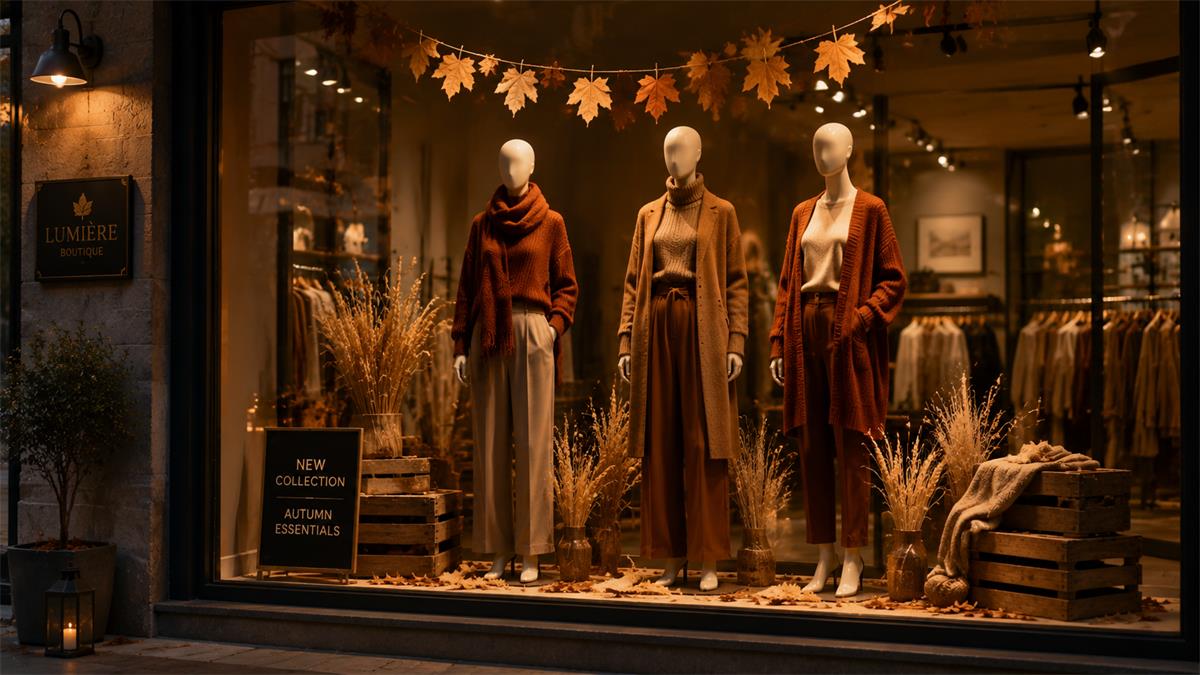
Walk down any main street in early September and you can spot the stores that planned ahead. Their windows glow amber at dusk, a mannequin in a camel coat leans toward a stack of vintage books, and shoppers slow down without knowing why. The stores that waited? Bare glass and a sale sign.
A fall window display is a seasonal storefront presentation that combines autumn color, layered merchandise, and directional lighting to stop foot traffic and pull shoppers inside during the August-to-November selling window. It is not interior decor that happens to face the street. The window works as paid media you already own: NRF-tracked seasonal spending events (back-to-school through Thanksgiving) drive hundreds of billions in US retail sales each year, and your glass is the first touchpoint most passersby ever have with your brand. Get the window right and the store does the rest. That six-foot stage is the cheapest ad you will ever run.
This guide is written for boutique owners, store planners, and visual merchandising (VM) designers who need a fall window on the floor by Labor Day. You will find a styling timeline, mannequin selection advice, two comparison tables, and a props list you can source this week.
Why do fall window displays matter for retail sales?
Fall is the runway into the two biggest spending quarters of the retail year. The National Retail Federation put 2024 back-to-school and college spending at a combined $125.4 billion, and winter holiday spending near $989 billion. Shoppers who pass your store in September are already in acquisition mode: new wardrobe, new routine, colder weather coming.
Your window either joins that momentum or watches it walk by.
There is a measurable behavior shift too. Foot traffic patterns change when school schedules resume; weekday late-afternoon traffic rises in shopping districts near schools and offices. A window that reads clearly from 15 feet away, in about 3 seconds of walking pace, converts a portion of that traffic without a single ad dollar.
One more reason, and it is underrated: social proof. A styled fall window gets photographed. Boutiques with strong seasonal windows show up on local Instagram and Pinterest boards, which feeds discovery search. The window sells twice, once on the street and once online.
When should you install a fall window display?
Install your fall window between mid-August and the first week of September. That timing catches back-to-school shoppers at the peak and gives the display a solid 8 to 10 weeks of life before Halloween and holiday transitions take over.
Retail buyers at CREOATE, a UK wholesale marketplace, recommend September at the very latest, and note that late-summer installs are now normal because early fall stock arrives in July. If your autumn inventory is already in the stockroom, there is no prize for waiting.
Work backward from the calendar, not forward from inspiration. Here is the fall window timeline most US boutiques run:
| Window Theme | Install By | Take Down | Length |
|---|---|---|---|
| Back-to-school / early fall | Aug 10-20 | Mid-Sept | 4-5 weeks |
| Core autumn / harvest | Mid-Sept | Late Oct | 5-6 weeks |
| Halloween accent (optional) | Oct 1-10 | Nov 1 | 3-4 weeks |
| Thanksgiving-to-holiday bridge | Nov 1-5 | Thanksgiving week | 3 weeks |
A display running past 6 weeks starts to go invisible to regular passersby. Plan at least one mid-season refresh: swap the outfits on your mannequins and rotate two props. That 90-minute job resets the clock.
Which mannequin style fits your fall storefront?
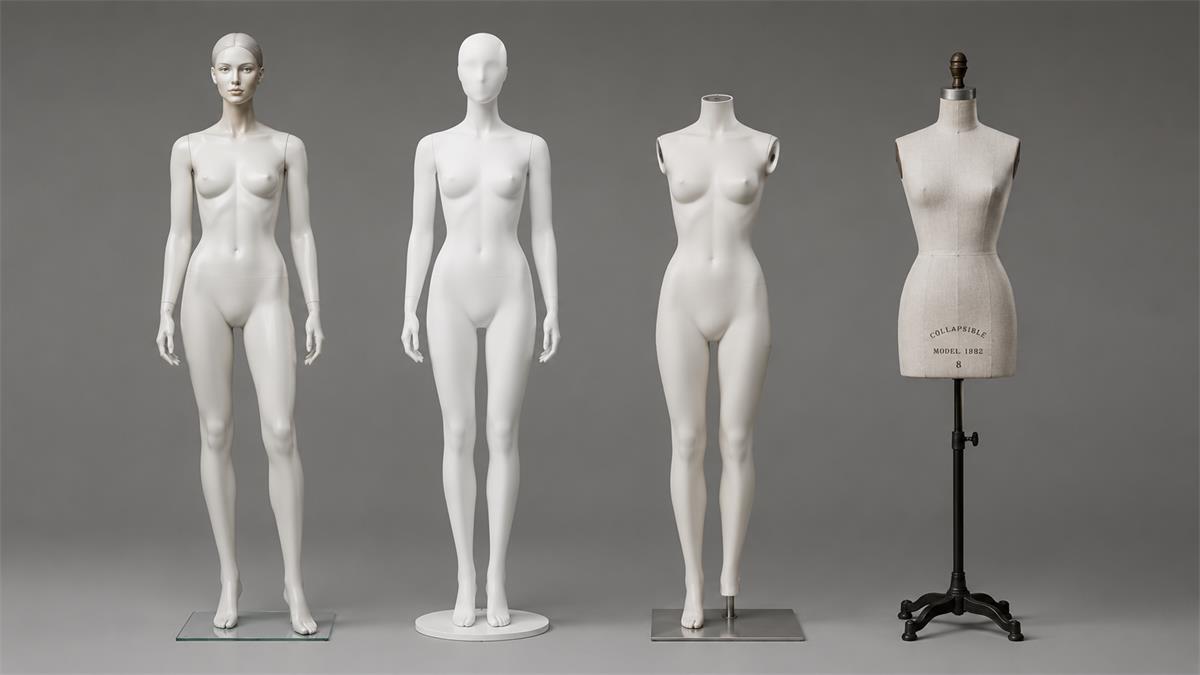
The mannequin is the anchor of the window; choose it before the props. The right form depends on your merchandise, your brand tone, and how much styling labor you can spend each month. A boutique mannequin with an abstract finish suits minimalist brands, while a realistic form sells outfit-driven fall layering better.
Before you buy or pull from storage, weigh the four main options. The table below compares them on the criteria store owners actually feel: styling time, garment fit, and the vibe the window projects.
| Mannequin Type | Best For | Strengths | Limitations |
|---|---|---|---|
| Realistic (full features) | Department-style fall lookbooks, family stores | Shows true garment drape; makeup and wigs read warm and seasonal | Slowest to dress; wigs and features date fast; higher cost |
| Abstract / faceless | Fashion boutiques, minimalist brands | Timeless; no expression to clash with any theme; fast to restyle | Cannot show eyewear or hats convincingly; less emotional pull |
| Headless / partial | Small windows, apparel-first displays | Cheapest full-body option; keeps focus 100% on clothing | No storytelling from posture above the neck; weaker at night |
| Dress form (torso) | Dresses, knitwear, jewelry layering | Fits tight windows; vintage look pairs naturally with autumn props | Cannot wear pants or full looks; no pose variety |
Two practical notes from the shop floor. First, matte finishes photograph better than gloss under warm fall lighting; gloss throws hotspots that ruin street photos. Second, a seated or leaning pose beats a standing one for autumn scenes because fall stories are about slowing down: a figure on a bench with a scarf half-wrapped tells that story on its own.
If your current forms are chipped or yellowed, fall is the season to deal with it, since warm spotlights magnify every surface flaw. Browse the female mannequins, male mannequins, and dress forms collections to compare finishes and poses against the table above.
How do you style mannequins for a fall window?
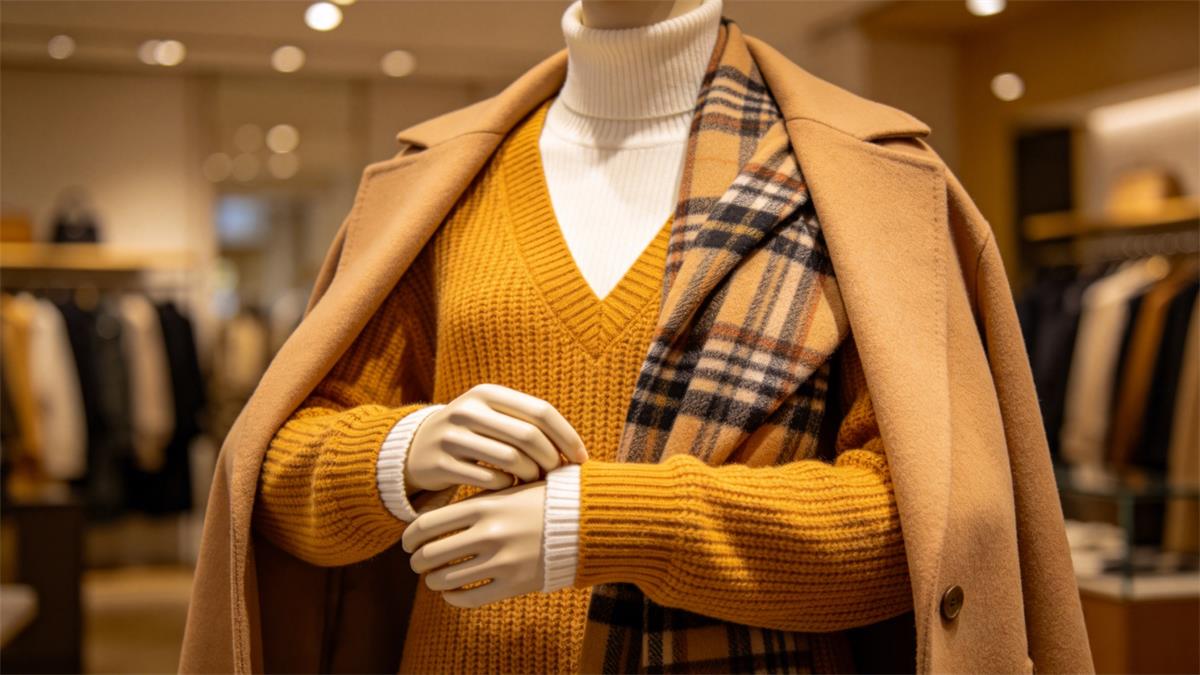
Style fall mannequins around layering, texture, and one hero color. Autumn is the only season where a full outfit story (base layer, knit, coat, scarf, boots) reads as natural rather than overdressed, so use every layer to add merchandise depth per figure.
A repeatable 5-step method:
Pick one hero product per figure. A rust wool coat, a plaid blazer, a statement boot. Everything else on the mannequin supports it. Windows fail when every item screams.
Layer in threes. Base (turtleneck or shirt), middle (knit or vest), outer (coat draped or worn open). Three visible layers per figure is the sweet spot; four turns to clutter.
Break one rule of symmetry. Roll one sleeve, half-tuck the scarf, let one coat hang off a shoulder. Perfect symmetry reads as a catalog; a small imperfection reads as a person just left.
Angle figures toward each other or toward the door. Two mannequins facing each other imply conversation; a trio in a shallow V guides the eye to the hero figure in the middle. Never line them up flat like a police lineup.
Connect the floor. Scatter three to five leaves at the base, place one prop (a crate, a lantern, a stack of books) at knee height to bridge the vertical gap between floor and figure.
Group heights matter more than most owners think. Mix one standing form, one seated, and one dress form or child mannequin and the window gains a skyline. Flat rooflines bore the eye; varied ones hold it.
Color palette: anchor in one warm dominant (terracotta, burgundy, or mustard) plus one cool counterweight (forest green or deep navy) and one neutral (cream, camel, or grey). The cool counterweight is the trick most windows on your street will miss; an all-orange window in October disappears among its neighbors.
What props and materials build an autumn scene?
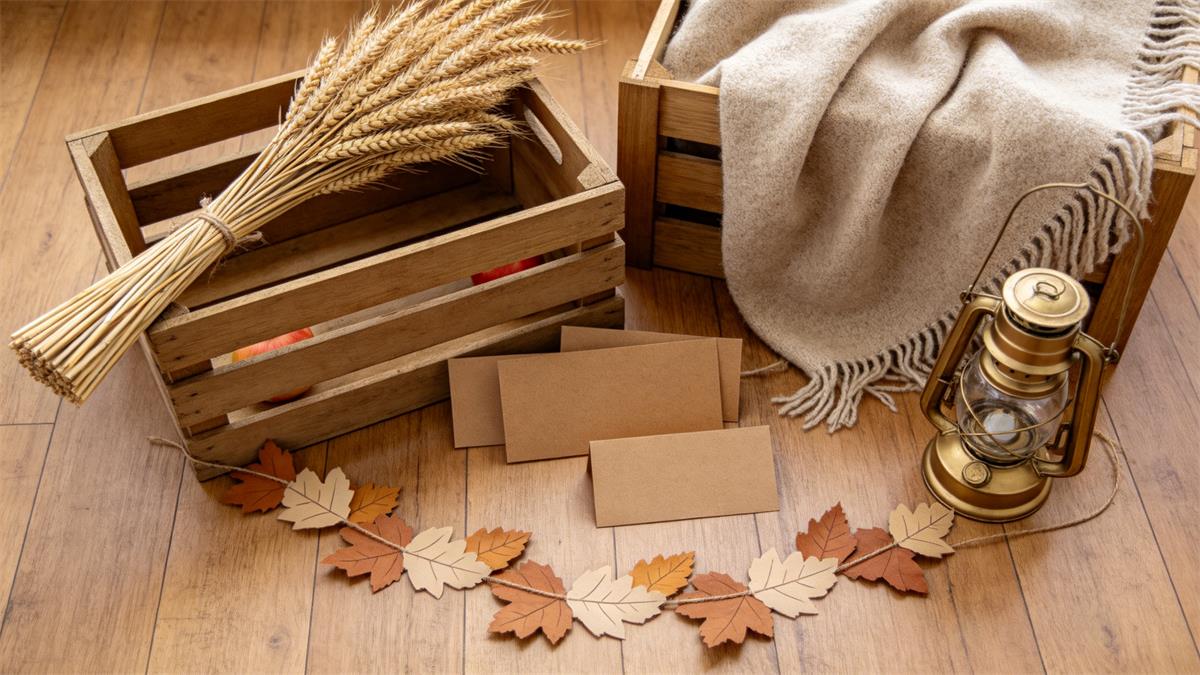
Props should support the merchandise, not compete with it. The strongest fall windows in recent seasons lean on natural, reusable textures rather than plastic pumpkin piles: raw linen backdrops, wooden crates, dried wheat bundles, wool throws, moss mats, stacked vintage books.
There is a soft sustainability angle here that customers notice. Wooden crates and linen panels get reused for the winter and spring windows; a plastic foliage curtain gets landfilled in November. Buying three or four quality reusable props costs more up front and less per season, and "we reuse our display props" is a story boutique customers respond to. Keep the eco note in your window signage subtle; one small card beats a lecture.
A working props list for a 6-to-10-foot boutique window, sourced for roughly $150-$400:
2-3 wooden crates or apple boxes (risers and floor interest)
1 large paper or fabric leaf garland (statement piece, reusable yearly)
Dried wheat, pampas, or branch bundles in a floor vase
1 wool or chunky-knit throw (drapes over a crate or a mannequin arm)
Warm-white string lights or 2 battery lanterns
Kraft-paper price or story cards, hand-lettered
Skip real produce. Real pumpkins and apples soften, attract flies, and stain flooring within two weeks under warm spotlights; quality faux versions survive to next year. The V&A Museum's archive of retail display history shows how far a few well-made props carry a scene when the composition is right; craft beats quantity, and it has since window dressing began in the 1890s.
How do you light a fall display so it works after dark?
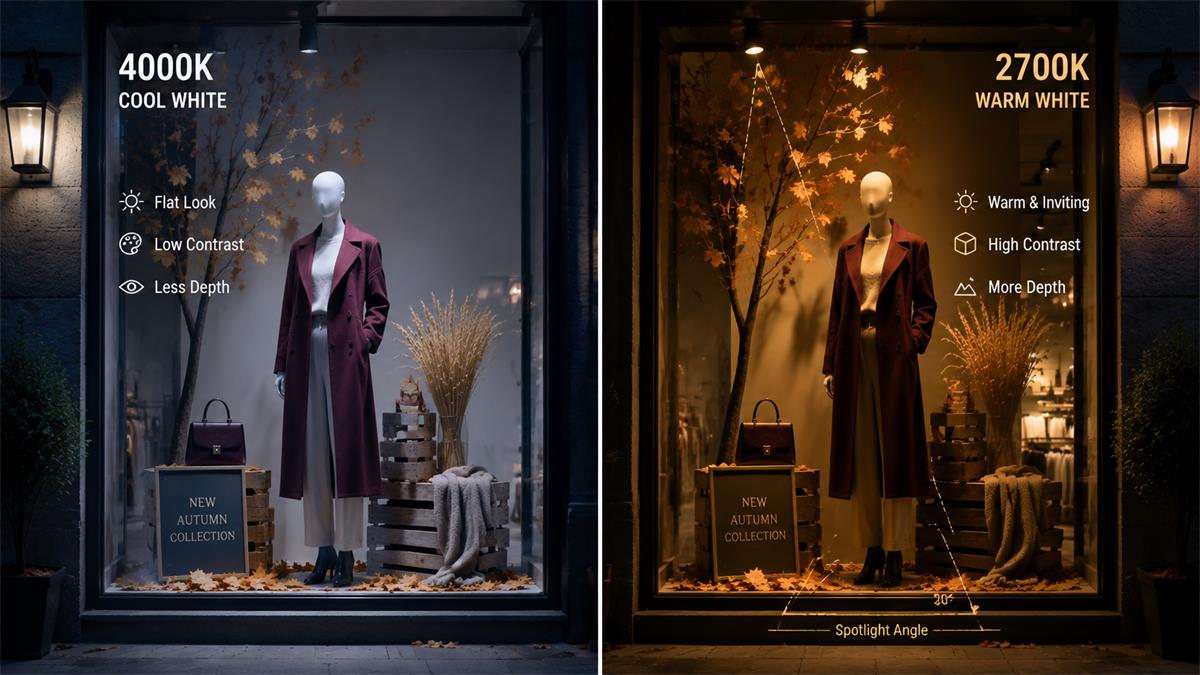
Light your fall window with warm-toned LED spotlights in the 2700K-3000K range, angled at roughly 30 degrees from above. That color temperature mimics low autumn sun, flatters knitwear texture, and makes amber and rust tones glow instead of flattening out.
Daylight-balanced (4000K+) fixtures are the most common lighting mistake in seasonal windows. They turn a cozy scene clinical.
Three placement rules:
Key light on the hero figure. One focused spot on your main mannequin, roughly 30% brighter than the rest of the window. The eye goes where the light is.
Accent from a low angle. One small uplight or lantern at floor level adds long shadows and depth, the visual signature of autumn.
Leave shadow zones. A window lit evenly everywhere has no drama. Darkness around the edges frames the scene like a stage.
Check the display after sunset during the first week. Days shorten fast after the September equinox, and by late October most US commuter traffic passes your window in the dark. A window that only works in daylight is a half-time player. Put the lights on a timer running to at least 10 pm; late dog-walkers window-shop too, and they come back on Saturday.
How do you plan the fall-to-holiday transition?
Design the fall window so 40-50% of it survives into the holiday set. Wooden crates, string lights, neutral backdrops, and mannequins in dark-neutral base layers all carry through; only the foliage, color accents, and hero garments need to change. This is the "transformative display" approach: build the bones once in August, then re-skin in early November over one evening instead of rebuilding from zero.
The calendar pressure is real. Between November 1 and Thanksgiving you will be juggling Black Friday prep, holiday inventory, and staffing. A window teardown you can do in 3 hours instead of 2 days is a gift to your future self.
Practical bridge plan:
Late October: remove Halloween accents the morning of November 1. Nothing ages a storefront like a cobweb on November 3.
First week of November: swap autumn leaves for evergreen sprigs, warm ambers for deeper reds and golds, harvest props for wrapped-gift boxes. Keep the crates and lighting rig.
Mid-November: re-dress mannequins in holiday-party or gift-focused looks. Fall knits shift to velvet, satin, and metallic accents.
Shopify's retail research on holiday windows makes the same point from the conversion side: shoppers begin holiday browsing before Thanksgiving, so a window still showing October in mid-November hands those early buyers to your neighbor.
Frequently Asked Questions
When should fall decorations go up in a retail store?
Mid-August to early September is the standard install window for US boutiques. Early fall stock arrives in July, back-to-school traffic peaks in August, and wholesale marketplace CREOATE advises September at the very latest. Installing early extends the selling life of your autumn collection; waiting past mid-September wastes the season's strongest traffic weeks.
How long should I leave a fall window display up?
Four to six weeks per theme, with a mid-cycle refresh around week three. Displays older than six weeks go visually invisible to daily passersby. Most boutiques run two fall sets: an early-autumn window (late August to early October) and a harvest or Halloween-accent window (October), then bridge into holiday the first week of November.
Can I create a fall window display without mannequins?
Yes, using dress forms, hanging garments on branch rails, or flat-lay compositions with crates and risers. It works for accessories and home goods stores. For apparel, though, a mannequin earns its space: it shows drape, proportion, and full-outfit styling that a hanger cannot, which is why outfit-driven fall layering windows nearly always anchor on at least one figure or dress form.
How much does a display mannequin cost?
Standard retail mannequins run roughly $100 to $500 per figure depending on material, finish, and pose; premium realistic or custom-designed forms cost more. Dress forms start lower, around $50 to $200. For a fall window, matte-finish abstract or headless forms in the mid range handle layered knitwear and coats well. Buying two or three quality forms you restyle each season costs less over three years than replacing cheap ones that chip.
What are the best colors for a fall retail window?
Anchor with one warm dominant (terracotta, burgundy, mustard or muted orange), add one cool counterweight (forest green or deep navy), and one neutral (cream, camel, grey). The two-warm-one-cool structure keeps the window from melting into the orange sea every other storefront becomes by October. Pantone's autumn/winter color reports are a fast reference for the exact shades buyers already saw in the fall collections.
Ready to build your fall window?
The stores that win September start in July. Audit your mannequins this week: check finishes under a warm light, count your poses, and note what the layered-knit story will need that your current forms cannot do.
If the audit turns up gaps, browse our female mannequins, male mannequins, kids mannequins, and dress forms collections, or contact our design team for pose and finish advice matched to your window dimensions. Custom finishes and poses are available for brands that want a figure nobody else on the street has.
Your glass is the best ad space you own. Give it a season worth stopping for.