
Window & In-store Display Ideas: The Complete Inspiration Guide
A window display is a curated, three-dimensional scene built inside a storefront window to catch the eye of passersby, communicate a brand story, and pull foot traffic into the store. In-store displays do the same work deeper on the selling floor, guiding shoppers toward hero pieces and complete looks. Together they are the most cost-effective marketing a brick-and-mortar retailer owns. Research consistently shows that eight in ten shoppers base buying decisions on what they see, and a strong window can lift foot traffic by roughly 23 percent. This guide walks through a repeatable framework for building displays that stop the scroll on the sidewalk: concept, mannequin hero, composition, color, lighting, layout, and a measurement habit that keeps the window earning its place.
What makes a window display stop a shopper in three seconds?
A window display has a very short time to win attention. Most passersby decide in the first few seconds whether to slow down, and the decision is almost entirely visual. Studies on retail environments put the share of shoppers who base buying decisions on what they see in store at about 80 percent, and a well-built window is associated with a roughly 23 percent lift in foot traffic compared with a stale or empty one.
The job of the window is not to show everything you sell. The job is to show one clear idea so strongly that a stranger on the sidewalk feels a pull. That pull comes from three things working together: a single hero, a story the eye can read at a glance, and light that tells the viewer where to look.
A good test is to stand across the street and give the window three seconds. If you cannot name the hero product and the mood in that time, the display is trying to say too much. Strip it back to one message and the window starts to work.
How do you build a window display in seven repeatable steps?
You do not need a design degree to build a window that performs. A simple, repeatable sequence keeps every install consistent and lets a small team reproduce good results. Follow these seven steps.
Set one objective. Pick the single job for this window: launch a collection, clear a season, promote a hero piece, or tell a brand story. One objective keeps the scene focused.
Choose a concept. Give the window a theme a passerby understands in a glance: "cozy fall layering," "holiday gift edit," or "minimalist summer." The concept is the sentence your window speaks.
Cast the mannequin hero. Select the form that carries the story (see the next section). The hero should wear the complete look, not a single item.
Compose the focal point. Place the hero where the eye lands first, usually centered or on a sightline from the sidewalk. Build supporting elements around it.
Lock the color story. Limit the palette to three to five tones so the scene reads as intentional rather than random.
Light it with purpose. Use a warm key light on the hero and a tighter accent to create depth. Avoid flat, overhead wash.
Measure and refresh. Count door entries during the install week versus the prior week, and change the window before it goes stale.
This framework is the backbone of every idea in the rest of this guide. When you treat the window as a small, repeatable system instead of a one-off craft project, results become predictable.
Which mannequin works best as the window hero?
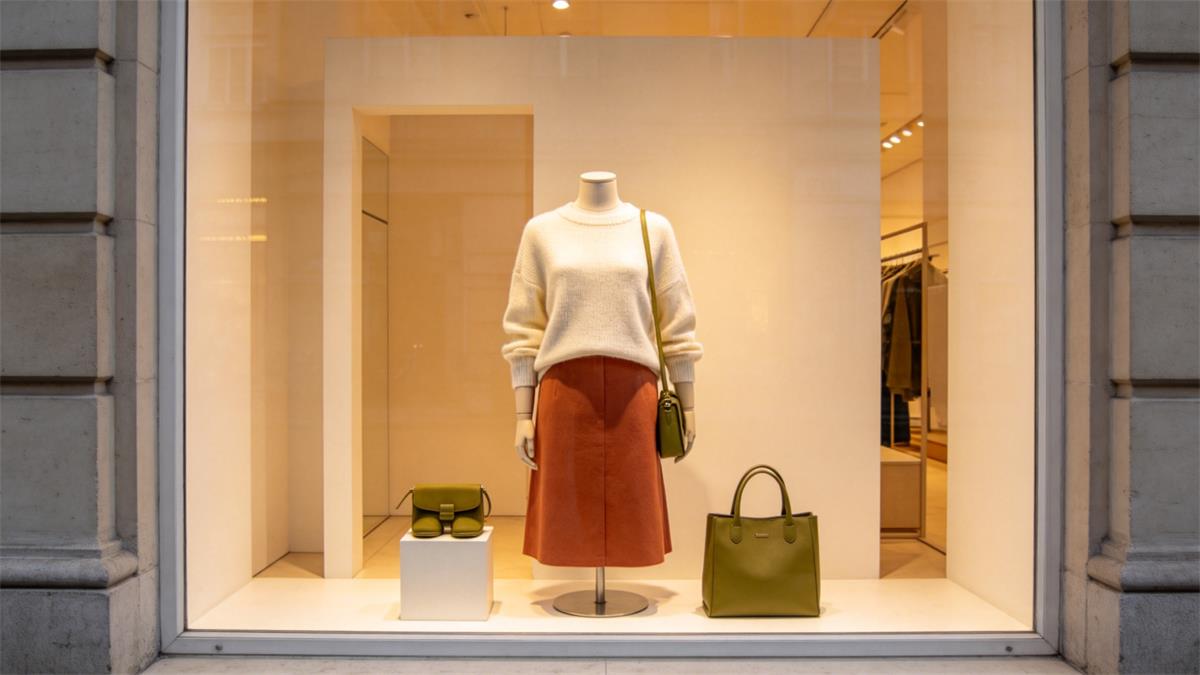
The mannequin is usually the element a passerby connects with first, because it shows how clothing is worn and lets a shopper picture themselves in the outfit. Displays that use mannequins are associated with a sales lift of around 66 percent compared with displays that do not, which is why the form deserves a deliberate choice rather than whatever is in stock.
Different forms play different roles in a window. The table below maps each type to the job it does best.
| Mannequin type | Best window role | Reads at distance? | Use it when |
|---|---|---|---|
| Female form | Hero of the apparel story | Strong | Selling women's fashion and complete looks |
| Male form | Balances a duo or trio | Strong | Menswear or mixed-gender edits |
| Kids or child form | Builds a family or back-to-school scene | Moderate | Children's boutique and seasonal themes |
| Dress form | Spotlights garment detail | Weak (needs a close view) | Tailoring, texture, and fabric stories |
| Headless or abstract form | Makes a minimalist brand statement | Strong silhouette | Concept stores where the window is art |
A single strong female or male form in a complete outfit is the safest starting point for most boutiques. If you want to go deeper on the full range of options, our guide to types of mannequins for retail breaks down every form family and how to match it to your space.
For day-to-day styling technique, see how to style a mannequin for the pose, color, and layering moves that make a form look natural rather than stiff.
How do color and lighting set the mood of a display?
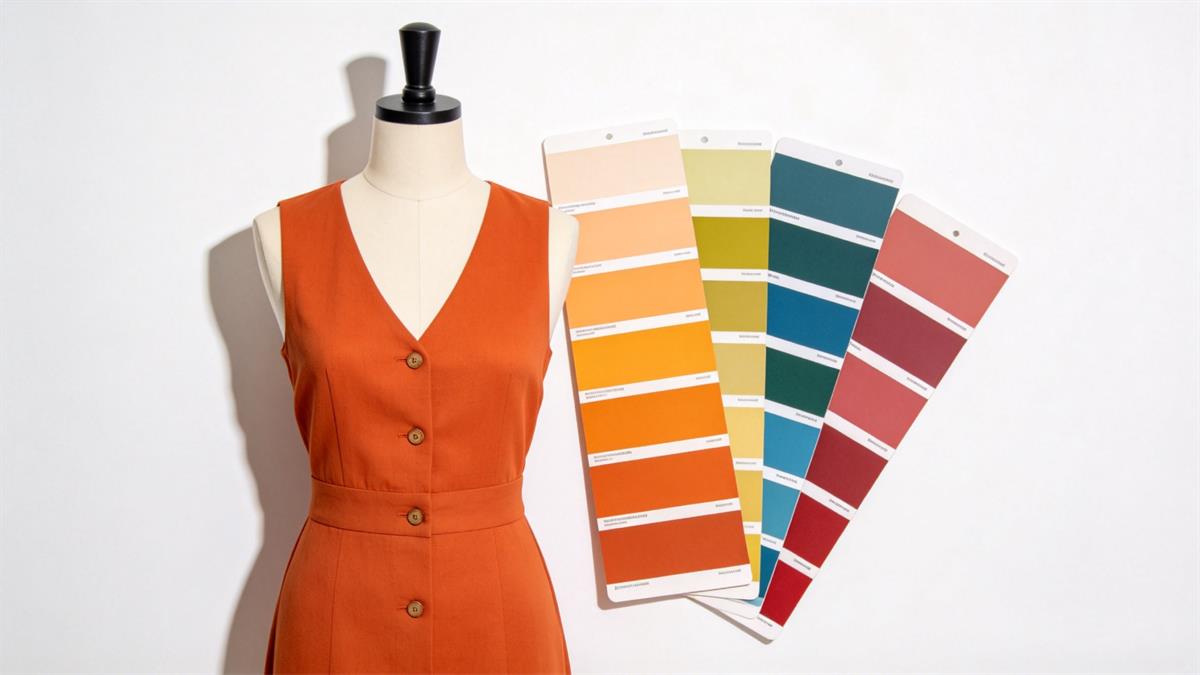
Color is the fastest mood signal in a window. Before a shopper reads a single word, the palette has already told them whether the store feels calm, bold, playful, or premium. Keep the story to three to five tones and let one color dominate.
| Palette move | Mood it creates | Best for |
|---|---|---|
| Warm neutrals (cream, terracotta, olive) | Calm, premium, inviting | Everyday boutique and fall edits |
| High contrast (black and white plus one pop) | Bold, modern, editorial | Launches and fashion-forward stores |
| Monochrome with a metallic accent | Luxe and cohesive | Holiday and eveningwear |
| Pastel or seasonal tone | Playful and timely | Spring and seasonal promos |
Lighting does the second half of the mood work. Where color tells the viewer what to feel, light tells them how strongly to feel it. A flat overhead wash flattens the scene; a warm key light on the hero with a tighter accent creates depth and draws the eye.
For retail windows, a warm white in the 3000 to 3500 Kelvin range with a focused accent spotlight reads as premium and raises the perceived value of the product. Cool, blue-heavy light can feel clinical, so reserve it for tech or athletic concepts. Always light the hero first, then decide what else needs to be seen.
What window layout works in a small shop?
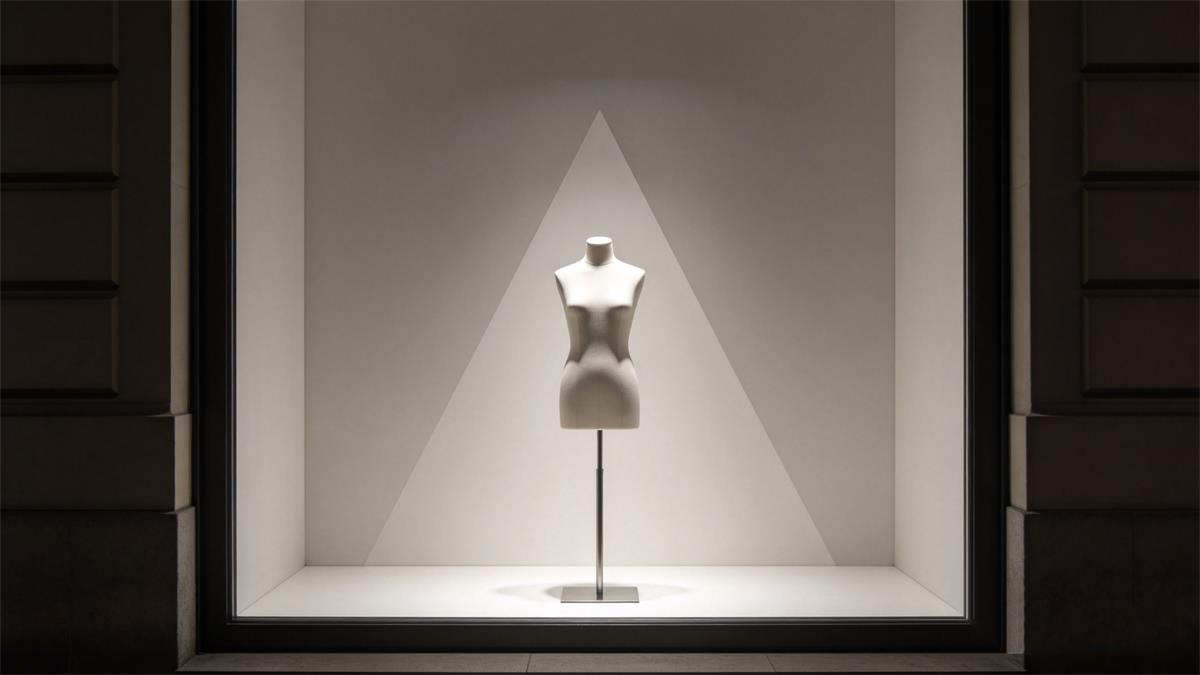
Small shops win by being disciplined, not by showing more. A cramped window with ten items reads as a sale bin; a window with one hero and deliberate negative space reads as a destination. The layout you choose changes how the eye travels.
| Layout | What it does | Watch out for |
|---|---|---|
| Pyramid (largest item on top) | Guides the eye and builds hierarchy | Can feel static if overused |
| Odd-number grouping (three or five) | Keeps the eye moving around the scene | Clutter if the items are unrelated |
| Triangle composition | Balances tension between hero and supports | Needs a clear focal point |
| Minimalist (one hero, lots of space) | Feels premium and breathable | Looks empty if the hero is weak |
For a narrow boutique window, the minimalist or triangle approach usually outperforms a packed shelf. Give the hero room to breathe, then place one or two supporting pieces off to the side at different heights. The empty space is not wasted; it is what makes the hero legible from the sidewalk.
If your footprint is tight, our clothing boutique display ideas piece goes deeper on floor plans and compact merchandising that still feels open.
How often should you change window and in-store displays?
A display ages faster than most retailers expect. Regular customers stop seeing a window they walk past every day, a phenomenon merchandisers call habituation. The fix is a refresh cadence, not a perfect first install.
A practical rhythm is to change the window every two to four weeks and rotate key in-store forms on a similar schedule. Stores that change displays seasonally see shoppers spend about 14 percent more time in the space, because novelty pulls people back into the exploration loop.
You do not need a full rebuild each time. Often a new color story, a swapped hero garment, or a moved focal point is enough to make the window feel new. The goal is to give regulars a reason to look again, and to keep first-time passersby from assuming the store is closed or stale.
How do you plan displays for holiday and seasonal peaks?
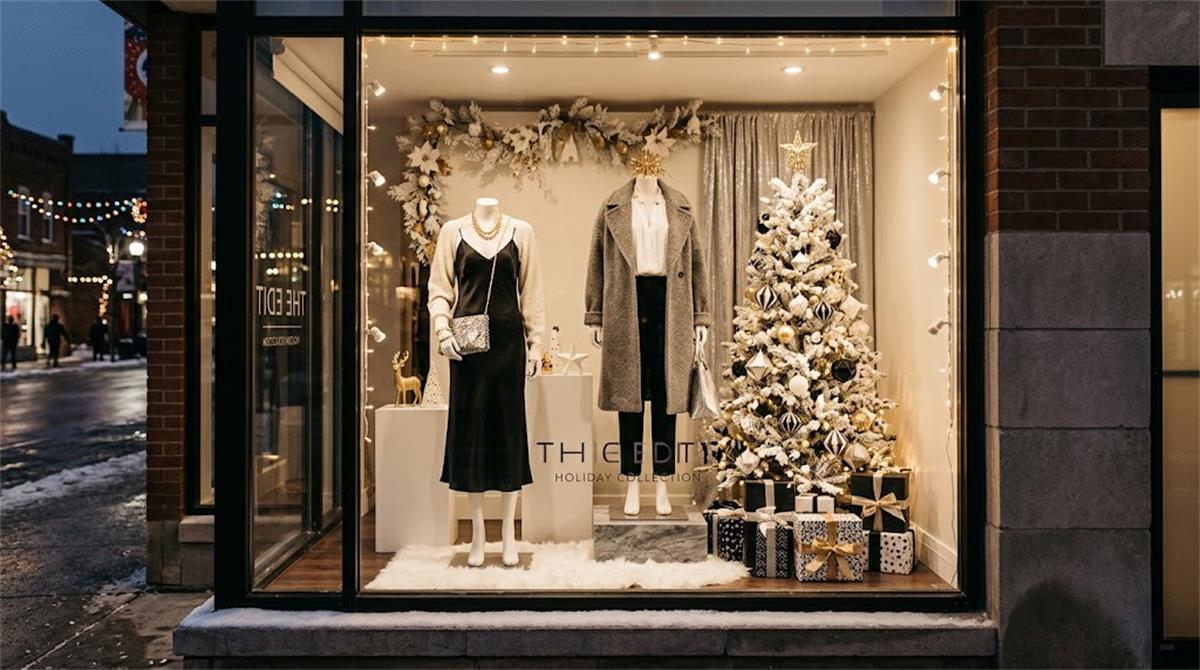
Holiday windows are where window display ideas pay for the whole year, because that is when foot traffic and gifting intent peak. The National Retail Federation forecast the 2025 November to December retail season at between 1.01 trillion and 1.02 trillion dollars, a record that shows how much is decided in the final two months.
The mistake most stores make is starting too late. Plan a holiday or seasonal window at least six to eight weeks before the node so production, props, and install timing line up. That lead time is why our fall window display ideas guide publishes in late summer and our back-to-school window display ideas land before the first week of school.
A simple seasonal calendar keeps you ahead:
Back to school (late July to August): family and campus edits, durable kidswear heroes.
Halloween (six to eight weeks prior): bold, playful scenes that read from the sidewalk.
Black Friday (November): clear offer, hero product front and center, fast path from window to shelf.
Christmas (six to eight weeks prior): gift编辑, warm light, monochrome with metallic accent.
For boutique-specific window angles year round, see boutique window display ideas.
How do you make displays people share on Pinterest and LinkedIn?
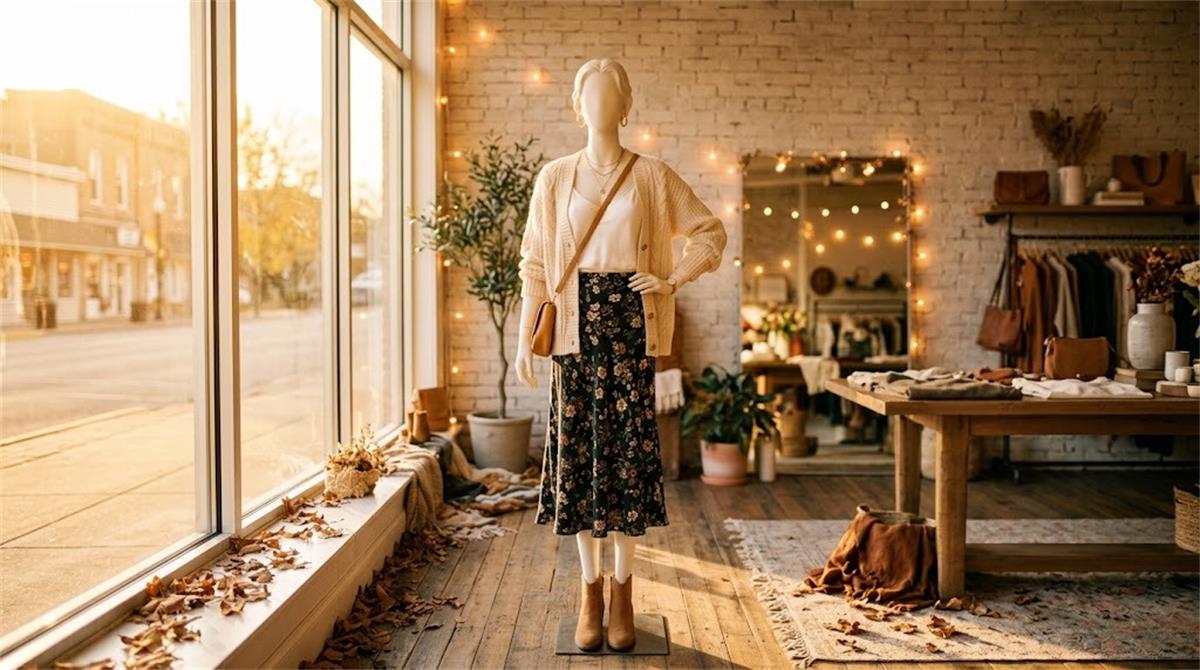
A window is no longer only seen by the people walking past it. A single photogenic install can travel across Pinterest and LinkedIn and bring a store free reach it could never buy. The stores that win this are the ones that design the photo, not just the product.
Build at least one "shot" into every window: a clean head-on hero, a strong color block, or an unexpected prop that makes someone stop and frame it. Natural light from the side, a simple backdrop, and one bold element are usually enough. The scene should be understandable in a thumbnail, because that is how it travels.
On LinkedIn, the angle that performs is the craft story: why you chose the concept, how the mannequin pose carries the narrative, what the color story means for the brand. Share the process, not just the result, and the post becomes useful content for other retailers instead of a plain advertisement.
What does a window display scorecard look like?
A scorecard turns taste into a checklist you can run before every install. Walk the window against these six points and fix any fail before you call it done. This habit is what separates a display that earns its place from one that merely fills the glass.
| Check | What good looks like | Pass or fix |
|---|---|---|
| Single clear focal point | The eye finds one hero within two seconds | Pass or fix |
| Mannequin reads at 20 feet | Pose and outfit are visible from the sidewalk | Pass or fix |
| Lighting has a warm key plus accent | Hero is lit, shadows are intentional | Pass or fix |
| Color story limited to three to five tones | No rainbow clutter | Pass or fix |
| Negative space present | Room to breathe, not crammed | Pass or fix |
| Photo-ready from outside | Worth a Pinterest or LinkedIn shot | Pass or fix |
Run this scorecard from across the street, not from inside the store. The window lives in the street, so it has to be judged from the street.
Frequently Asked Questions
What is the difference between a window display and an in-store display?
A window display is built to be seen from the sidewalk and exists to pull strangers into the store, so it needs a bold, simple story that reads at distance. An in-store display works on shoppers who already entered and should feel shoppable up close, with reachable sizes and coordinating pieces nearby. The window sells the walk-in; the floor sells the basket.
How many mannequins should a small shop put in one window?
One strong hero form is enough for most small boutique windows, and two or three only if they tell one connected story at different heights. A packed window reads as clutter and weakens the focal point. Start with a single complete look, then add supports only if the negative space still feels intentional.
How do you choose a mannequin color or skin tone for a display?
Match the form's finish and skin tone to your brand, not to a trend. A minimalist store reads better with a matte abstract form, while a romantic boutique suits a realistic warm-toned figure. The mannequin is part of the brand story, so its look should feel like a member of your cast rather than a random extra.
What lighting temperature works best for retail windows?
A warm white in the 3000 to 3500 Kelvin range with a focused accent spotlight reads as premium and raises perceived product value. Cool blue-heavy light can feel clinical, so reserve it for tech or athletic concepts. Always light the hero first, then decide what else needs to be seen.
How far ahead should you plan a holiday window display?
Plan a holiday or seasonal window at least six to eight weeks before the node so props, production, and install timing line up. That lead time is why fall guides publish in late summer and back-to-school guides land before the first week of school. Starting early protects the window from last-minute, lower-quality execution.
About the Author
Brook Chen is a Visual Merchandising Specialist at awmannequins.com. With over 8 years of experience designing window and in-store displays for retail brands across the US, Canada, and Australia, she helps boutiques and stores translate seasonal concepts into store-ready merchandising.