
Mannequin Pose Selection: How to Match Pose to Merchandise
Mannequin pose selection is the decision about how many joints a form needs, which stance each one holds, and which garments that stance can actually sell. It is the part of a mannequin order that gets the least scrutiny and changes the display the most. A still, arms-at-sides form flatters a tailored coat and makes a sundress look like a hospital gown. A mid-stride form sells athleisure and makes a suit look like it is fleeing the building. Adjustable pose mannequins have moved from novelty to default in fashion retail for one unglamorous reason: a form with movable arms and legs does the work of two or three fixed forms, and it lets a single window answer to a season that now changes faster than a fixture budget. This guide walks through the joint types worth paying for, how stance maps to merchandise, what each option costs, and the spec lines to put in an RFQ. For the wider framework behind these choices, start with the mannequin selection guide.
Why are adjustable pose mannequins suddenly the default?
Because a poseable form is a multi-season asset in a business that now re-dresses its windows every two weeks.
The commercial pressure behind that shift is measurable. K-12 families planned to spend a record $43.3 billion on back-to-school in 2026, with $250.29 per student landing in clothing and accessories, and 39% of shoppers naming clothing stores as a destination (NRF, July 2026). Only half of those shoppers planned to buy online, down from 55% the year before. When the category's biggest spending moments keep resolving inside a physical store, the form in the window is doing first-line sales work, not decoration.
A fixed form can hold one of those moments. A poseable form can hold all of them. The same figure that carries a structured coat in October can hold a layered knit in December and a linen set in April, because the arms and legs move to where the garment needs them. That is the whole argument for adjustable pose mannequins, and it holds up better than any aesthetic case.
Cost is the second half of it. Retailers spend $150 to $1,500 or more per full-body mannequin, with material, realism and poseability driving the number more than size does (Shopify, May 2026). Paying once for a form that repositions beats paying three times for forms that do not.
That shift has a shelf-life argument behind it too. A mid-stride form does the work of two forms in one window position, which matters most for stores running four to eight themes a year on a two-week rotation.
What do the different joint types actually let you do?
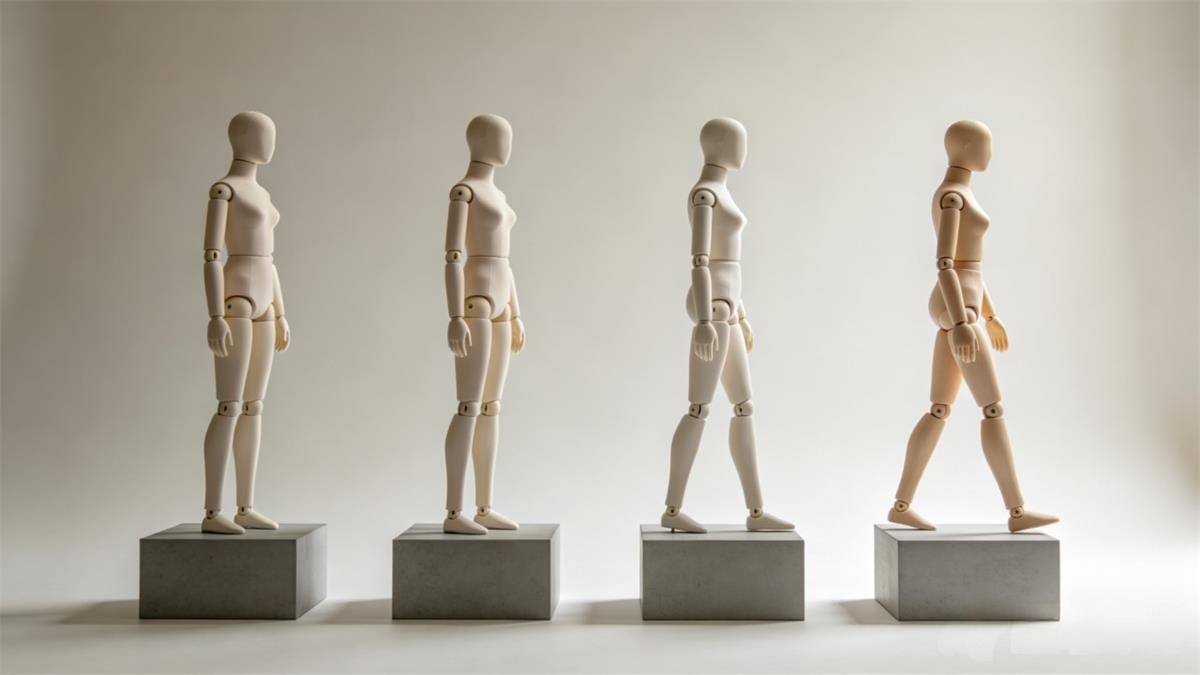
They let you move different numbers of body parts, and the count is what you are really buying.
The useful way to think about it is as a ladder. Most discussions of "poseable" collapse four genuinely different products into one word, which is why quotes for the same brief come back hundreds of dollars apart.
| Joint level | What moves | Typical mechanism | What it unlocks | Cost signal |
|---|---|---|---|---|
| Fixed | Nothing | Single mould, no joints | One look, held for years | Lowest |
| Semi-poseable | Arms at shoulder and elbow | Screw-clamped joints tightened after posing | Bag, scarf and hand-on-hip gestures | Entry |
| Multi-point articulated | Shoulders, elbows, wrists, fingers, hips, knees, head | Ball-and-socket at shoulder, hinge at wrist, tools supplied | Walking, seated and interaction poses | Mid to high |
| Flexible body | Whole form bends along a wire frame under a foam skin | Internal wire armature in PU foam | Soft, fluid poses a jointed shell cannot hold | Niche |
The mechanism matters because it decides how long a pose survives. Articulated forms clamp their joints with screws, and the assembly order is not arbitrary: components are fitted loosely, the pose is set with the garment already on the form, and only then are the screws finally tightened. Tools ship inside the box, and the same key is needed every time the pose changes. A form without that key is a form you cannot re-pose.
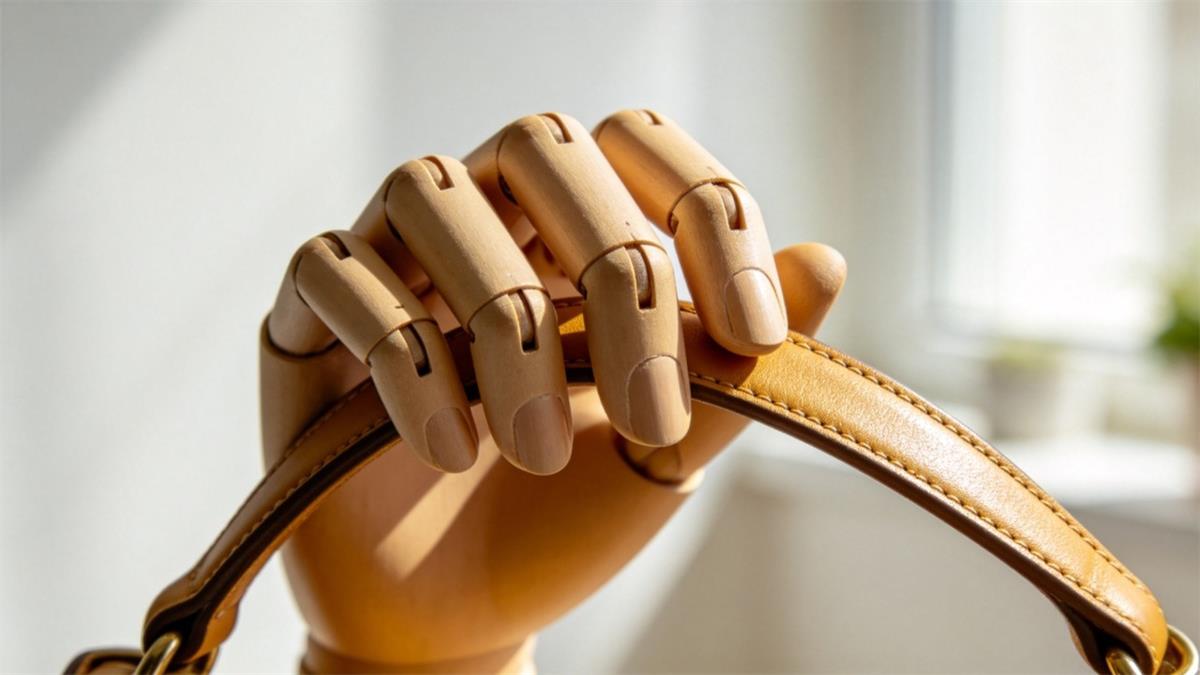
Multi-point articulation is the level most fashion retail now specifies, because fingers and wrists are what make accessory selling possible. A form whose hand can hold a strap sells a bag without a separate prop. A form with immovable fingers needs the bag balanced on an elbow, which reads as an accident.
Which pose suits which merchandise?
Match the stance to the garment's strongest selling argument, then keep it there for the season.
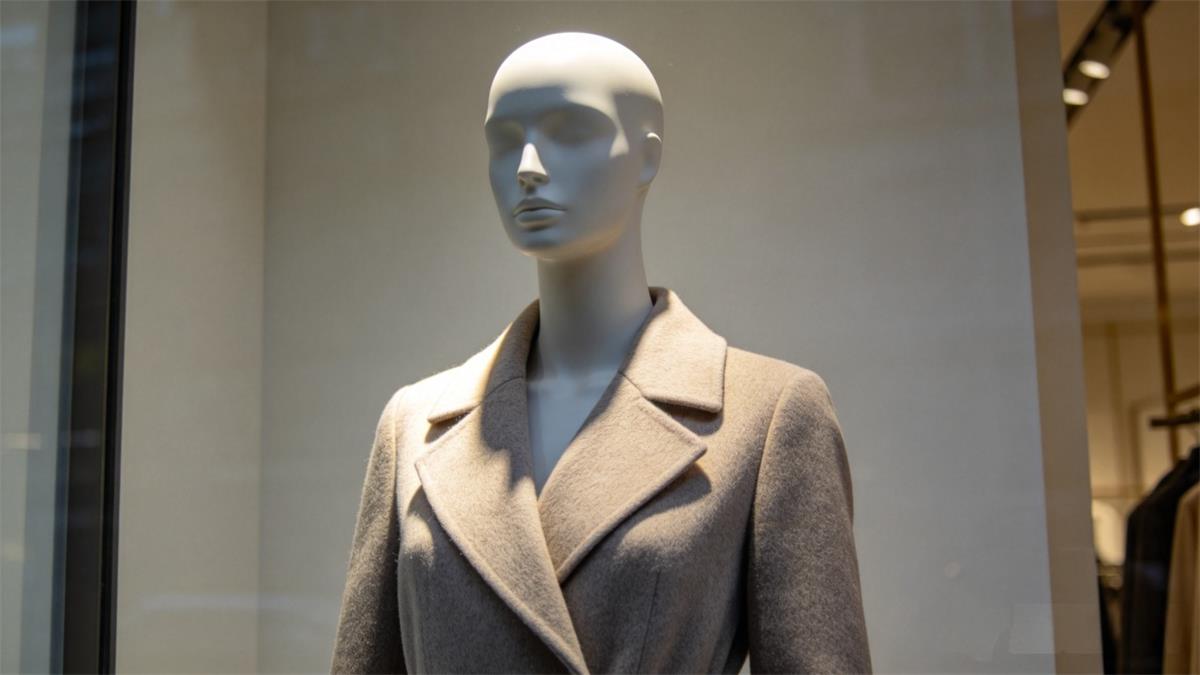
This is the decision that separates a display that sells from a display that merely stands. Store Supply Warehouse's buying framework makes the mechanical point plainly: arms at the sides show a jacket silhouette cleanly, while extended arms work better for displaying bags and jewellery, or for building a visual relationship between two forms (Store Supply Warehouse). Same form, same garment, different arm position, different product being sold.
| Merchandise | Pose that sells it | Pose that fights it | Why |
|---|---|---|---|
| Tailoring, coats, structured jackets | Still, arms at sides, weight even | Mid-stride, arms out | The cut is the argument; movement blurs the line |
| Athleisure, sportswear, denim | Walking, weight shift, one arm swung | Rigid symmetrical stance | The garment promises motion the pose must show |
| Dresses with drape or long hems | One leg bent, hand near hip | Deep stride | A bent leg releases the hem so the fall is legible |
| Knitwear, soft separates | Relaxed, arms slightly forward | Tension-filled angles | Soft goods need soft lines |
| Bags, jewellery, scarves | One arm extended or hand raised | Arms locked at sides | The accessory needs a body part to hang from |
| Separates and layered looks | Two forms turned toward each other | Both facing front | A pair reads as a look; two singles read as stock |
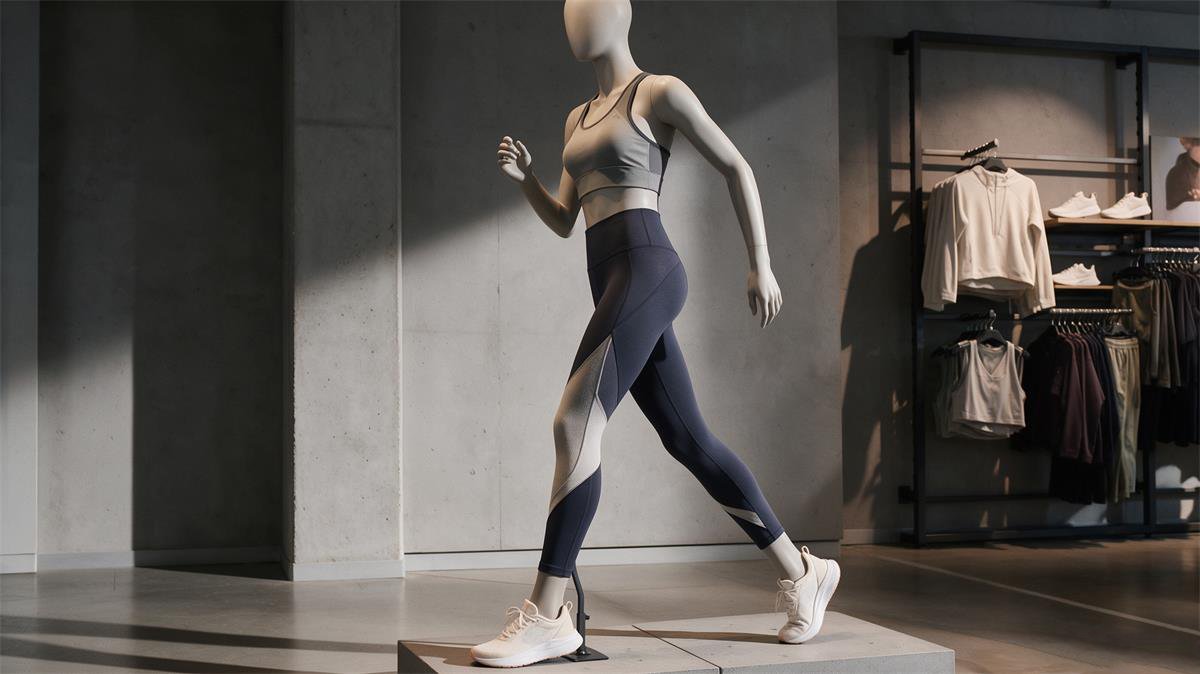
The pairing rule underneath the table is simple. If the garment's appeal is its construction, freeze the pose. If its appeal is its movement, move the pose. Form follows function here more literally than in most design advice.
Does a complicated pose cost you labour?
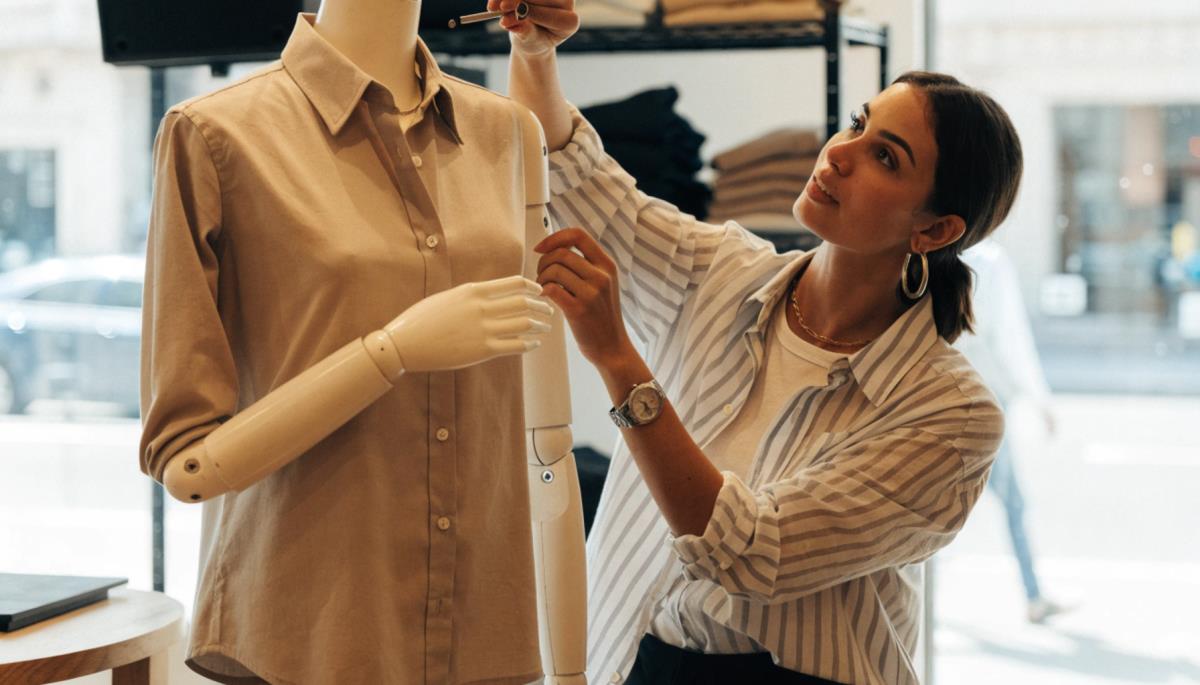
Yes, and the cost shows up in staff hours and breakages rather than on the invoice.
Morplan's buying guide names the trade-off directly: poses with bent arms or complex angles can slow staff down and increase the risk of breakage (Morplan). That single sentence should decide more pose briefs than it currently does.
Run the arithmetic on a window that changes every two weeks. A simple stance might take one staff member 20 minutes to dress. A dramatic, multi-angle pose on the same garment can take 45 minutes once you allow for pinned seams, an accessory that will not sit, and a hand that keeps slipping. Across 26 changeovers a year, that gap is roughly 11 hours of labour, and it arrives during the busiest trading weeks when staff time is scarcest.
Breakage compounds it. Joints that are wrenched rather than loosened, fingers used as hooks, and forms dragged fully dressed across a floor are how a $900 articulated form becomes a $200 repair. The practical compromise most independents land on is to keep one or two dramatic forms for a hero window changed four times a year, and run the weekly rotations on simpler semi-poseable figures.
How many poseable forms does a store actually need?
Fewer than most owners buy, if you assign each form a job instead of buying a matching set.
Three positions cover a typical independent. One articulated form holds the hero window, where the pose is the point. One semi-poseable form anchors the entrance sightline and carries the weekly outfit change. One simpler form sits near the fitting rooms, where the job is showing fit at close range and the pose barely matters. That mix spends the joint budget where shoppers actually look at it.
The argument for consistency still applies. Dimitri Koumbis, a visual presentation consultant quoted in Shopify's guide, warns that mixing mannequin types often reads as amateur and messy, and that retailers should stay consistent to present a cohesive message. The version of that rule worth following is not "buy identical forms." It is "keep one visual family." Finish, skin tone and pose energy should agree across every form on the floor, so a calm boutique does not run one athletic figure mid-sprint beside two static ones.
How do you write pose into a buying brief?
Hand your vendor a joint map and a stance description, not the word "poseable."
The word alone is the most common cause of a disappointing delivery, because it covers everything from screw-clamped elbows to a fully articulated frame. A workable spec names four things.
| Spec line | What to write | Why it prevents a bad delivery |
|---|---|---|
| Joint map | Which joints move: shoulder / elbow / wrist / fingers / hip / knee / head | "Poseable" alone delivers arms-only |
| Mechanism | Ball-and-socket at shoulder, hinge at wrist, screw-clamped, key supplied | Decides whether a pose holds or drifts |
| Stability | Support rod plus weighted base rated for off-centre poses | A complex stance topples on a light base |
| Tools and spares | Assembly key, spare screws, joint replacement parts | Without the key you cannot re-pose at all |
Two further lines save arguments later. State the finish and skin tone on the same line as the pose, since a form re-posed for a new season still has to match the family it stands with. And ask what the base and support rod are rated for, because a walking pose moves the centre of gravity forward and a base sized for a static figure will let it tip. If you are still deciding between a jointed form and a simpler dress form for a given position, the dress form display ideas comparison covers where each one earns its place on the floor.
How often should you change a pose?
Change the pose with the merchandise cycle, not on a fixed calendar, and expect the pose to do less work than the clothing.
The habit that ages a display fastest is re-dressing without re-posing. A form that holds the same stance while wearing its fourth consecutive outfit stops registering as a new display. Rotating the pose at the same time as the outfit resets the shopper's attention without spending anything.
A practical rhythm for an independent: refresh the hero window every 10 to 14 days, rotate the pose on the entrance form roughly monthly, and leave the fitting-room form alone unless its stance no longer suits the merchandise near it. Every changeover is also a maintenance check. Tighten the joints, look for cracks at the shoulder and hip where stress concentrates, and confirm the support rod is still seated. A five-minute check at each rotation is what keeps an articulated form on the floor for years instead of months.
If a pose has stopped earning its complexity, simplify it. A still form that is easy to dress and photographs cleanly will outperform a dramatic one that costs an hour a week and gets avoided by staff.
Ready to match pose to your floor?
Start with the merchandise you sell most of, then specify the joints that stance needs rather than the maximum available. Browse female mannequins, male mannequins or dress forms, or talk to our team about a joint map and stance brief for a specific window. If you would rather see the whole framework first, the mannequin selection guide covers size, material and budget in one place.
About the Author
Charles Yang is a 3D Model Designer at awmannequins.com. With over 6 years of experience in retail fixture 3D modeling and product visualization, he supports retail brands with renders, virtual merchandising, and e-commerce-ready 3D assets.
Frequently Asked Questions
What is mannequin pose selection?
Mannequin pose selection is the process of choosing how many joints a display form needs and which stance each form holds, based on the merchandise it will present. It covers the joint map (shoulder, elbow, wrist, fingers, hip, knee, head), the mechanism that locks a pose, and the stability needed to hold that pose safely in a high-traffic area.
Are adjustable pose mannequins worth the extra cost?
They are worth it when a store changes displays often. Retailers spend $150 to $1,500 or more per full-body mannequin, with poseability one of the main drivers of price. A poseable form that supports 26 wardrobe changes a year usually costs less than buying two or three fixed forms to cover the same range of looks.
Which pose is best for a retail window display?
Match the pose to the garment's strongest selling point. Use a still, arms-at-sides stance for tailoring, coats and structured jackets, and a walking or weight-shifted stance for athleisure, sportswear and denim. For a dress with drape, one leg bent releases the hem so the fall reads clearly.
Do posable mannequins break easily?
Joints fail most often from handling, not from normal display use. Poses with bent arms and complex angles slow down dressing and raise breakage risk, and joints wrenched rather than loosened are the usual cause. Keep a hero form for the few dramatic looks and run weekly rotations on simpler forms, and check and tighten joints at every changeover.
How many poseable mannequins does a small store need?
Three positions usually cover an independent store: one articulated form for the hero window, one semi-poseable form at the entrance for the weekly outfit change, and one simpler form near the fitting rooms. Keep finish, skin tone and pose energy consistent across all three so the floor reads as one visual family.
What should a pose specification include?
A pose specification should name the joint map, the joint mechanism, the base and support rod rating for off-centre poses, and the tools and spare parts included. The word "poseable" on its own delivers anything from screw-clamped elbows to a fully articulated frame, so the joint map is the line that prevents a disappointing delivery.