Boutique Window Display Ideas: A Styling Playbook for Small Shops
A great window is the cheapest salesperson you will ever hire. It works every hour your store is closed, it never calls in sick, and it decides whether a stranger becomes a customer before they touch a single rack. For a boutique owner or visual merchandiser, the window is not decoration. It is the first and most important sentence your shop speaks to the street.
This playbook walks through practical, budget-aware boutique window display ideas you can build around the mannequin as hero. No film degree required, no six-figure install. Just a clear method you can repeat every few weeks and a few styling rules that reliably stop feet on the sidewalk.
What makes a boutique window display actually stop someone?
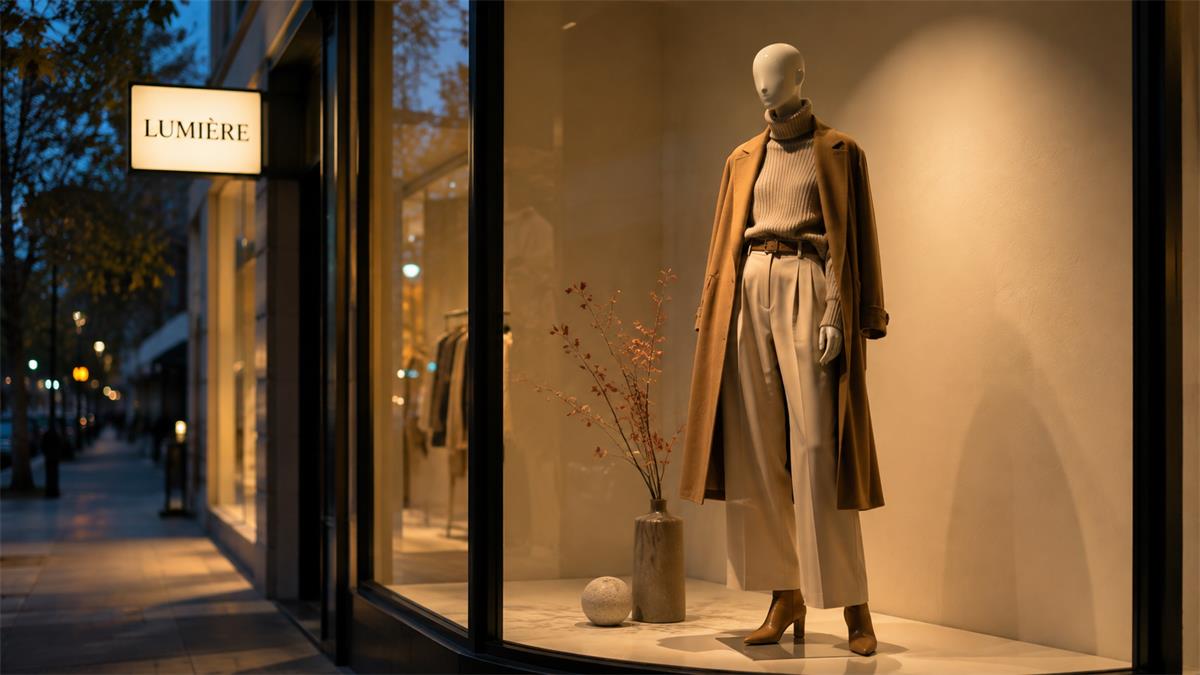
You have about two and a half seconds. Research on retail presentation puts the window's first impression at roughly 2.6 seconds, and visual merchandising guides consistently cite a window's window of attention at three to four seconds before a passerby decides to keep walking. That is the whole game. Your display has to land its point before the next song in their headphones.
The single most reliable way to win those seconds is a focal point: one hero moment the eye finds immediately. In a boutique, that hero is almost always a styled mannequin. A well-executed window display can lift foot traffic by 20 to 30 percent and push sales up by as much as 45 percent, because the eye stops, the story reads, and the door opens. Mannequins carry that load better than any prop, since they show the garment the way a customer imagines wearing it.
Build the stop with three layers. Put your hero mannequin about 12 inches from the glass. Set supporting pieces 24 inches back. Push backdrops and props to 36 inches. That shallow depth gives richness without clutter and keeps the focal point unmissable from the sidewalk.
How do you build a color story that fits a small boutique?
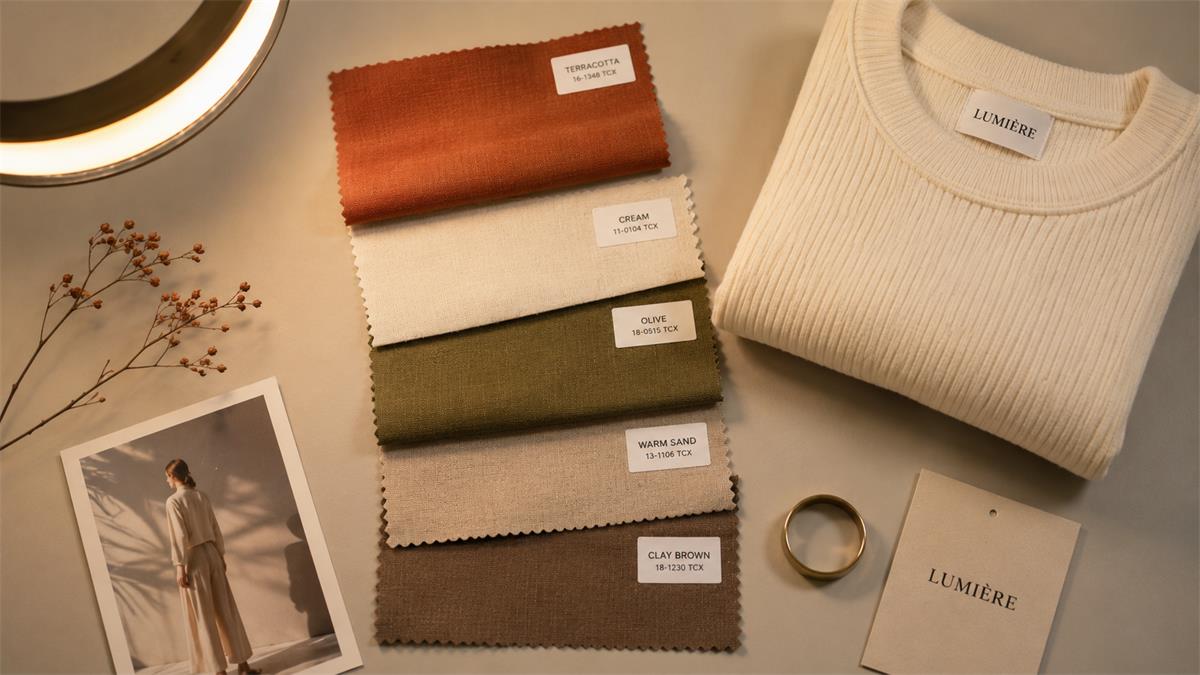
Pick three to five colors and stay loyal to them for the whole display. A tight palette is what makes a small window look intentional instead of accidental. Choose colors that already live in your brand, then let one of them be the dominant tone and use the others as accents.
A simple method: start from the hero outfit on your mannequin, pull two garment colors, then add one contrasting accent for a prop or sign. Shoppers process a display in seconds, so the fewer competing hues, the faster the message lands. If your boutique skews warm and natural, lean into cream, terracotta, and olive. If it is sharp and modern, try black, bone, and one electric pop.
Keep the background calm. A plain wall in your dominant color does more for a small window than a busy printed scene, because it lets the product and the mannequin carry the story.
Which mannequins belong in a boutique window?
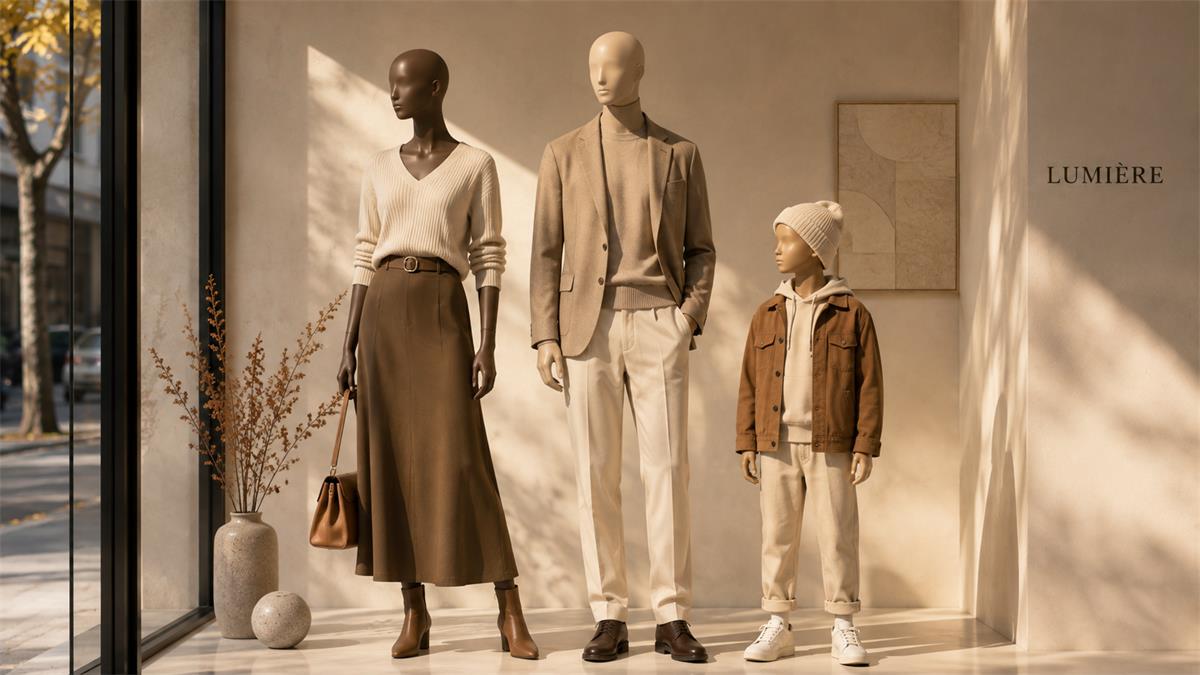
The mannequin is your lead actor, so the cast should match the story you sell. A children's boutique, a menswear shop, and a women's fashion studio each need a different hero. Use the table below to pick the right type for the window you are building.
| Mannequin type | Best for | Pose style | Skin tone options | Space needed |
|---|---|---|---|---|
| Female mannequin | Women's apparel, dresses, accessories | Relaxed, seated, or dynamic | Light, medium, dark, abstract | Medium |
| Male mannequin | Menswear, streetwear, tailored looks | Standing, athletic, contrapposto | Light, medium, dark, abstract | Medium |
| Kids mannequin | Children's boutiques, family stores | Playful, natural stance | Light, medium, dark | Small |
| Dress form | Tailoring, bridal, jewelry, layering | Static torso, no head or limbs | Fabric-covered or raw | Small |
Mix one hero mannequin with a secondary piece to suggest a scene rather than a catalog shot. A female mannequin in a finished look beside a dress form showing the same garment unstyled tells a "we craft this for you" story that boutique shoppers respond to.
Skin tone matters more than most owners expect. Offering a range of mannequin tones lets more customers picture themselves in the clothes, which is the entire point of a window. Abstract gray or white finishes still work for minimalist brands, but a thoughtful tone choice reads as inclusive without a word of signage.
Studies on in-store presentation put the sales lift from using mannequins at around 66 percent versus similar displays without them. That is the strongest single argument for making the mannequin the hero of every boutique window.
How do you light a boutique window on a real budge
Lighting is where a small boutique can look like a flagship, and you do not need a lighting designer. Two rules cover most cases. First, light the hero, not the whole box. Aim a focused spotlight at the mannequin's upper body so the face and the garment lead. Second, warm the scene. Warm light reads as inviting and premium; cold flat light reads as a stockroom.
Layer three sources if you can. A key spotlight on the hero, a soft fill so shadows do not go muddy, and a small accent on a prop or sign. Even a single well-aimed track light beats a ceiling panel flooding the whole window. Position lights to create gentle contrast on the product, because contrast is what makes the eye pause.
Time the lights to the street. If your block stays busy after dark, leave the window lit on a timer so the display keeps selling when the store is closed. A lit window at 9 p.m. is free advertising to every person walking home.
What is the easiest window layout for a narrow boutique?
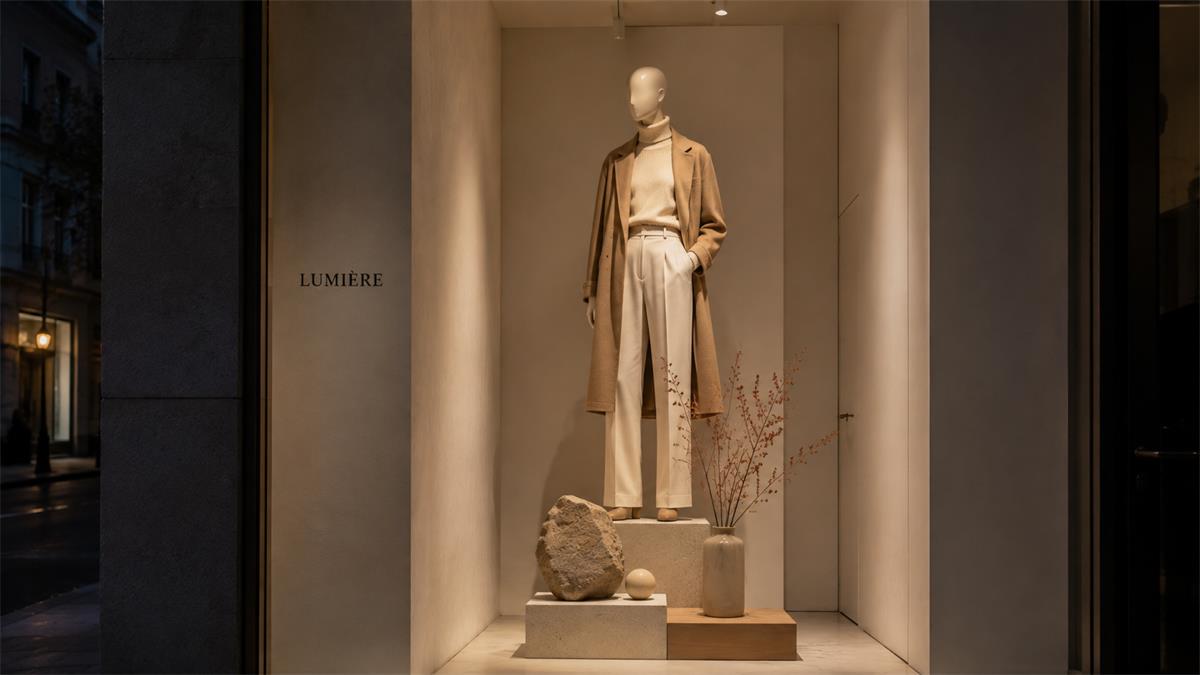
Narrow windows punish clutter, so the layout has to do the work. Compare the three common formats and pick the one that matches your space and stock.
| Window format | Best for | Build effort | Conversion note |
|---|---|---|---|
| Open-back | Lifestyle brands, stores with a pretty interior | Low | Shows the whole shop, builds social proof |
| Closed-back | Luxury, hero-product focus, distraction-free | Medium | Controlled focal point, higher conversion |
| Semi-closed | Small boutiques, fast seasonal swaps | Low to medium | Partial wall, quick theme changes, lower cost |
For a narrow front, the closed-back or semi-closed format usually wins because it removes the noise of whatever is behind the glass. Use the pyramid principle: place your most wanted or smallest hero piece highest, larger items lower, and let the eye travel down a clean diagonal. Break symmetry with an odd number of elements, three looks more designed than two or four and keeps the eye moving.
Below is a quick scorecard you can run against any window before you call it done.
| Check | Why it matters | Pass threshold |
|---|---|---|
| One clear focal point | Stops the eye in under 3 seconds | Yes, identifiable from the sidewalk |
| Brand color story (3 to 5 colors) | Reads as intentional, not random | Palette stated and followed |
| Mannequin hero styled head to toe | Shows the garment worn, not hung | Full look, not a bare form |
| Layered, warm lighting | Makes product the hero after dark | Key light on upper body |
| Negative space | Avoids the "bargain bin" feel | At least one empty calm zone |
| Next refresh date set | Keeps the window feeling alive | Date on the calendar |
How often should a boutique rotate its window display?
Change it more often than feels natural. A window that stays the same for three months trains regulars to stop looking at it. Most shops benefit from a full refresh every two to four weeks, with small tweaks in between. Pick a fixed day, tell your team, and treat it like a recurring appointment.
Seasonal cadence gives you a free content calendar. Back-to-school in August, Halloween at the end of October, Black Friday and the winter holidays from late November into December are the heavy retail moments. The National Retail Federation projects U.S. winter holiday sales to surpass one trillion dollars for the first time in 2025, growing roughly 4 percent over the prior year. That scale of shopping means a refreshed, timely window in November and December is not a nice-to-have, it is the main stage.
You do not need a holiday theme for every change. A color story swap, a new hero outfit, or a repositioned mannequin is enough to make the window feel new. The goal is simply to give the regular walker a reason to look again.
How do you style apparel and accessories on a dress form?
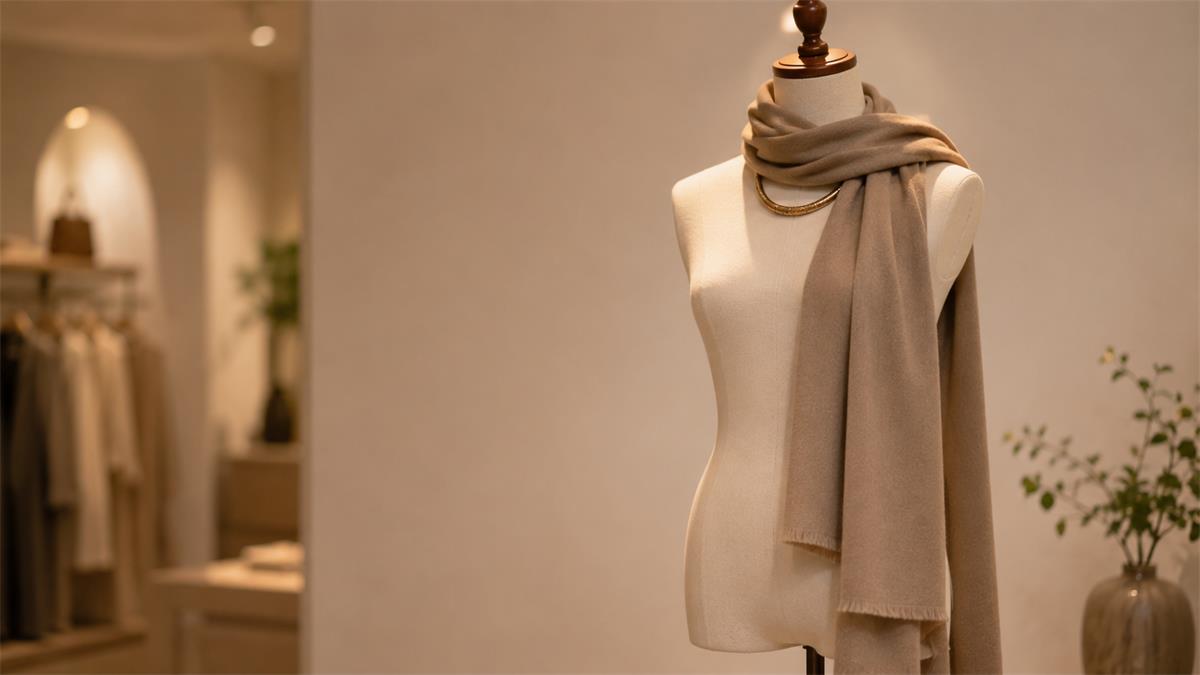
A dress form is the most honest stylist in the shop because it shows construction and fit without a face or pose getting in the way. Use it for tailored pieces, bridal, knitwear, and anything where the cut is the selling point. Style it the way you would a mannequin but let the form's job be detail.
Start with the garment on straight and smoothed, then break one rule for life: turn a collar, drape a scarf, or let a sleeve fall naturally. Add one accessory at the neck or waist so the eye has a second stop. If the form sits near a full mannequin, dress the mannequin in the finished look and leave the form half-laced or mid-tailor to hint at craft. That pairing reads as "we make this fit you," which is exactly the boutique promise.
Keep the form's base clean and the surrounding space open. A dress form crowded by stock loses the focus that makes it useful.
Can a sustainable styling choice win boutique customers?
It can, quietly. You do not need to shout about materials to signal care. Reuse the same backdrop across seasons, repair rather than replace props, and choose mannequins and forms built to last through years of swaps. Shoppers notice restraint, and a significant share say they will pay more for brands they see as responsible.
The soft move is to let longevity do the talking. A window built from a small set of quality pieces you rearrange all year looks more considered than a wall of disposable props, and it costs less over time. Save the loud eco message for a tag or a line of copy, not the whole display.
Frequently Asked Questions
How do I style a boutique window display on a small budget?
Start with one strong mannequin, a calm wall in your brand color, and a single aimed light. You do not need props or prints to make a window work. Style the mannequin head to toe, leave open space around it, and change one element every few weeks so the window stays fresh. Most of the impact comes from focus and lighting, not spend.
How many mannequins should a boutique window have?
One hero mannequin is enough for a small window, and two is plenty for most boutiques. A single styled figure with negative space around it often outperforms a crowded group because the eye finds the focal point faster. Add a dress form as a second element only when it supports the story, such as showing tailoring next to a finished look.
How often should I change my boutique window display?
Aim for a full refresh every two to four weeks, with small tweaks in between. Regulars stop seeing a static window after a month, so a fixed change day keeps it alive. Tie changes to the retail calendar, with bigger themed windows for back-to-school, Halloween, and the winter holidays.
How do I style a dress or outfit on a dress form for display?
Put the garment on straight and smoothed first, then add one natural break like a turned collar or draped scarf. Place a single accessory at the neck or waist for a second point of interest, and keep the base and surrounding space clear. Pair the form with a fully dressed mannequin to show the finished look next to the craft.
What actually makes a boutique window stop shoppers?
A single clear focal point the eye finds in under three seconds. That is usually a styled mannequin lit warmly against a calm background, with one color story and open space around it. Clutter, cold light, and no hero are the three fastest ways to lose the passerby.
Explore our mannequins and dress forms. Ready to put a hero in your window? Browse our female mannequins, male mannequins, kids mannequins, and dress forms to find the cast that fits your boutique. Not sure which pose or tone tells your story best? Contact our team and we will help you plan a window that turns the sidewalk into your sales floor.