

Black Friday Visual Merchandising: How to Turn a Crowd Into Conversions
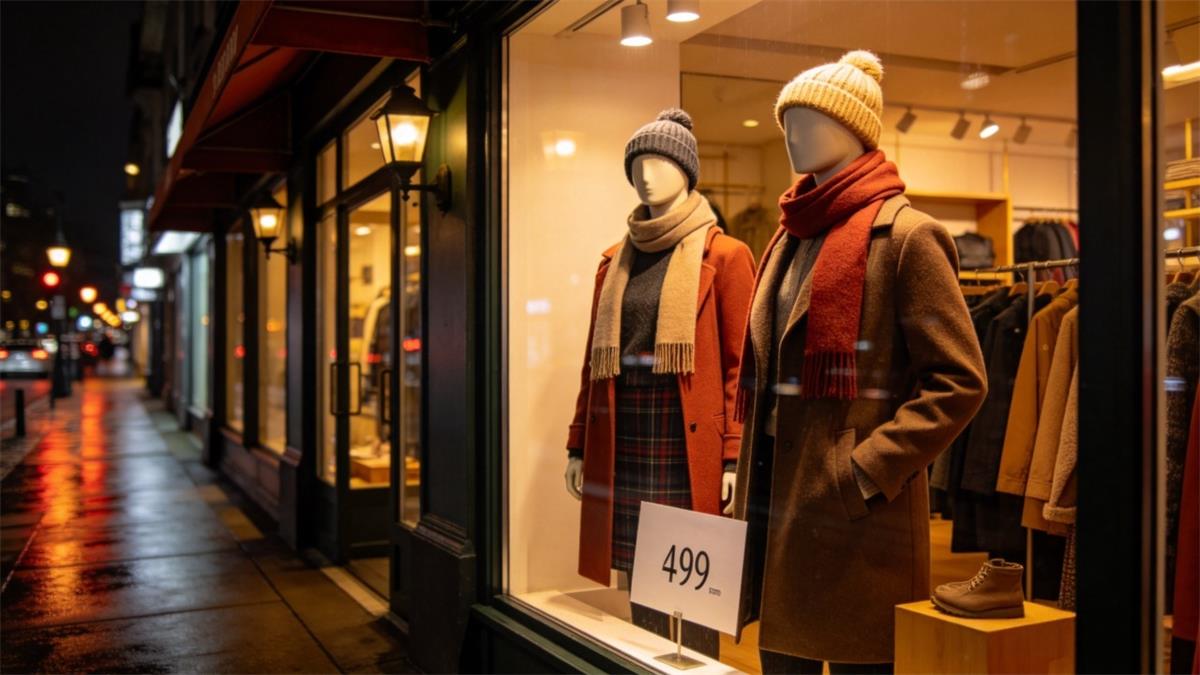
Black Friday visual merchandising is the practice of arranging fixtures, mannequins, sightlines and price messages so a shopper moving fast on the busiest trading day of the year can find, understand and buy without asking for help. It is not holiday decorating, because the goal is a decision rather than an atmosphere. Three facts set the brief for 2026: Black Friday falls on November 27, the holiday season from November 1 to December 31 has averaged about 19% of annual retail sales over the last five years, and 84% of shoppers had already begun their holiday buying before Thanksgiving weekend in 2025. This guide covers the planning timeline, the door-to-till route, what to put on your mannequins, how to show a price without devaluing the store, and how to prove the display paid for itself.
What makes Black Friday different from holiday decorating?
The traffic pattern changed and most advice has not caught up. In 2025 a record 202.9 million consumers shopped from Thanksgiving Day through Cyber Monday, up from 197 million in 2024 and above the previous record of 200.4 million set in 2023, according to the National Retail Federation and Prosper Insights and Analytics (NRF, December 2025). In-store traffic reached 129.5 million, up 3% year over year, and online reached 134.9 million, up 9%.
The detail worth planning around is where that growth sat. Black Friday itself drew 80.3 million in-store shoppers, slightly below the 81.7 million of 2024. The Sunday after Thanksgiving drew a record 32.6 million in-store shoppers, a 27% increase over 2024. Cyber Monday online traffic climbed to 75.9 million from 64.4 million. The crowd did not disappear, it spread out. A display built for a six hour Friday morning surge does not serve a five day window, because the store has to read clearly on Thursday, on a slow Sunday and again on Monday evening.
When should you start planning a Black Friday display in 2026?
Four to six weeks is the working lead time for this node, which puts the concept decision in the second half of October and the install in the week of November 16. Starting earlier is not wasted, but the items that actually run late are printed price cards, prop orders and garment pulls, so lock those first. Work backwards from the calendar below.
| 2026 date | What happens | What the display has to be doing |
|---|---|---|
| Week of October 19 | Concept lock | One message, one focal product family, one colour direction, written down |
| Week of October 26 | Orders placed | Prop orders, price card print, garment plan confirmed with the buyer |
| Week of November 2 | Test form | Dress one form, photograph it, check light and fit before styling a second |
| Week of November 9 | Base build | Platforms, backdrop and lighting installed; test after dark |
| Week of November 16 | Full install | Live for a full selling week so the sidewalk can tell you what is wrong |
| November 23 to 25 | Refill and clean | Glass cleaned, layers topped up, price cards corrected |
| November 26 | Thanksgiving | Closed or short hours; the last quiet day for fixes |
| November 27 | Black Friday | The display is a wayfinding tool first and a selling tool second |
| November 28 to 30 | Small Business Saturday, Sunday, Cyber Monday | Traffic spreads across all five days; keep the route clear every one of them |
| Week of December 1 | Front layer swap | The shopper question changes from deal to gift |
| December 19 | Super Saturday | Peak footfall; the display should be at its simplest |
| December 27 to 30 | Teardown | Strip within three days, because a half-stripped store reads as a closing down sale |
Two dates in that table do the most work. The mid-November install makes the display live for a normal trading week before the spike, which is the only way to see how it reads from the pavement when nobody is rushing. The December 1 swap exists because the buying question changes: on Black Friday shoppers solve for value, and by the first week of December they solve for a gift for a specific person. The holiday visual merchandising calendar maps the same lead times across the rest of the retail year.
What does a Black Friday shopper actually need from the store?
They are not finished shopping when they walk in. As of Thanksgiving weekend in 2025, 84% of consumers had started their holiday shopping but still had a little over half of their list remaining, and 96% of those who shopped over the weekend made a holiday related purchase, spending $337.86 on average, up from $315.56 the year before (NRF, 2025). Clothing and accessories were the most bought category at 51%, followed by toys at 32%.
Put those together and the shopper in front of your window is mid-list, not browsing. They need four things, in this order: to identify the category inside, to see a complete outfit rather than a garment, to understand the price without asking, and to reach the till quickly.
How do you build the route from door to till?
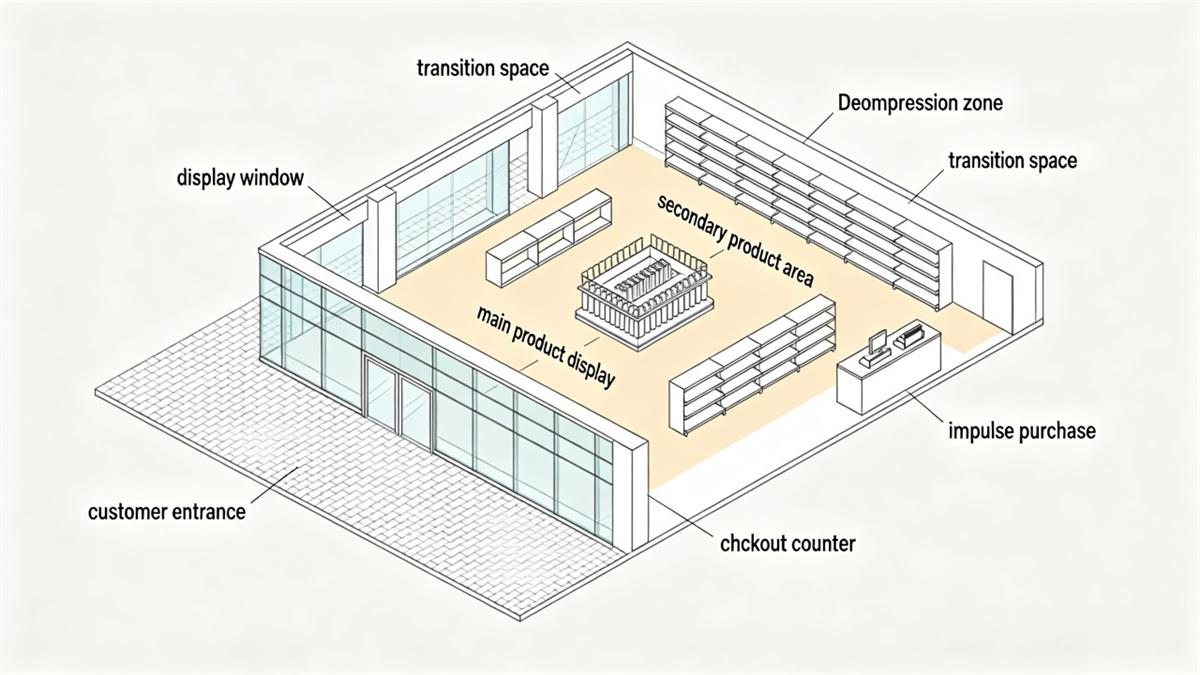
Black Friday visual merchandising works as a sequence of short decisions rather than one big room. Each zone has one job, and a zone asked to do two tends to do neither on a busy day.
| Zone | What the shopper is doing | What the display has to do | Practical move |
|---|---|---|---|
| Pavement to glass | Scanning for a reason to stop | Answer "what is this shop selling today" in three seconds | One headline, one focal form, no more than two products in the glass |
| First 5 to 15 feet inside | Adjusting to light and space | Give the eye somewhere to land | Keep it clear. No freestanding rack, no queue barrier, no display |
| First focal unit | Deciding whether to walk further in | Show a complete outfit at 48 to 60 inches | One platform, one to three forms, one price message |
| Mid floor | Comparing and picking up | Break the walk into short decisions | Group by complete look, not by size or colour |
| Aisle ends and till approach | Moving with a destination in mind | Catch the list item, then add without asking for a decision | Highest demand category with the price readable from the aisle, and small giftable items near the pay point |
The decompression zone is the one retailers remove first and regret most. Five to fifteen feet of clear floor feels like wasted selling space in a good month, and on a day when people enter at walking speed with their coats still on it is the difference between a shopper orienting themselves and a shopper turning around.
What should the mannequins be doing on Black Friday?
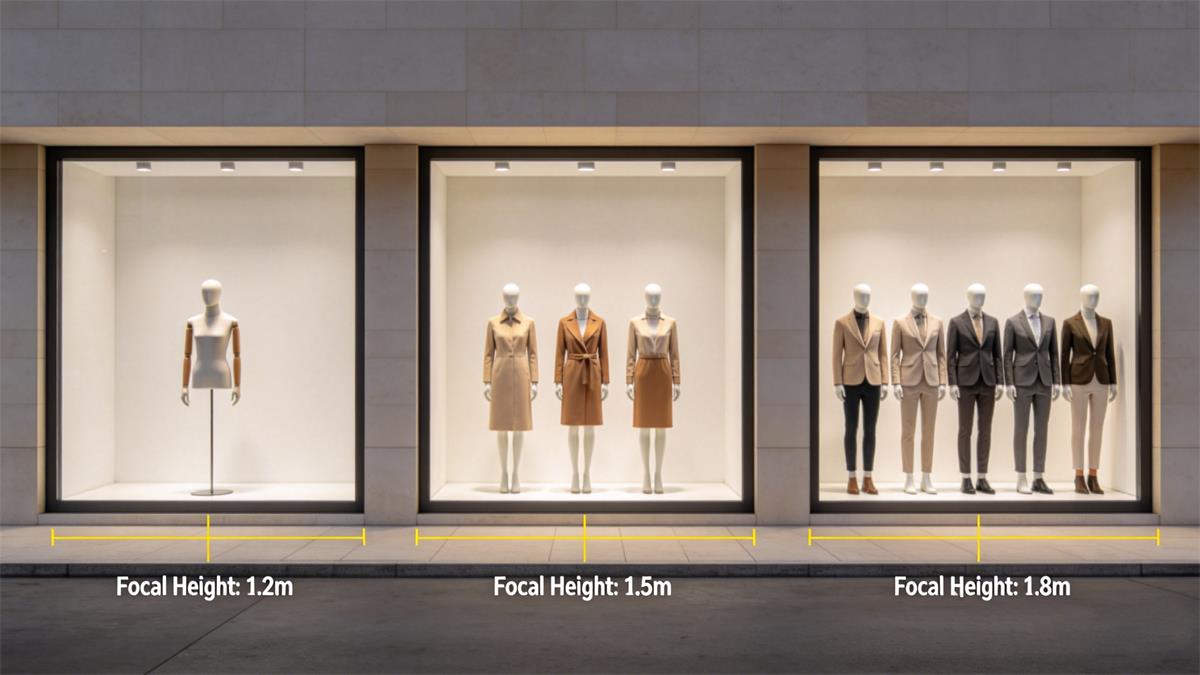
Mannequins do the one thing a flat rail cannot do: show a shopper what a complete purchase looks like. On Black Friday that makes them a basket size tool rather than a decoration, because a form wearing a coat, a knit and a scarf sells three items while a rail sells one.
| Window width | Forms to use | What the grouping is doing |
|---|---|---|
| Under 6 feet | One | Single hero look, styled completely, on a low platform |
| 6 to 12 feet | Two or three | One hero, one or two supporting looks in the same palette |
| Over 12 feet | Three to five | One hero plus a family or pair grouping; keep every look related |
Keep focal details between 48 and 60 inches above the floor. That band matches eye level for most adults and it is where a hat, a collar or a held product reads from the pavement. Dress every form completely, including the piece a shopper would not think to add, because the add-on is the part that lifts transaction value. If a large part of the range is folded, hung or high value, dress forms do the same job for less floor space.
Two things are worth avoiding. Do not put discount messaging onto the form itself, because it turns a styled look into a shelf label. And do not restyle the window daily, because the shopper who passes twice in one weekend should recognise it as the same shop. The mannequin styling walkthrough covers layering and proportion, and the selection guide covers sizing and grouping.
How do you show a price without devaluing the store?

Price visibility and discount shouting are different decisions, and confusing them is the most common Black Friday display error. A shopper who cannot find a price assumes the worst, while a shopper surrounded by percentages stops looking at the product.
| Message type | Where it works | What it costs you |
|---|---|---|
| One headline percentage in the glass | Window only, as the single largest element | Nothing, as long as it is the only one there |
| Shelf edge or rail ticketing | Inside, at the point of comparison | Staff time each time the deal changes |
| Stacked or layered discounts | Almost nowhere on this day | Confusion at the exact moment of decision |
| Hand written card | Boutiques and small shops, used sparingly | Inconsistency once there are more than a few |
| Screens and digital price boards | Stores that already run them | A dark or frozen screen reads as a closed shop |
The working rule is one message in, many messages out. The window carries a single claim that is legible from the pavement at walking speed, and inside, pricing sits next to the product it belongs to, so the comparison happens where the decision happens.
How often should the display change during Black November?
More often than the props budget suggests, and in layers rather than rebuilds. Retailers now run promotions weeks ahead of the day itself, and about two out of every five holiday shoppers start browsing and buying before November (NRF, 2025). A display built once on November 16 and left alone reads as tired by the Sunday after Thanksgiving, which 2025 data shows is now one of the busiest days of the weekend. Shops that ran a Halloween build a month earlier already have a base layer in place, so the Halloween display run is worth re-reading before the Black Friday swap.
Use three layers. The base layer, meaning platform, backdrop and lighting, holds for five weeks and should be neutral enough to survive a theme change. The middle layer, props and the product family on show, changes once around November 30. The front layer, price cards, small props and the styling accessory on the hero form, changes weekly and costs almost nothing. Change the front layer and the display feels new without a rebuild, which is the only cadence most independent stores can sustain through December.
Where does the sustainable argument actually fit?
It fits in the storage room, not in the window copy. Holiday decor has moved from a seasonal expense to what industry analysts now describe as an experience investment, and the 2026 direction from Ambius leans toward structured, durable systems built for repeated use rather than single-season novelty (Chain Store Age, August 2026). That is a commercial argument before it is an environmental one. Buying the base layer to last and treating only the front layer as disposable keeps reset time short between holidays and cuts spending in year two and year three, and a sturdy platform that reappears every November tells shoppers the shop plans to be there next year.
How do you know whether the Black Friday display worked?

Measure six things against the week before, not against a feeling. None of them need new hardware, and two need nothing more than a tally sheet at the till.
| What to track | How to capture it | What a good result looks like | What a miss tells you |
|---|---|---|---|
| Stop rate | Tally of people who slow or stop at the glass across two 30 minute windows | Higher than the week before | The window is not answering the question in three seconds |
| Entry count | Door counter or manual tally, install week versus prior week | Above the pre-install week | The window promised something the shop floor does not deliver |
| Fitting room use | Hangers taken into fitting rooms | Above a normal week | Forms are showing looks shoppers cannot find on the rail |
| Category sell through | Units sold divided by units received, per category, across the five days | The featured category moves fastest | The display and the stock plan disagree |
| Average transaction value | Sales divided by transactions | Up against the same weekend last year | The route is pushing shoppers toward one item instead of a look |
| Price questions at the till | Staff tally over two days | Low | Nobody could find the price, which slows every sale in the queue |
Category sell through is the most useful figure, because it separates a display problem from a pricing problem. If the featured category moved fastest, the display did its job and any shortfall sits with the offer. If it moved slowest, look at the fixture and the hero product first.
What are the mistakes that quietly cost sales on Black Friday?
Most Black Friday visual merchandising mistakes are small and repeatable, and fixing them before the date costs far less than fixing them during it.
| Mistake | What it looks like | What it costs |
|---|---|---|
| Selling the discount instead of the product | A window that is mostly numbers | Shoppers compare on price alone and the shop becomes interchangeable |
| A route with no room to stand | Racks pushed into the decompression zone | People do not stop at all, and the queue blocks the door |
| Every form in a different look | Five forms, five unrelated outfits | The shopper cannot tell what the shop is actually about |
| New props, no storage plan | Single season items with nowhere to live | Full prop spend again next year, and a damaged base layer |
| Leaving the deal display up past December 2 | Still selling a bargain when shoppers have moved to gifting | The shop reads as behind the season |
The last one is the most expensive because it is invisible. The display still looks tidy, the price cards are still accurate, and the shopper has simply moved on. Swapping the front layer in the first week of December is the least costly correction on this list.
Ready to plan your Black Friday display?
Start with the forms you already own and spend the Black Friday budget on light, layering and legible pricing. Browse female mannequins, male mannequins, kids mannequins and dress forms to fill the gaps in a grouping, and contact the team if you want a second opinion on a layout before install week.
About the Author
Brook Chen is a Visual Merchandising Specialist at awmannequins.com. With over 8 years of experience designing window and in-store displays for retail brands across the US, Canada, and Australia, she helps boutiques and stores translate seasonal concepts into store-ready merchandising.
Frequently Asked Questions
How far in advance should you plan Black Friday visual merchandising?
Four to six weeks is the realistic execution window, which puts the concept decision in the second half of October for Black Friday on November 27, 2026. The items that genuinely run late are printed price cards, prop orders and garment pulls, so lock those before you design anything. Installing a week early also matters, because a normal trading week is the only honest test of how the display reads from the pavement.
When is Black Friday in 2026?
Thanksgiving falls on Thursday, November 26, 2026, so Black Friday is Friday, November 27. Small Business Saturday is November 28 and Cyber Monday is November 30. Plan for the whole five day stretch rather than the Friday alone, because 2025 data from the National Retail Federation shows the strongest in-store growth landed on the Sunday after Thanksgiving, up 27% year over year.
Should Black Friday displays show discount signs in the window?
One message, always. A single legible headline in the glass tells a passerby what the shop is selling today, and past that point every extra percentage competes with the product. Put the rest of the pricing beside the products inside, where the comparison actually happens. If the headline cannot be read from the pavement in three seconds, it was designed for a screen rather than a street.
Do you need new mannequins for Black Friday?
No, and replacing them is usually the wrong first purchase. Restyle the forms you own, then spend on lighting and on the front display layer, which is where the visible difference sits. The exception is a grouping that cannot show complete looks, for example a shop with only one form type, or a window that needs a kids figure to finish a family scene. Display mannequins range from about $60 to $600 each, so adding one form is a small decision next to replacing a set.
How long should a Black Friday display stay up?
Keep the deal framing through the weekend and swap the front layer in the first week of December. The middle layer, meaning props and the featured product family, can stay until mid-December if the base palette is neutral. Leaving Black Friday price messaging in place past December 2 is the most common and most invisible error, because the display still looks tidy while shoppers have already moved from solving for value to solving for a gift.