

Winter Window Display Ideas: How to Build a Storefront That Works All Season
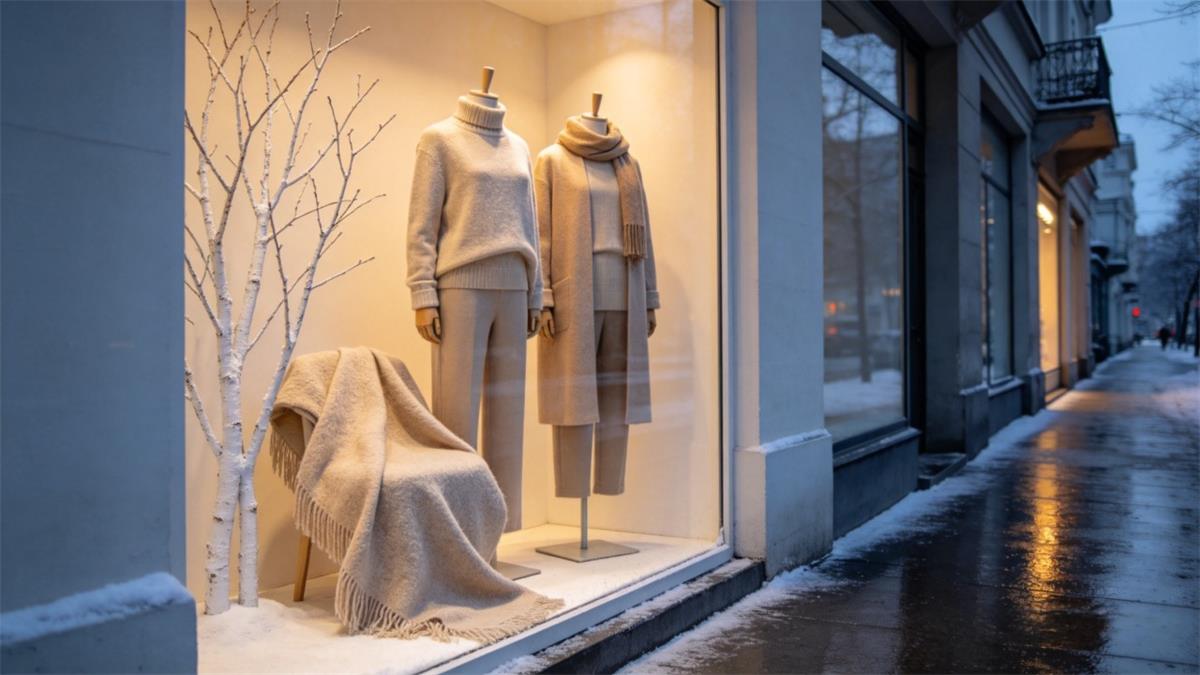
Winter window display ideas are the palettes, props and mannequin plans a store uses to keep its window selling from the first week of November through late February, including the four to six weeks after the holiday decorations come down. That last stretch is where most shops quietly give up, and it is the stretch where a winter window proves its worth. Holiday spending is finished, foot traffic softens, and the window has to sell winter merchandise on its own merits. The 2025 holiday season grew 4.1% year over year and passed the $1 trillion mark for the first time, according to the CNBC/NRF Retail Monitor, and clothing and accessories stores closed December up 6.11% year over year. Then January arrived and in-store sales fell 2.0% year over year, the sharpest drop since mid-2022. A window built only for December loses the argument the moment the tree comes down.
This guide covers what separates a winter window from a holiday window, the three-phase calendar for 2026 into 2027, colour and material direction that does not look like left-over Christmas, how many forms a window of your width actually needs, and the January reset that keeps a storefront looking alive in the slowest month of the year.
What makes a winter window different from a holiday window?
A holiday window sells a decision and a winter window sells a season, and confusing the two is why so many storefronts look tired by January 5. The holiday window runs four to five weeks and its job is to convert a gift purchase. The winter window runs twelve to sixteen weeks and its job is to make layering, warmth and texture feel worth buying while the weather outside keeps doing the work for you. That difference changes the palette, the prop list, the lighting and the refresh schedule.
| Question | Holiday window (late November to 26 December) | Winter window (November to late February) |
|---|---|---|
| Primary job | Convert a gift decision | Sell layering, warmth and wardrobe staples |
| Lifespan in the glass | 4 to 5 weeks | 12 to 16 weeks |
| Palette | Holiday reds, greens, metallics | Frost whites, warm neutrals, one accent |
| Props | Trees, gift boxes, foliage, ribbon | Wool, bare branches, ice, glass, warm light |
| Refresh points | Two (Black Friday, mid-December) | Three (November, December overlay, January) |
| Typical failure | Clutter | Looking exhausted after New Year |
The practical consequence is that a winter window has to be built as a base with layers on top, not as a single finished picture. If you install one complete scene in November, you have nothing left to change in January except taking things away, and a window that only ever loses elements reads as decline to a passerby.
When should a winter window display go up, and when does it come down?
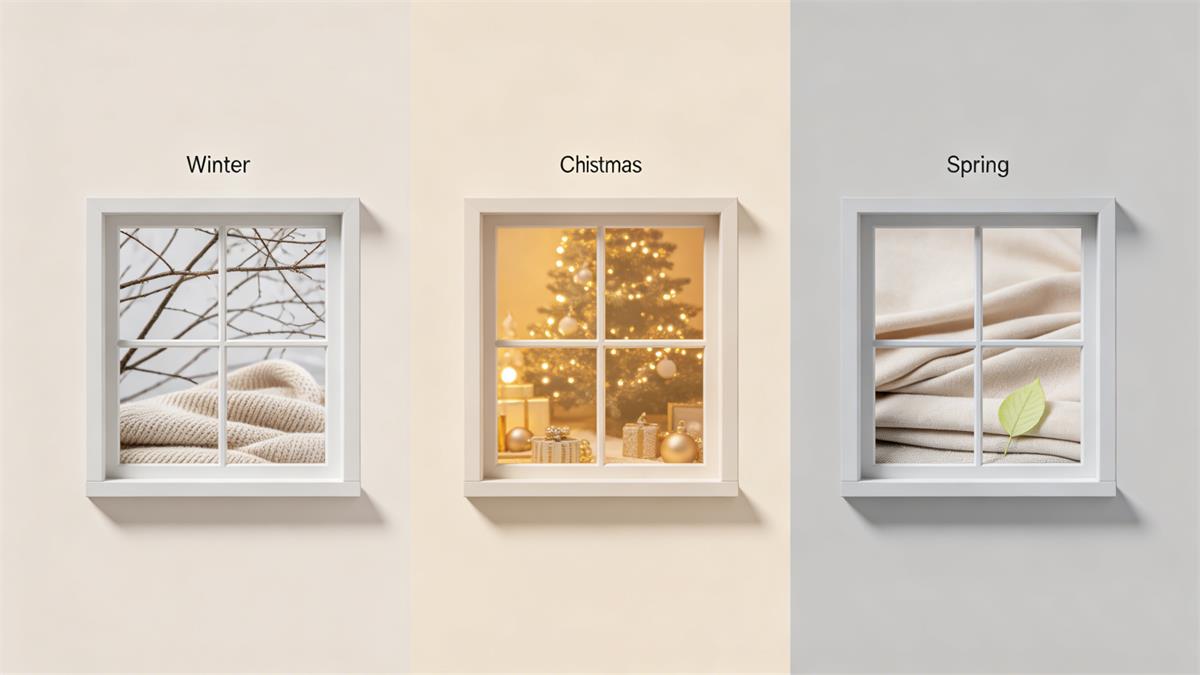
Plan winter in three phases and give each phase an install day you write into the calendar now. The eight weeks from late October to Christmas Eve carry somewhere between 20% and 40% of annual revenue for most physical retailers, which is why prop orders and fixture decisions have to be locked in September. The winter calendar does not end when that rush does, though. It has a third phase that most stores never plan and therefore never execute well.
| Phase | Dates for 2026 into 2027 | Install | What belongs in the glass |
|---|---|---|---|
| Phase 1, early winter | 1 to 25 November | First week of November | Frost and texture base, bare branches, wool, no holiday motifs |
| Phase 2, holiday overlay | 26 November to 26 December | Week of 16 November | Holiday layer added on top of the winter base, never a rebuild |
| Phase 3, post-holiday winter | 27 December to late February | 27 December to 2 January | Warm neutrals, new arrivals, transitional pieces, one fresh accent |
| Phase 3b, Valentine crossover | 3 January to 14 February | First week of January | A single curated front table, kept small and gift-led |
The teardown window is the one to protect. Retail execution planning guidance puts the December 26 to early January de-Christmas at 48 hours, and that speed only works if the winter base was installed underneath the holiday layer in November. Stores that stack instead of replace spend two weeks dismantling a window in the quietest trading month of the year, with a half-dressed glass facing the pavement the whole time.
Which winter window display ideas work for a small boutique?
Small windows respond to one idea executed fully rather than four ideas crammed together. Each of the six directions below fits a window between five and twelve feet wide, and each one can be built from the same frost-and-neutral base, which is what keeps the annual prop spend down.
The warm room. Build one corner of a room rather than a shop display: a low platform, a wool throw, a single warm light source at 3000K and two forms dressed for real weather. The scene reads as a place a customer wants to be, which is exactly what winter sells. Keep the platform under twelve inches high so the forms still read from the pavement.
Bare branch and frost minimalism. Two or three painted branches, a matte frost-white backdrop, one abstract form in a winter coat and no other props at all. It is the cheapest of the six to build and the easiest to keep clean through February, and it photographs exceptionally well for social because the negative space gives the product somewhere to sit.
The layering window. Use three forms to show one outfit in three weights: a shirt, then a shirt with knitwear, then the full outer layer. Retailers commonly use this to teach a customer how to buy for the shoulder season, and it turns a single garment into a three-piece sale. Label the layers with a small card rather than a price shout.
The outdoor-life scene. Après-ski, winter walking or cold-weather commuting, built with a bench, a thermos, a folded blanket and a bag. This direction suits outdoor and casual brands because it shows products in a life rather than on a body.
The winter light window. Translucent and reflective materials used at two or three heights: frosted acrylic panels, mirror elements, hanging ornaments on fine line. Messe Frankfurt's Christmasworld Trends 27+ describes the same direction for the coming season, with transparency and shimmering finishes used to create depth without weight, and suspended elements grouped at two or three levels rather than spaced evenly. It works after dark, which matters when your window is seen mostly by commuters on the way home.
The January start-again window. Frost base, no holiday residue, one clean message about new arrivals or gift-card spend, and transitional pieces styled forward in the glass. This is the phase that keeps a boutique looking current while the pavement is quiet.
What colors and materials read as winter without looking like leftover Christmas?

Build winter colour as a ratio rather than a list, and use holiday colour only as a small deliberate accent. The season's trade direction supports pale, misty foundations with a few darker accents: Messe Frankfurt groups the winter palette around soft shades such as Cosy White, Clear Sky and Gentle Breeze, set against warm tones like Roasted Apricot and Warm Brown and one confident accent. Boutique buying guides for 2027 point the same way, with glacier blue and soft neutrals as the eye-catching accents and burgundy, plum and forest green acting as the new neutrals.
| Layer | Share of the window | Colour direction | Material direction |
|---|---|---|---|
| Base | About 60% | Cosy white, misty grey, warm beige | Matte painted panel, wool, felt, foam board |
| Mid | About 30% | Warm brown, caramel, forest green, soft burgundy | Raw wood, knit, corduroy, matte ceramic |
| Accent | About 10% | Silver, ice blue, one jewel note | Mirror, clear or frosted acrylic, metal, glass |
The ratio is what stops a winter window drifting into a Christmas window. Red and green are not banned, they are demoted: a burgundy scarf on a neutral form reads as winter, while the same scarf on a red backdrop reads as December. Keep the base layer neutral and the whole window survives the transition from holiday to January with a prop swap instead of a rebuild.
How do you light a winter window when daylight is short?
Winter is the season when lighting carries most of the display, because through November, December and January a large share of the people walking past your glass are doing it after dark. Treat light as three separate jobs instead of one switch: a soft ambient wash to lift the whole scene, accent spots aimed at the product rather than the wall, and one feature element that reads from twenty feet away, such as a warm light inside a prop or a lit backdrop panel.
Two decisions matter more than fixture choice. The first is colour temperature, because warm light flatters wool, cashmere and leather while cooler light flatters denim and technical outerwear, so a mixed outfit needs a mixed setup. The second is the after-dark test, which should be run the day the window is installed and again in January when the props change. A window that has never been checked at 8pm in winter has never actually been seen by the audience it is built for. Aim for the middle of the road on brightness as well: a window bright enough to read from across the street will flatten texture if every fixture is run at full power, so set the ambient layer low and let the accent layer do the work.
How many mannequins does a winter window need, and where should they stand?
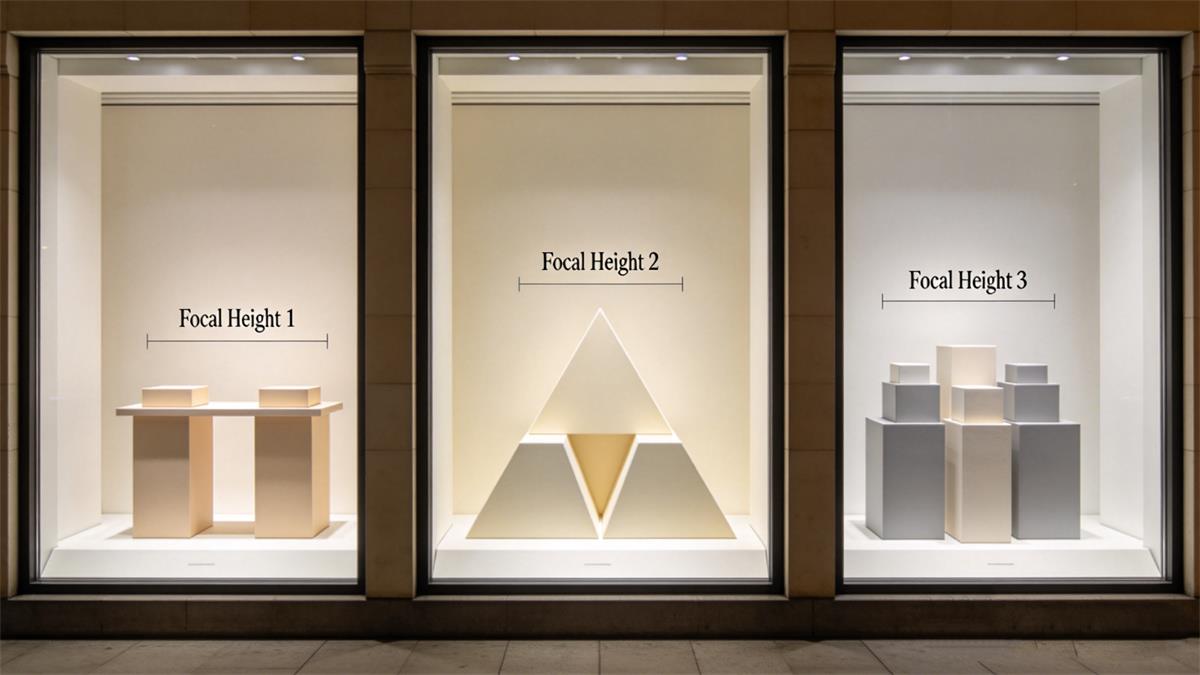
Buy the number of forms your window can dress well, then arrange them around one focal point rather than spreading them evenly. Wide spacing is the most common winter window fault because it makes a large window look empty and a small window look random. The table below is a starting count for a boutique window with a single glass frontage and an average eye height of about five feet four inches.
| Window width | Forms to plan | Arrangement | Notes |
|---|---|---|---|
| Up to 6 ft / 1.8 m | 2 | One standing, one seated or kneeling | Stagger heights so the smaller form sits in front, never behind |
| 8 to 10 ft / 2.4 to 3 m | 3 | Triangle, tallest on the outer edge | Keep the centre of the triangle on the product you most want to sell |
| 12 to 15 ft / 3.6 to 4.5 m | 4 or 5 | Two clusters, one anchor prop between them | Two clusters read as depth, one long line reads as a queue |
| Over 15 ft / 4.5 m | 5 to 7 | Two or three clusters with a repeated motif | Repeat the motif rather than adding a new prop each time |
A winter grouping also needs to show at least one complete layered look, which usually means a form with a head and arms rather than a torso-only piece. If your current forms are all the same type, the cheaper fix is normally to add one contrasting form rather than to replace the set. Browse female mannequins, male mannequins, kids mannequins and dress forms to see how the different categories sit inside a group.
How do you handle the post-holiday January window?
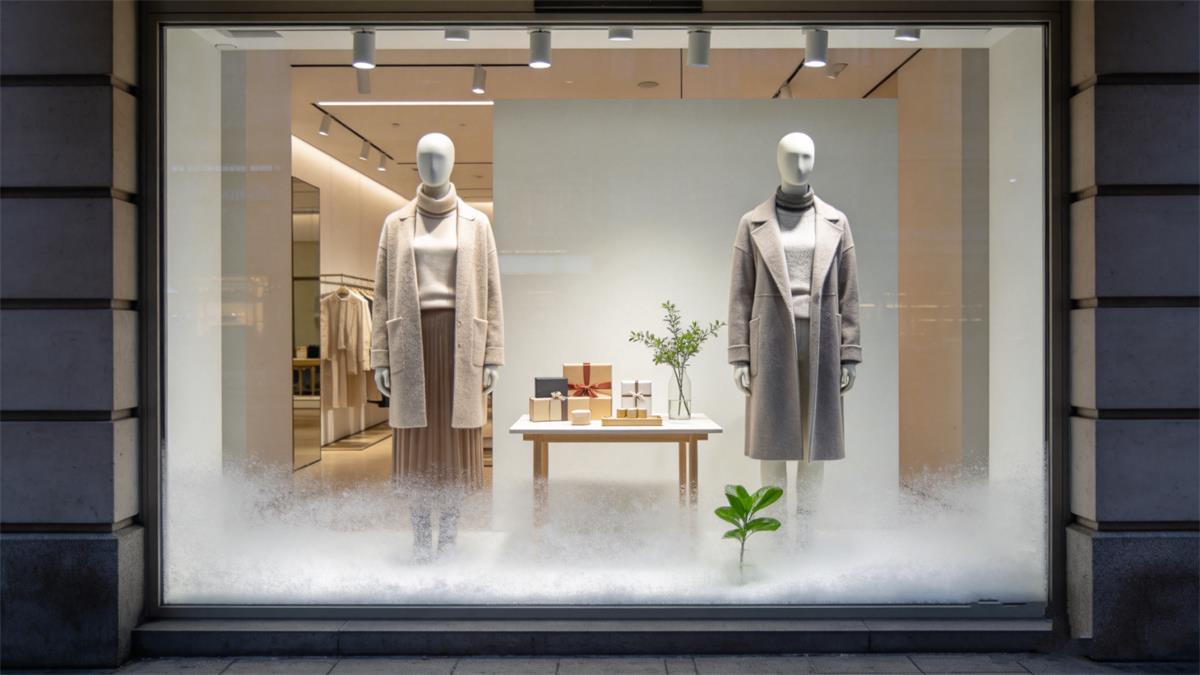
Run January on a 70/30 split and build it before the holiday takedown, not after. The working rule for the transition period is roughly 70% of visible merchandising given to transitional and early spring pieces and 30% left for winter stock that still has real wearing time, with new and transitional product occupying the prime positions in the window and at the entrance. Clearance stays in its own zone, capped at roughly 20% to 30% of retail space and positioned away from the door so customers pass full-price product first.
| January week | Window message | Mannequin work | What to avoid |
|---|---|---|---|
| Week 1 (Jan 1 to 7) | Start again, gift-card spend | Re-dress two forms in transitional layers | Holiday motifs, red and green props |
| Week 2 to 3 (Jan 8 to 21) | New arrivals forward, winter styled for depth | Add one spring-forward look beside the winter group | Blanking the window while you plan February |
| Week 4 to 6 (Jan 22 to Feb 14) | Valentine as a small gift moment | One curated front table with accessories | Turning the whole window into a Valentine display |
The commercial argument for this effort is straightforward. In January 2026, year-over-year sales rose only 0.7% while month-over-month sales dipped 0.5%, and in-store sales fell 2.0% year over year as severe weather kept shoppers home. A window that looks purposeful in a month when traffic is soft is one of the few levers a small store still controls, and it costs a prop swap rather than a rebuild if the base palette was planned in November.
Which winter display mistakes cost the most foot traffic?
Most winter windows fail for a short list of repeated reasons, and each one has a cheap fix.
Keeping holiday props past the first week of January. Red and green in February tells a customer the store is not paying attention. Swap the accent layer, keep the base.
Lighting the wall instead of the product. Aim spots at garments and faces, then check the window after dark from the far side of the street.
Leaving the window unchanged for twelve weeks. Three refresh points are the minimum for a season this long.
Crowding the base layer before the season starts. A winter window needs spare space for the January layer you have not added yet.
Showing only outerwear. Layering sells more units, so at least one form should show a transitional outfit that still works in March.
Letting the glass get dirty. In a low-sun season, dust and condensation are much more visible, and cleaning is the cheapest improvement available.
Ready to plan your winter window?
Start with the base: a neutral 60% foundation, two to three forms arranged around one focal point, lighting aimed at the product, and a calendar that puts the January reset in the diary before December ends. Browse female mannequins, male mannequins, kids mannequins and dress forms to fill the gaps in your grouping, look at sustainable display solutions if you want the base palette to carry over into spring, and contact the team if you want a second opinion on a layout before install week.
For the wider bank of window and in-store concepts this piece belongs to, start from our complete window and in-store display ideas guide. If your season is already in progress, the Christmas window display guide covers the December overlay, the fall window display guide covers the October to November handover, and the boutique window display playbook covers small shop layouts in detail.
About the Author
Brook Chen is a Visual Merchandising Specialist at awmannequins.com. With over 8 years of experience designing window and in-store displays for retail brands across the US, Canada, and Australia, she helps boutiques and stores translate seasonal concepts into store-ready merchandising.
Frequently Asked Questions
When should winter window displays go up?
The winter base goes in during the first week of November, before holiday props arrive, so the holiday layer can sit on top of it later. Halloween windows come down on November 1, early winter reads as frost, texture and neutral colour, and the holiday layer is added in the week of November 16. Building the base first is what lets you take December down in 48 hours without leaving an empty window.
How long should a winter window display stay up?
Twelve to sixteen weeks, from early November to late February, with three refresh points along the way. Change the accent layer when the holiday overlay goes in, again when it comes out in the last week of December, and once more in mid-January. A winter window that is never touched between November and March is the single most common cause of a storefront that looks abandoned in the new year.
Can you create a winter window display without Christmas decorations?
Yes, and many boutiques should. Frost whites, warm neutrals, bare branches, wool, glass and one jewel accent all read as winter without any holiday motif, and that palette can stay in the glass from November to February. The only change is the thickness of the layer: your window will need more contrast and more light than it would in summer, because pale tones on a pale backdrop need shadow to become visible.
How much does a winter window display cost?
The cost is driven by how much of the window you rebuild each time rather than by any single prop price. A store that installs a neutral base in November and then adds and removes an accent layer spends far less across the season than one that builds three separate scenes from scratch. Prioritise lighting and the front layer, since that is where customers notice the difference, and reuse the base palette across the holiday, January and Valentine phases.
What colors work best for a winter window display?
Pale, misty foundations with warm mid-tones and one accent. Cosy white, misty grey and warm beige carry about 60% of the surface, warm brown, caramel and forest green take roughly 30%, and the remaining 10% is the accent that changes through the season. Holiday red and green are best kept to that accent share, because at full coverage they lock the window to December and make January look like left-overs.