Tel: +86-0769-33218711
E-Mail: info@ysydisplay.com
Add: A1#807, Tianan cyber building, Huangjin Road, Nancheng, Dongguan, China 523000.


Boutique displays
A boutique is not a small department store. It has one window, one door and no back-of-house team, which changes how many figures you need, which sizes fit, and what the finish has to survive.
Figures for a typical boutique2–4One window pair plus one in-store
Minimum order5 piecesPer model; mix poses freely
Price per adult figureUSD 110–130Fibreglass, matte or gloss
Lead time2–4 weeksProduction, before freight
Count first
The instinct is to buy six and place them everywhere. The result is a shop that looks like a stockroom with better lighting. Small retail works the other way round: fewer figures, each one carrying a complete outfit, with space around them doing the work that extra mannequins cannot.
Count by floor area, then subtract one. A 45 m² shop does not need the same density as a 140 m² shop, and a shop with a single 1.8 m window cannot absorb more than a pair no matter how many figures it owns.
| Sales floor | Total figures | In the window | On the floor | Where they go |
|---|---|---|---|---|
| Under 40 m² | 2–3 | 2 | 1 | Window pair; one torso form near the till or the fitting-room door |
| 40–80 m² | 3–4 | 2–3 | 1–2 | Window trio; one at the threshold, one on a low plinth mid-floor |
| 80–150 m² | 4–6 | 3 | 2–3 | Window trio; a threshold figure, a centre island pair, one by the fitting rooms |
| Over 150 m² | 6–10 | 3–5 | 3–5 | Treat the window as its own project — see the window display guide |
Why three beats six. Three figures can each wear a complete outfit, which is what a customer is actually buying. Six figures on a small floor force you to split outfits across bodies, and a customer walking in sees six half-stories instead of three whole ones. Three also fits in a single delivery at the minimum order quantity and can be restyled by one person in an afternoon.
Footprint
The constraint in a boutique is not the mannequin's height, it is the base and the space a customer needs to walk past it. A full-body figure needs roughly 1.1 m of clear width beside it before a customer stops feeling squeezed — and that clear width, not the figure itself, is what decides how many you can place.
| Figure type | Clear width needed | Use it for |
|---|---|---|
| Full-body adult | 1,100 mm | Window, threshold, centre island |
| Sitting adult | 1,200 mm | Trouser and denim stories; needs a seat-height plinth |
| Torso / half-body | 700 mm | Fitting-room approach, till counter, shelf ends |
| Child, 5–7y | 800 mm | Family windows, low plinths, school season |
| Headless adult | 1,000 mm | Where the shop wants the garment to speak, not the face |
Copy these
Each setup is built from stock models, so it can be ordered at the 5-piece minimum without tooling. Model names below are the ones in our current range; substitute freely if a pose is out of stock.
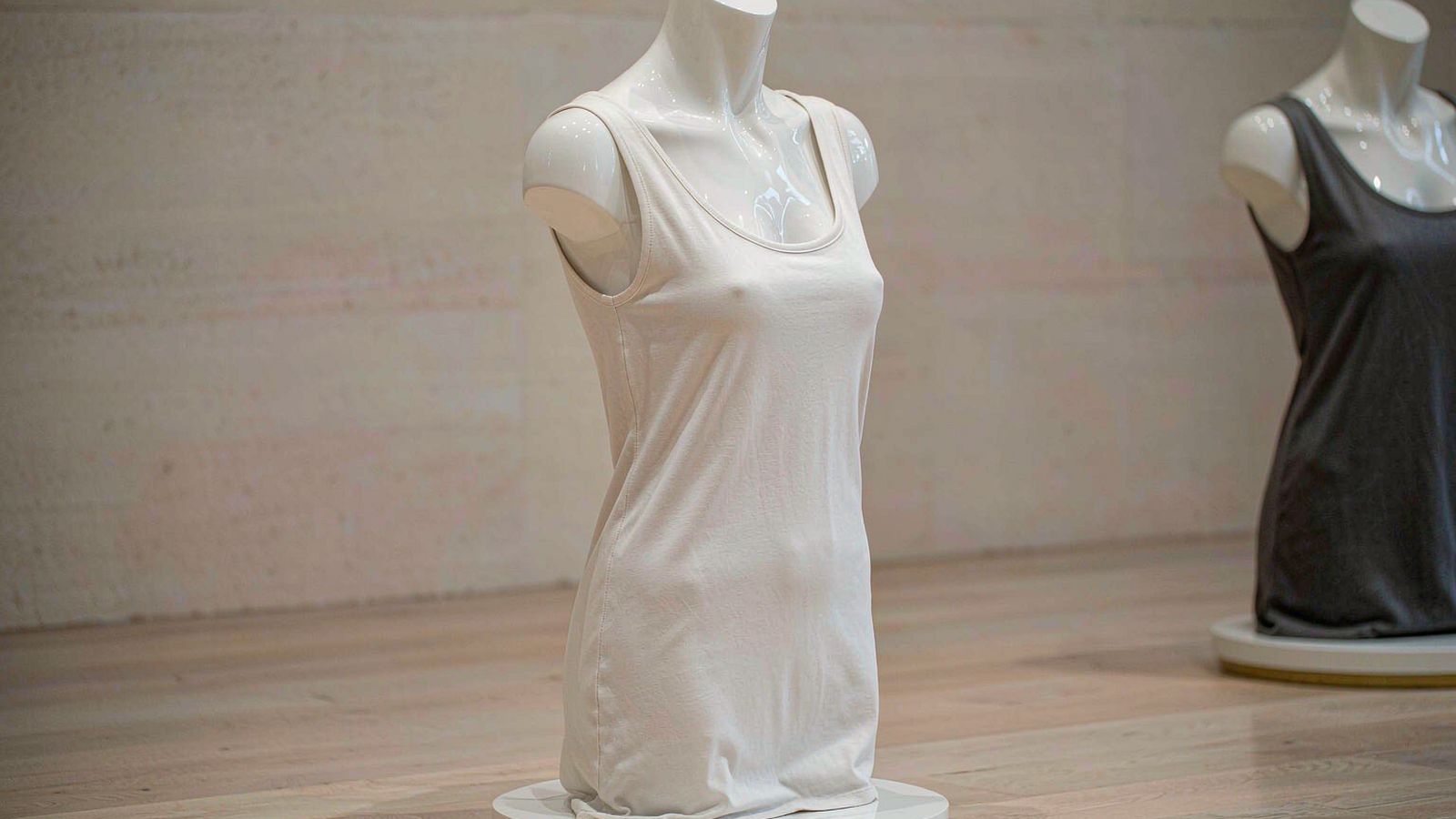
All-white figures, no heads, gloss or satin finish, nothing on the floor. This is the setup that makes a 30 m² shop look like it has a budget. It works because white reads as material rather than as a person, so the clothing carries all the colour.
Figures: two headless adult females, one torso form
Finish: satin white, RAL 9010 equivalent
Bases: glass disc on felt pads
Best for: contemporary womenswear, concept stores, anything under 50 m²
Realistic figures in a warm mid-tone, wooden or brass-toned bases, one figure wearing the season's key look. This reads as a boutique rather than a gallery, and it photographs better for social media because the skin tone gives the camera something to meter on.
Figures: two realistic adult females, make-up finish, one full-body male for mixed ranges
Finish: warm mid-tone skin, matte, hand-finished face
Bases: solid oak disc
Best for: womenswear with a warm palette, occasion wear, shops with timber floors
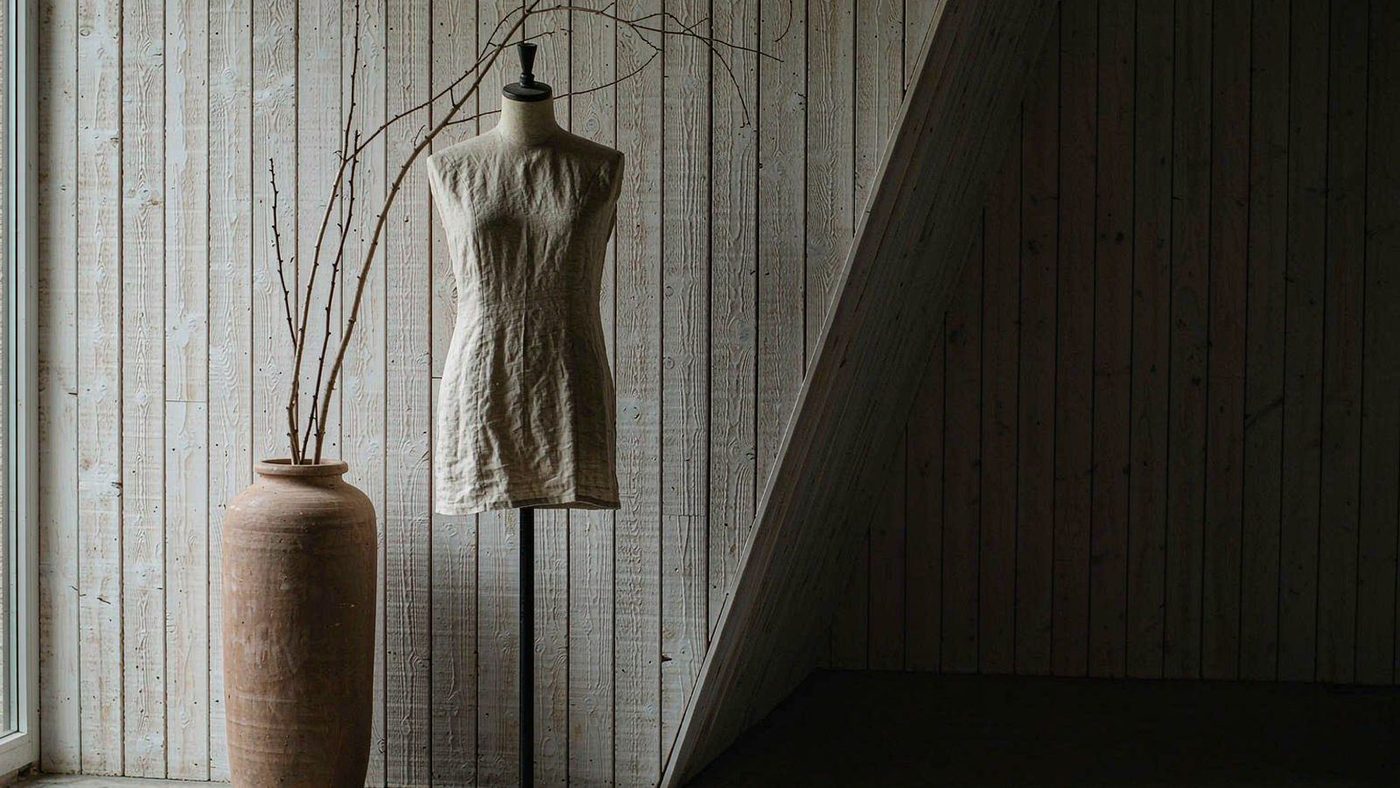
Torso forms only, on plinths at two heights, with two or three props. The cheapest setup to change: a new season costs a new prop and a new garment, not a new figure. This is the setup that makes a monthly window change realistic for a shop with one member of staff.
Figures: three torso forms, two plinths at 300 mm and 600 mm
Finish: matte white or linen-wrapped, so props can be changed without a colour clash
Bases: round disc; plinths on felt
Best for: knitwear, accessories, shops that change the window monthly
| Setup | Figures | Figure cost | Change cost per season | Staff time to dress |
|---|---|---|---|---|
| Minimal white | 3 | USD 330–390 | Garments only | 45 min |
| Warm skin tone | 3 | USD 330–390 | Garments, occasional re-style | 60 min |
| Seasonal torso | 3 | USD 240–300 | Garments plus props | 30 min |

Durability
A boutique figure is touched every week: arms removed to dress it, wig taken off, base dragged two metres to sweep. The finish that looks best in a photograph is not always the one that survives that.
Matte hides fingerprints, scuffs and small repairs, and can be touched up locally with the same topcoat on a cloth. Gloss reads more expensive in a window and shows every mark; a scuff needs a re-spray of the whole panel, not a spot repair. For a shop that restyles weekly, matte is the practical choice; for a sealed window that changes four times a year, gloss is worth it.
Cleaning is the same for both: a damp microfibre cloth with a drop of pH-neutral soap, no alcohol, no abrasive cream. Alcohol lifts the topcoat and leaves a dull patch that cannot be polished back.
Questions
Not a weighted one. A standard adult figure on a glass or timber disc weighs 17.6–19.6 kg with the base, so the centre of gravity sits low and takes a shoulder-height knock without tipping. Taller or leaning poses need a heavier base — stainless steel over a cast iron core — or a base bolted to the floor.
Yes, if the figure has a standard foot rod. Our bases — glass, iron in three shapes, and timber — are interchangeable across the range, which is why we suggest choosing the pose first and the material second.
Single units are available from stock in a limited set of models and colours. Custom poses and colours start at 5 pieces per model, because a new pose requires a new mould. If you need one figure in a specific finish, ask what is currently in production — there is often a slot to add to.
Production is 2–4 weeks after you approve pose and colour; sea freight adds 5–6 weeks to the US or northern Europe. If you need a figure in three weeks, air freight is the only route and it costs roughly three to four times the sea rate.
Yes — on the base, as a printed disc insert, or as a small decal on the plinth. Logo work on the figure itself is not recommended: it draws the eye to the branding instead of the clothing, which defeats the purpose of the display.
Fibreglass figures can be refinished rather than replaced: a sand, a primer and a new topcoat brings a scratched figure back for roughly a third of the cost of a new one. If the pose is out of date, a prop house or a local theatre group will usually take them.
Tell us the sales floor area and the window width. We will suggest a figure count and one of the three setups above, sized to your space.
CONTACT US
ART WING Display Mannequin, a China manufacturer of high-end-mid mannequins.
We dedicated to innovative design and focus on producing high-quality display production.
QUICK LINKS
PRODUCTS
ABOUT ART WING
SERVICE

Tel: +86-0769-33218711
E-Mail: info@ysydisplay.com
Add: A1#807, Tianan cyber building, Huangjin Road, Nancheng, Dongguan, China 523000.
Copyright © 2026 DongGuan Art Wing Display Co., Ltd | All Rights Reserved
Hello, please leave your name and email here before chat online so that we won't miss your message and contact you smoothly.