
Tel: +86-0769-33218711
E-Mail: info@ysydisplay.com
Add: A1#807, Tianan cyber building, Huangjin Road, Nancheng, Dongguan, China 523000.


Walk into any store and you see them. Standing in windows, sitting on display tables, frozen mid-stride in a shop entrance. Mannequins do the quiet work of selling clothes nobody bothered to describe out loud. But most retail buyers spend weeks picking the right lighting and exactly five minutes thinking about what their mannequins are made of.
That five-minute decision can cost you.
A fibreglass mannequin that cracks during a window change costs more than its replacement. A cheap plastic torso that yellows after one summer under store lights makes every outfit look washed out. Get the material wrong and you are not just replacing a fixture. You are replacing the thing that makes your merchandise worth the price tag.
A mannequin is a three-dimensional display form used to present clothing, accessories, and visual merchandising concepts in retail, museum, and commercial settings. Mannequin materials are the raw substances used to manufacture these display forms, and they directly determine durability, weight, finish quality, cost per unit, and how well the form holds up under daily store conditions. The material is not an afterthought. It is the whole job.
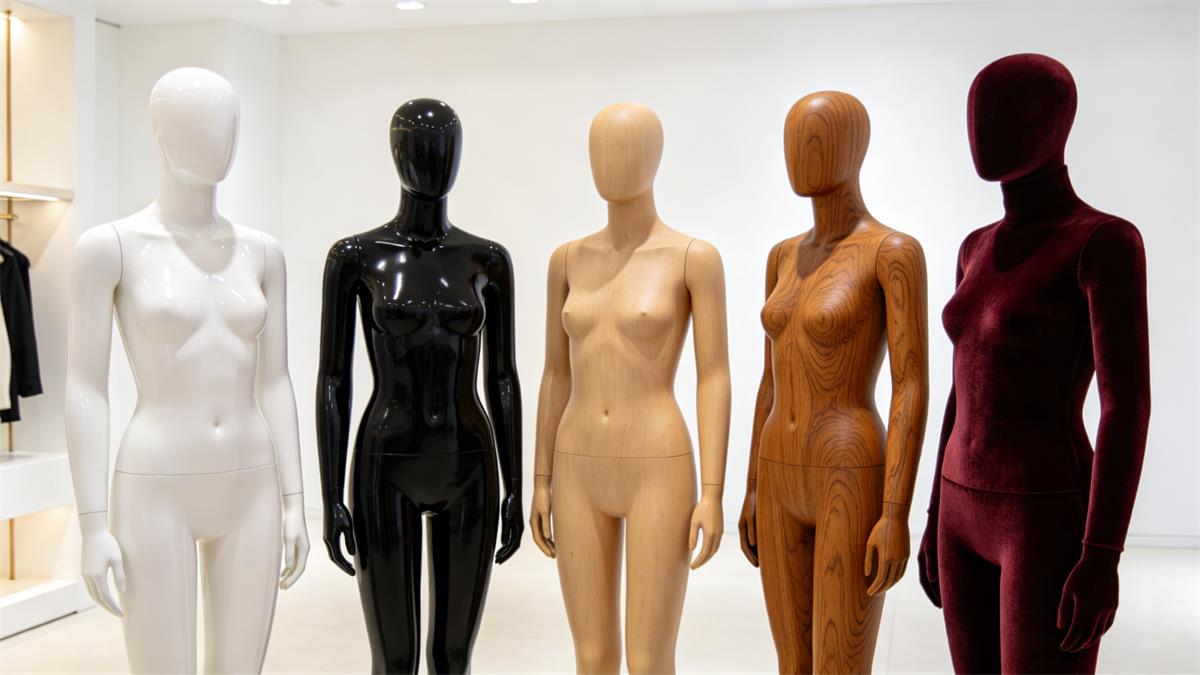
The material a mannequin is made from affects five things that show up on your P&L, not just in a catalogue spec sheet.
Durability under daily use. Staff take clothes on and off these things dozens of times a week. A material that chips on the third dressing is a material that costs you labor hours and replacement budget. Fibreglass lasts years in high-traffic stores. Cheap polystyrene cracks in months.
Weight and portability. A full-body fibreglass female mannequin weighs 12-18 kg. A comparable ABS plastic model weighs 6-9 kg. If your visual merchandising team moves mannequins between store zones every two weeks, that weight difference compounds into real staff fatigue and slower window changes.
Finish and surface quality. Some materials take paint and coatings better than others. Fibreglass and bio-resin hold matte, gloss, satin, and skin-tone finishes cleanly. Plastic comes pre-colored from the mould, which saves money but limits your finish options to whatever the factory offers. Fabric-covered forms give you texture that paint cannot fake, but they are harder to clean and show wear faster.
Cost per unit. A factory-direct fibreglass mannequin runs roughly $150-400 per unit depending on detail and finishing. Basic plastic torsos can go as low as $30-80. Bio-resin sits somewhere in the middle. The cheap option is not always cheap: replace a $40 polystyrene bust three times in two years and you have spent more than the $180 fibreglass one you should have bought in the first place.
Environmental impact. According to the National Retail Federation's 2025 sustainability report, 67% of retail buyers now factor end-of-life disposal into fixture purchasing decisions. Traditional fibreglass and polystyrene are petroleum-based and hard to recycle. Bio-resin and papier-mâché options break down faster and carry a smaller carbon footprint.
The material determines whether your mannequins look good on day 300, not just on day one.
Most mannequins on the market today fall into one of seven material categories. The table below gives you the headline differences. The sections after it dig into what each material actually feels like to live with.
| Material | Durability | Weight | Cost per unit | Finish quality | Best for |
|---|---|---|---|---|---|
| Fibreglass (FRP) | High | Heavy (12-18 kg) | $150-400 | Excellent | High-end retail, permanent displays |
| Plastic (ABS/PS) | Medium | Light (6-9 kg) | $30-150 | Good (pre-colored) | Budget retail, pop-ups, rentals |
| Bio-resin (BIO FRP) | High | Medium (8-12 kg) | $120-350 | Excellent | Eco-conscious brands, luxury retail |
| Wood | High | Heavy (15-25 kg) | $200-600+ | Natural grain | Museum, vintage, art displays |
| Fabric-covered | Medium | Medium (8-14 kg) | $180-450 | Textured | High-end boutiques, museum |
| Foam (PU/polypropylene) | Low-Medium | Very light (2-5 kg) | $50-120 | Matte/flocked | Dressmaking, photography, flexible poses |
| Papier-mâché | Low-Medium | Light (3-7 kg) | $100-250 | Matte, paintable | Museum conservation, eco displays |
Key takeaway: fibreglass and bio-resin are the workhorses for serious retail. Plastic is fine for temporary work and tight budgets. Wood, fabric, and papier-mâché serve specific niches where looks and authenticity beat raw durability.
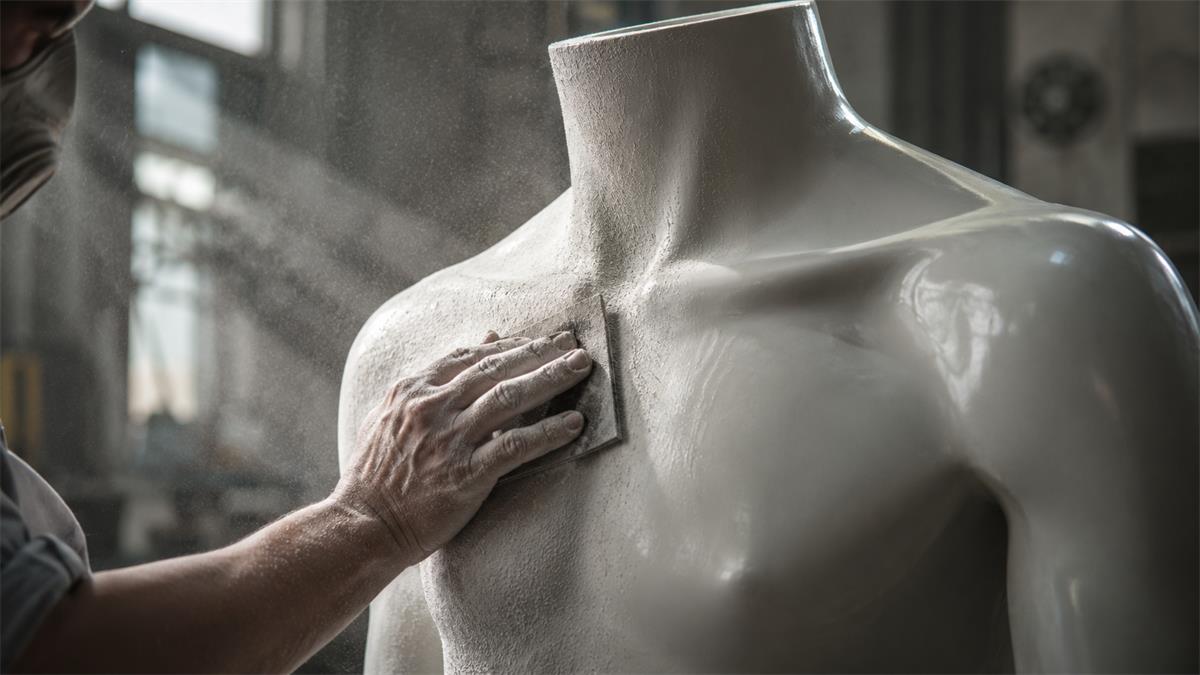
Fibreglass, also called Fibre Reinforced Polyester or FRP, is the most common mannequin material in mid-to-high-end retail. It is a composite: polyester resin reinforced with glass fibres, hand-laid or sprayed into a mould, then cured and finished.
FRP mannequins are heavy. A typical standing female form weighs 14-16 kg including the glass base. That weight is actually a feature in busy stores. Lightweight mannequins tip over when customers bump into them. FRP stays put.
The surface takes paint, clear coat, and skin-tone sprays extremely well. You can get high-gloss, satin, matte, and metallic finishes on FRP with no visible seam lines if the mould work is good. The downside: FRP cracks rather than bends under impact. Drop one during a window change and you will need a repair kit, not just some touch-up paint.
FRP mannequins typically last 5-10 years in normal retail conditions.
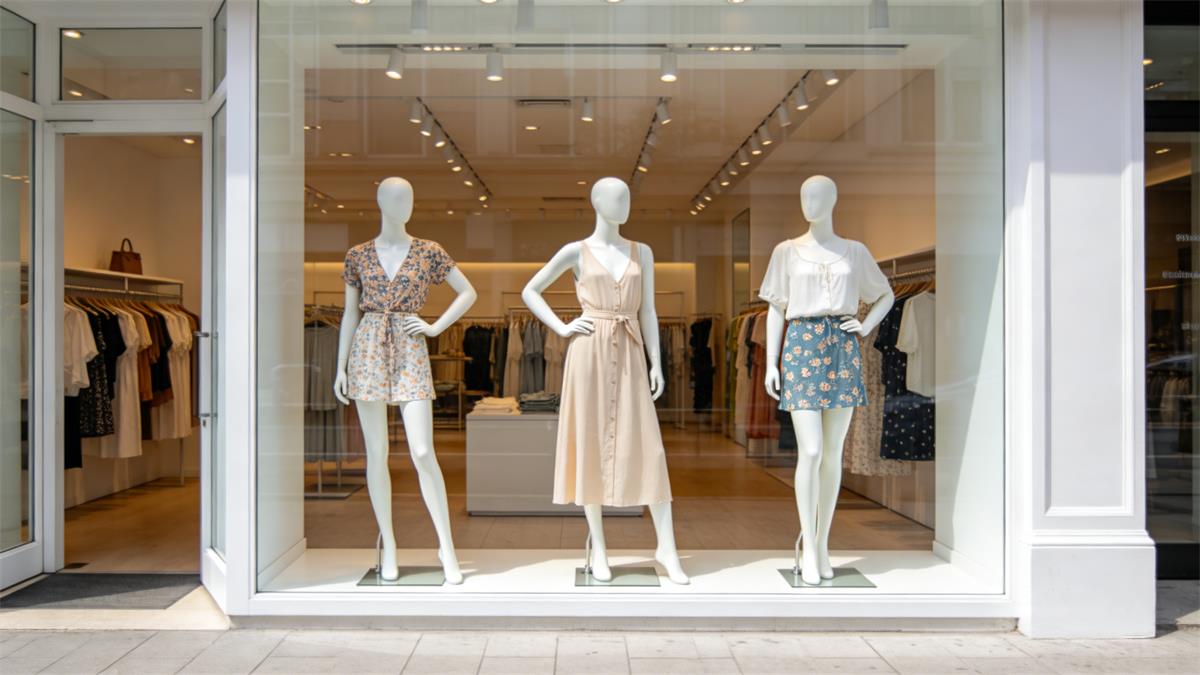
Plastic mannequins come in two main types: ABS (acrylonitrile butadiene styrene) and polystyrene. ABS is the tougher one. It flexes under impact instead of shattering, which makes it the default choice for rental mannequins that get shipped between trade shows and pop-up events week after week.
Polystyrene is cheaper and lighter but brittle. Retailers sometimes call it "unbreakable" in product descriptions, which is marketing, not engineering. It survives drops that would crack FRP, but it scratches easily and yellows under sustained UV exposure from store spotlights.
The big advantage of plastic is pre-coloring. The pigment goes into the material at the moulding stage, so scratches do not reveal a different color underneath. The trade-off: you get the colors the factory offers and nothing else. No custom skin tones, no brand-matched finishes.
Plastic mannequins last 2-5 years depending on usage intensity and UV exposure.
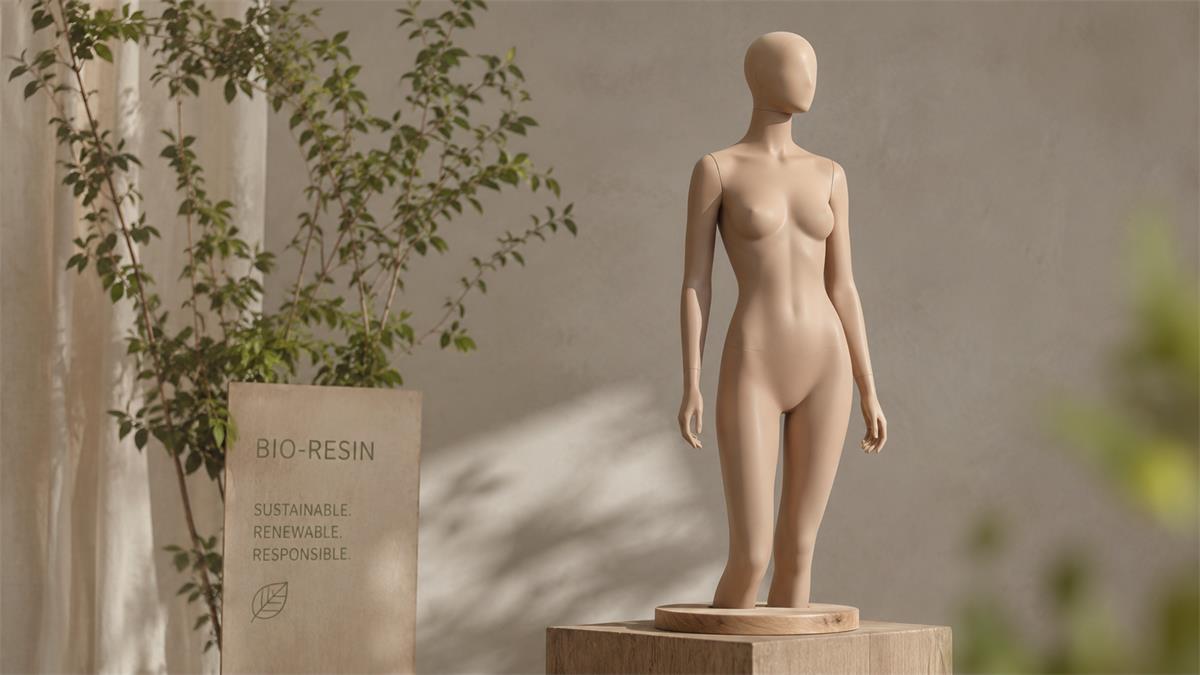
Bio-resin mannequins replace petroleum-based polyester with plant-derived resin, usually made from soybean oil, corn starch, or castor oil. The reinforcement fibres stay the same, so the structural performance is close to traditional FRP.
The finish quality is identical to fibreglass. You get the same range of gloss, matte, and skin-tone options. The weight is slightly lower, typically 8-12 kg for a full-body form. The real difference shows up at end of life: bio-resin mannequins can be ground down and the resin component biodegrades, leaving only the glass fibre to process separately.
Cost is higher than standard FRP by about 20-40%, but that gap has been shrinking since 2023 as more factories in China and Europe add bio-resin production lines. Bink With Us, a European mannequin supplier, lists BIO FRP as a standard material option across most of its contemporary collections.
Wood mannequins are the oldest type still in production. Most are made from limewood, poplar, or beech, carved and sanded to a smooth finish. Articulated wooden mannequins with jointed limbs are the classic artist's reference form, but solid carved display mannequins are also used in museum and heritage retail settings.
The look is unmistakable. No paint or finish replicates the warmth of oiled wood under gallery lighting. The downside is weight: a solid carved full-body form can weigh 20 kg or more. Wood also expands and contracts with humidity changes, which matters if your store does not have climate control.
Wood mannequins last decades with basic care. They are heirloom objects, not consumables. That also makes them the most expensive option: custom carved forms from specialist workshops run $500-1,500 per unit.
Fabric-covered mannequins have a structural core, usually FRP or wood, wrapped in textile. The fabric can be calico, linen, velvet, leather, or custom-printed material matching a brand's signature textile.
These forms are popular in high-end boutiques where the mannequin itself is part of the interior design, not just a clothes hanger. A velvet-covered torso in a jewellery store communicates something about the brand that white fibreglass cannot.
The maintenance story is less glamorous. Fabric collects dust. It stains when someone spills a coffee nearby during a window change. You cannot just wipe it down with glass cleaner the way you can with painted FRP. Expect to re-cover fabric mannequins every 2-4 years in high-traffic stores.
Foam mannequins use polyurethane or polypropylene foam, often with a fabric flocking layer on the surface for grip and appearance. They are extremely light. A full-body foam form with a metal base weighs 3-5 kg, which makes them easy to move and pose.
They are common in dressmaking and tailoring studios because the foam surface holds pins. Photographers use foam forms for product shots where a full mannequin would be too heavy to reposition quickly between setups.
The weakness is durability. Foam compresses under sustained pressure. A heavy coat left on a foam mannequin for weeks will leave permanent indentations. The surface flocking wears off at contact points like shoulders and hips within a year of regular use. Foam mannequins are tools, not investments.
Papier-mâché mannequins are made from recycled paper pulp mixed with adhesive, pressed or hand-layered into moulds, then dried and sealed. They are the lightest rigid-body option at 3-7 kg for a full form.
Museum conservators prefer papier-mâché for displaying historic garments because the material is chemically inert. It does not off-gas acids or solvents that could damage fragile textiles. Proportion London manufactures papier-mâché museum forms in their London factory, supplying institutions including the Victoria and Albert Museum (V&A).
Papier-mâché has two real limits: it is not waterproof, so it cannot be used outdoors or in humid environments without special sealing, and it does not hold fine surface detail as crisply as resin or fibreglass. For museum work, these limits barely matter. For a clothing store with a leaking air conditioner, they matter a lot.
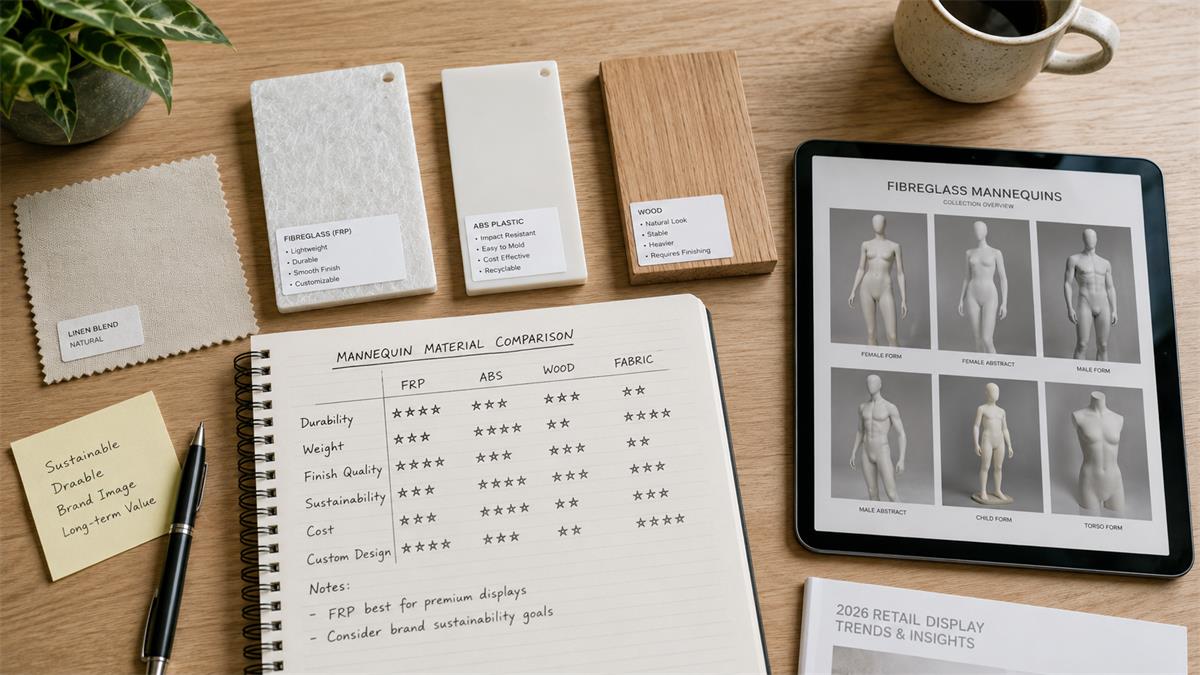
Use this table to match material to your actual store conditions. Score each factor from 1 (worst fit) to 3 (best fit) for your specific situation. The material with the highest total is your best starting point.
| Selection factor | Fibreglass | Plastic (ABS) | Bio-resin | Wood | Fabric | Foam | Papier-mâché |
|---|---|---|---|---|---|---|---|
| Heavy traffic durability | 3 | 2 | 3 | 3 | 2 | 1 | 1 |
| Budget under $100/unit | 1 | 3 | 1 | 1 | 1 | 2 | 2 |
| Custom finish available | 3 | 1 | 3 | 2 | 3 | 1 | 1 |
| Lightweight for moves | 1 | 3 | 2 | 1 | 2 | 3 | 3 |
| Eco-friendly end-of-life | 1 | 1 | 3 | 3 | 1 | 1 | 3 |
| Easy to clean | 3 | 3 | 3 | 2 | 1 | 2 | 2 |
Do not overcomplicate this. If you run a high-street fashion store with weekly window changes, pick fibreglass or bio-resin and move on. If you are outfitting a pop-up that runs for six weeks, plastic does the job for a third of the cost.
The mannequin industry has a waste problem. An estimated 50,000 to 70,000 mannequins end up in UK landfills each year, according to a 2024 report from the British Display Society. Most of them are fibreglass and plastic, materials that take centuries to break down.
Bio-resin is the most practical eco-friendly alternative for stores that cannot compromise on durability. It performs like fibreglass but the resin component degrades biologically at end of life. Proportion London introduced their EcoForm range in 2021, using fully recyclable materials with a carbon footprint roughly 40% lower than traditional FRP.
Papier-mâché is the lowest-impact option for controlled environments. It is made from recycled cardboard and water-based adhesive. At disposal, it composts or recycles with standard paper waste.
The harder conversation is about the business model. Some suppliers now offer mannequin take-back and refurbishment programs. Instead of buying new mannequins and trashing old ones, you rotate stock through a refurbishment loop. The unit cost is higher per rotation but the total cost of ownership drops because you are not paying disposal fees or buying replacements every 3-5 years.
No material is perfect. Here is what the spec sheets will not tell you.
Fibreglass chips at impact points. The glass fibres splinter and the exposed edge is sharp enough to cut skin. If your staff dress mannequins by pulling tight sleeves over rigid arms, expect chips at the wrist and elbow joints within two years.
Plastic warps in heat. A polystyrene mannequin left in a sunny window display during a heatwave will soften and sag. ABS is better but still deforms above roughly 90 degrees Celsius, which sounds impossible in a store until you remember that spotlights directly above a display can push surface temperatures past 60 degrees after hours of continuous operation.
Bio-resin costs more upfront. The 20-40% premium over standard FRP is real and not all clients are willing to pay it. Make the case in total cost of ownership, not unit price. If your brand markets sustainability, the premium pays for itself in marketing value within the first year.
Wood cracks with humidity swings. If your store is in a coastal city or a region with distinct wet and dry seasons, wood mannequins will move. You cannot stop it. You can only slow it with regular oiling and climate-controlled storage.
Foam is not an heirloom. It will look tired within 18 months of daily use and there is no practical way to refurbish it. Treat foam mannequins as consumable items with a known replacement schedule.
Three questions cut through the noise.
First: how often do you change your displays? Weekly changes demand durability. Monthly changes give you more flexibility on weight and cost.
Second: what is your lighting setup? Stores with heavy spotlighting need UV-resistant materials or finishes. White polystyrene under focused halogen will yellow in under six months. If you cannot change the lights, change the material.
Third: does your brand talk about sustainability? If the answer is yes, your mannequins need to match that story or customers will notice the gap. Bio-resin or papier-mâché forms backed by a take-back program say more about your values than a page on your website ever will.
For most mid-market retail stores, the practical answer is fibreglass for permanent floor displays and ABS plastic for promotional zones and window features that rotate every season. That combination balances durability, cost, and visual quality across the whole store.
Most modern retail mannequins are made from fibreglass (fibre reinforced polyester), ABS plastic, or bio-resin. Specialty forms use wood, polyurethane foam, fabric-over-FRP, or papier-mâché. The choice depends on budget, store traffic, and how often displays change.
Fibreglass (FRP) and bio-resin mannequins are the most durable options for daily retail use. Both last 5-10 years under normal store conditions. Bio-resin matches FRP structurally while adding end-of-life biodegradability. Wood lasts even longer under climate-controlled conditions but is heavier and more expensive.
ABS plastic mannequins are good for temporary retail, pop-up shops, and rental fleets. They are light, flex under impact, and cost $30-150 per unit. The trade-off is shorter lifespan (2-5 years), limited finish options, and UV yellowing under strong store lighting. They are practical, not premium.
Factory-direct pricing varies significantly by material. Basic polystyrene torsos: $30-80. ABS full-body forms: $80-150. Fibreglass (FRP): $150-400. Bio-resin: $120-350. Fabric-covered custom forms: $180-450. Hand-carved wood: $500-1,500. Papier-mâché museum forms: $100-250. These are approximate manufacturer prices. Retail and custom finishing add 30-60%.
Yes, for brands that can use them in the right environment. Bio-resin mannequins perform identically to traditional fibreglass with a 40% lower carbon footprint, based on manufacturer data from Proportion London's EcoForm range. Papier-mâché is the lowest-impact option but only works in climate-controlled indoor settings. The most sustainable choice is often not the material itself but the disposal model: take-back and refurbishment programs eliminate landfill waste regardless of what the form is made from.
CONTACT US
ART WING Display Mannequin, a China manufacturer of high-end-mid mannequins.
We dedicated to innovative design and focus on producing high-quality display production.
QUICK LINKS
PRODUCTS
ABOUT ART WING
SERVICE

Tel: +86-0769-33218711
E-Mail: info@ysydisplay.com
Add: A1#807, Tianan cyber building, Huangjin Road, Nancheng, Dongguan, China 523000.
Copyright © 2026 DongGuan Art Wing Display Co., Ltd | All Rights Reserved
Hello, please leave your name and email here before chat online so that we won't miss your message and contact you smoothly.