Retail Display Mannequins: How to Plan, Place, and Visualize Forms for Your Store
A retail display mannequin is a standing or partial form placed inside a store to present apparel and accessories the way a shopper imagines wearing them. It is the single most useful object a retailer can put on a sales floor, because it turns a flat garment into a finished outfit a customer can picture on themselves. Physical stores are still where most shopping happens: a National Retail Federation Consumer View survey found that 79 percent of US consumers buy at least half of their goods in person, and only 21 percent buy the majority of what they own online. Your windows and aisles are the stage, and the form is your lead actor.
This guide walks through how to choose retail display mannequins, where to put them, and how to plan the whole layout before you spend a dollar. It is written for store owners, visual merchandisers, and shop planners who need a practical method, not a catalog.
What is a retail display mannequin?
The window or entrance display is the first visual touchpoint a shopper has with a brand, and visual merchandising is the practice of arranging products and forms so that touchpoint drives a purchase. A retail display mannequin is the tool that carries apparel in that moment. It ranges from a full standing figure to a headless torso, a child sized form, or a fabric covered dress form used for tailoring and layering.
What they share is a job: show the garment in three dimensions. A folded stack on a table asks the customer to do the imagining. A styled form does the imagining for them, which is why forms sit at the center of almost every high performing window.
The main families you will choose between are:
Full body forms for complete outfits and window heroes.
Torso and shirt forms for focused garment presentation in tight spaces.
Dress forms for tailoring, bridal, and jewelry styling.
Abstract or headless forms for minimalist brands that want the clothing to lead.
Plus size, maternity, and kids forms for specific customer groups.
The rest of this guide helps you pick among them with a plan, not a guess.
Why does placement matter more than the mannequin itself?
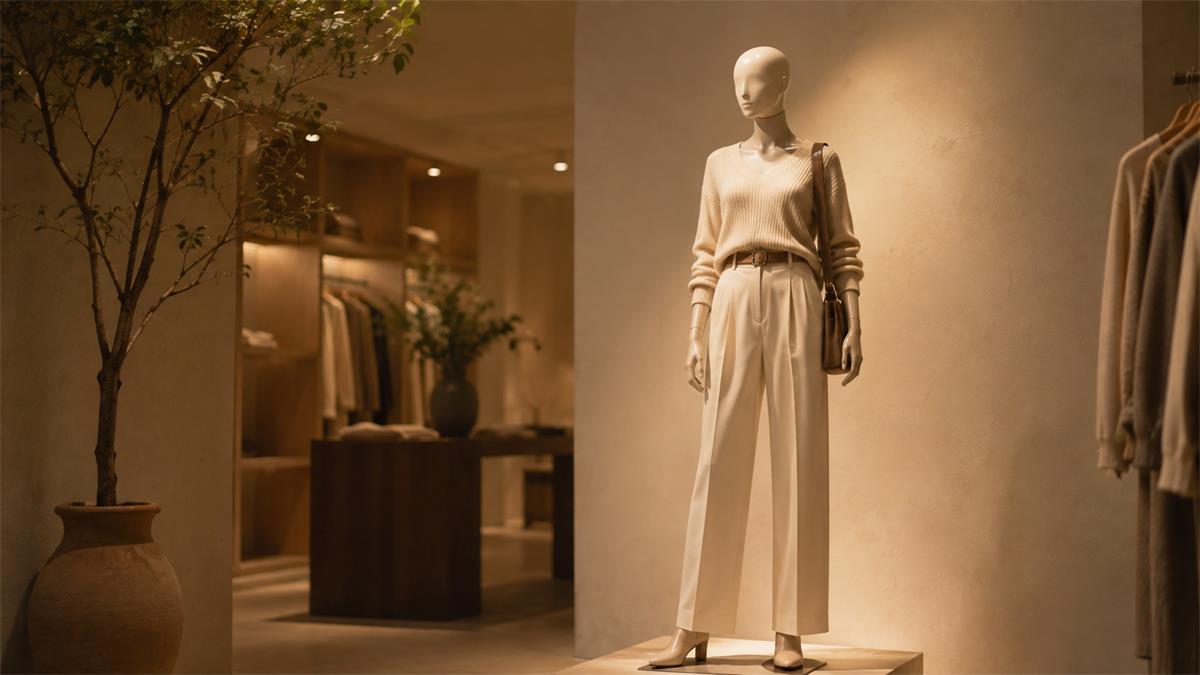
A form is only as effective as where it stands. Research on retail presentation puts the window's first impression at roughly 2.6 seconds, and well executed window displays can lift foot traffic by 20 to 30 percent while pushing sales up by as much as 45 percent. Those numbers come from how the form is placed, lit, and grouped, not from the form alone.
Think of it this way. Two stores can buy the same form. One puts it dead center under flat ceiling light with clutter behind the glass. The other places it twelve inches from the window, warms it with a single aimed spotlight, and leaves open space around it. The second store wins the sidewalk, and the sales gap between the two has almost nothing to do with the product they bought.
Placement is also where budget gets wasted or saved. A small number of well placed forms outperforms a wall of poorly placed ones. Before you shop, map the sightlines from your door, your windows, and your main aisle. The forms should earn their spot by being seen from those paths.
Which types of retail display mannequins should you consider?
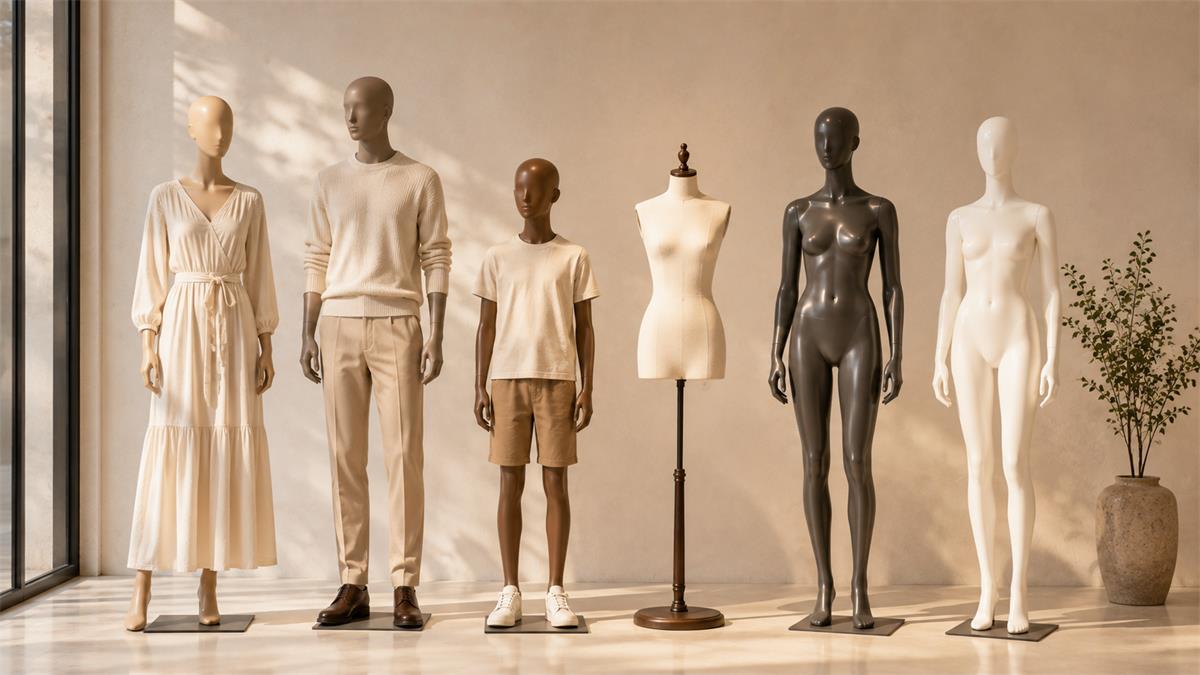
Use the table below to narrow the field. The right type depends on what you sell and how much floor you have, not on what looks impressive in a supplier photo.
| Type | Shows best | Best store type | Space needed | Note |
|---|---|---|---|---|
| Female full body | Dresses, women's apparel, accessories | Boutiques, department stores | Medium | The most common window hero |
| Male full body | Menswear, streetwear, tailored looks | Menswear, flagship | Medium | Athletic and classic poses available |
| Kids and teen | Children's apparel, family stores | Children's boutiques | Small | Playful, natural stance reads friendly |
| Torso or shirt form | Tops, knits, lightweight layers | Small stores, tight windows | Small | Lower cost, multiple display points |
| Dress form | Tailoring, bridal, jewelry, layering | Bridal, atelier, accessory shops | Small | Pairs well with a finished look nearby |
| Abstract or headless | Minimalist, concept brands | Concept and flagship | Medium | Keeps attention on the garment |
| Plus size or maternity | Inclusive sizing, specific categories | Specialty and inclusive retailers | Medium | Helps more shoppers picture themselves |
Skin tone and finish matter more than most owners expect. Offering a range of tones lets more customers see themselves in the clothes. Abstract gray or white finishes still work for minimalist brands, but a thoughtful tone choice reads as inclusive without a word of signage.
If you are matching forms to real body measurements, our mannequin size guide maps standard form dimensions to the customer groups you serve.
How do you match mannequins to your store format and merchandise?

The same form that fills a flagship window can drown a ten foot boutique. Match the cast to the room and the merchandise with the guide below.
| Store format | Recommended forms | Pose guidance | Why |
|---|---|---|---|
| Small boutique | One female or male hero, plus a dress form | Calm, relaxed stance | Limited space rewards focus over volume |
| Department store | Multiple full body, varied tones | Mixed dynamic and classic | Wide floor supports zones and stories |
| Flagship | Full body heroes plus abstract accents | Bold, brand specific | The window is brand theater |
| Pop-up | Torso and shirt forms, light weight | Simple, fast to move | Speed and portability beat drama |
| Outlet | Durable full body, fewer finishes | Standard standing | High traffic needs tough, simple forms |
A useful rule: let the merchandise set the pose. Formalwear wants a classic, stable stance that shows drape. Activewear wants movement and energy. Casual lines can mix poses to feel alive. When the pose matches the garment's message, the form stops looking like a prop and starts looking like a customer.
For window styling tactics that pair with these choices, see our boutique window display ideas.
Where should you place retail display mannequins in your store?

Placement breaks into two zones: the window and the interior. Each follows different rules.
In the window, build depth with three layers. Put your hero form about twelve inches from the glass, supporting pieces twenty four inches back, and backdrops or props thirty six inches back. That shallow stack creates richness without clutter and keeps the focal point unmissable from the sidewalk. Choose an open back format if your interior is attractive and you want to show the whole shop, a closed back if you need a controlled focal point, or a semi closed back for fast seasonal swaps on a budget.
In the interior, place forms where natural sightlines already travel: the entrance, the end of a main aisle, and any sightline from the window into the store. Raise hero pieces to eye level, which for most retail sits between forty eight and sixty inches from the floor, because products at eye level are noticed first and handled more.
Leave negative space around each form. A single styled figure with breathing room outperforms a crowded group, because the eye finds the hero faster. Use odd numbers of elements, usually three, to make a layout read as designed rather than accidental.
How can 3D modeling and virtual merchandising de-risk your layout?
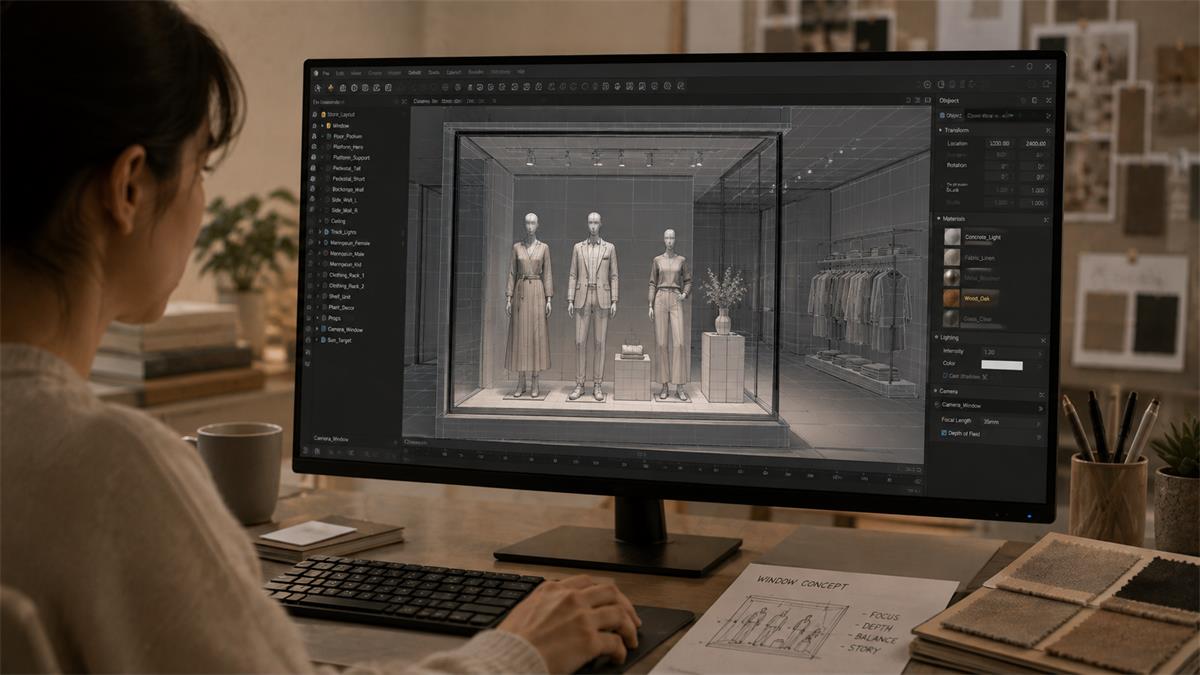
Most retailers buy forms, receive them, and only then discover the pose blocks the sightline or the group crowds the aisle. A 3D model of the form and the floor plan removes that risk before purchase.
In a visualization workflow, the store layout is built as a measurable 3D scene. Forms are dropped in at real scale, posed, and viewed from the exact angles a shopper sees from the window and the door. Sightlines, spacing, and grouping are tested on screen, so the expensive mistakes are caught in software instead of on the sales floor. The same 3D assets double as ecommerce product imagery, giving a store consistent renders across window, website, and social.
This step is the piece most retail display advice skips. Competitor buying guides tell you what to buy. They rarely show you how to prove the layout works in your specific room first. A short virtual plan turns a guess into a measured decision and usually means you buy fewer, better placed forms.
What is the right number of mannequins for your floor space?
More is not better. Use the scorecard below before adding another form.
| Check | Why it matters | Pass threshold |
|---|---|---|
| One hero per window | A single focal point stops the eye faster than a group | At most one hero, one support |
| Clear sightline from door | Forms should be visible on entry, not hidden | Seen from main entrance path |
| Forty eight to sixty inch eye line | Products at eye level get handled more | Hero garment near this band |
| Negative space around form | Clutter kills the focal point | At least one body width of clear space |
| Walkway stays open | Forms must not block the path to purchase | No form inside main aisle flow |
A small boutique often needs just one or two forms to look intentional. A department store can carry many because the floor supports zones. If you cannot pass every line above, hold the purchase and fix the layout first.
How often should you rotate retail display mannequins?
Static displays go invisible. Regulars stop seeing a window they pass every day, so a fixed change day keeps it alive. Stores that refresh windows every two weeks report 15 to 20 percent higher foot traffic than stores that change less often, because novelty pulls people back to look again.
A practical rhythm: a full refresh every two to four weeks, with small tweaks in between, and bigger themed windows tied to the retail calendar. Move a form, swap the hero garment, change the lighting color, or rebuild one window while leaving others. The goal is movement the regular eye notices.
Keep a simple rotation calendar so the work happens on a schedule instead of when someone finds time. The cost of a refresh is low compared with the traffic it protects.
Can a sustainable choice fit a retail display program?
It can, and quietly. You do not need to build a display around materials to signal care. Reuse the same backdrop across seasons, repair rather than replace props, and choose forms built to survive years of swaps. A program made from a small set of quality pieces you rearrange all year looks more considered than a wall of disposable props, and it costs less over time.
The soft move is to let longevity do the talking. Shoppers notice restraint, and a meaningful share say they will pay more for brands they see as responsible. Save the loud message for a tag or a line of copy, not the whole window.
Frequently Asked Questions
How much does a retail store mannequin cost?
Retail store mannequins range widely by type and material. Torso and shirt forms sit at the lower end and suit small spaces, while full body fiberglass or wood forms cost more and last longer. Budget for a few versatile pieces first, then expand as your display needs get specific, rather than buying many low quality forms at once.
What is the difference between a mannequin and a dress form?
A mannequin is a full or partial figure, often with a head, used to show complete outfits in windows and on the floor. A dress form is a torso only, usually fabric covered or raw, used for tailoring, bridal, and jewelry styling. Mannequins sell the finished look; dress forms show the craft and structure of a garment.
How many mannequins do I need for my store?
Most small boutiques need one hero form and at most one support piece per window. Department stores can use many because the floor supports zones. Judge by sightline and negative space, not by square footage alone. If a new form blocks a pathway or crowds a focal point, you already have enough.
Can I use a 3D model of a mannequin to plan my store?
Yes. A 3D model of the form and the floor plan lets you test poses, sightlines, and grouping on screen before you buy. It catches layout mistakes in software instead of on the sales floor, and the same assets can serve ecommerce and social imagery. It is the most reliable way to de-risk a layout in a specific room.
How often should retail display mannequins be changed?
Aim for a full refresh every two to four weeks, with small tweaks in between. Stores that refresh every two weeks see notably higher foot traffic than those that change less often. Tie bigger themed changes to the retail calendar so regulars always have a reason to look again.
Explore Our Mannequins and Dress Forms
Ready to put the right form in the right place? Browse our female mannequins, male mannequins, kids mannequins, and dress forms to find the cast that fits your store. Not sure which pose or tone tells your story best? Contact our team and we will help you plan a layout that turns your floor into your strongest sales tool.
About the Author
Charles Yang is a 3D Model Designer at awmannequins.com. With over 6 years of experience in retail fixture 3D modeling and product visualization, he supports retail brands and manufacturers with renders, virtual merchandising, and e-commerce-ready 3D assets.