Tel: +86-0769-33218711
E-Mail: info@ysydisplay.com
Add: A1#807, Tianan cyber building, Huangjin Road, Nancheng, Dongguan, China 523000.


Custom Mannequin Design Process: From Concept to Reality
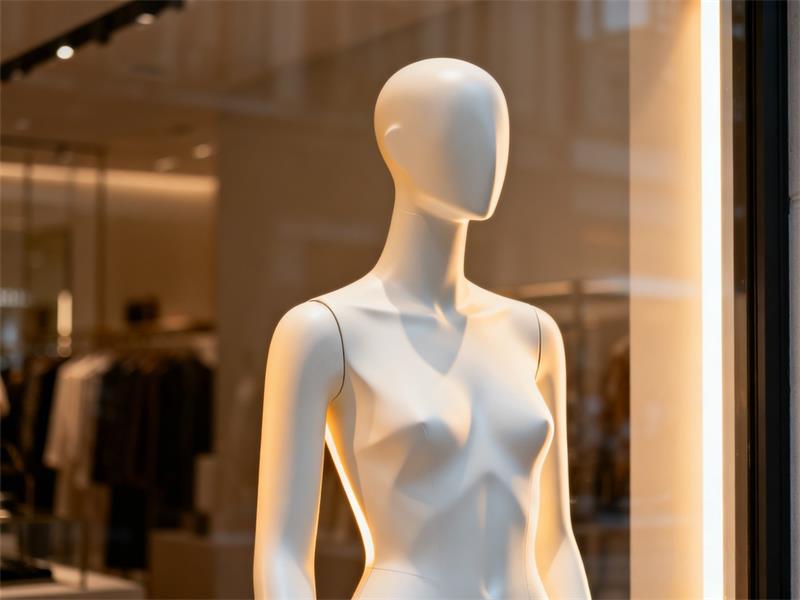
Walk into any retail store, and you will realize that the first thing you engage with is not the item being sold but the posture of the forms representing the product. Most retailers tend to disregard the impact that these silent ambassadors have, seeing them as simple forms instead of well-engineered elements that are part of their brand's visual language. The designing and manufacture of custom mannequins is where visual merchandising leaves its mark; either it wins through or sinks without trace. They are much more than simply models intended to show clothing off.
This is one important fact about the process of custom mannequin design— it's never a frivolous effort. It follows every aspect of the language used by the brand in communicating with its audience. A weak mannequin design can end up diluting all your efforts to communicate the right message and weaken the display process into a mere necessity. Brands that employ good strategies in their displays soon realize how the design of the mannequin helps create a hierarchy within the display.
Cost of Compromise: Why Pre-Cut Forms Do Not Work
The biggest pitfall for purchasing mannequins is using pre-formed ones with claims of fitting everybody's needs. This is where professionals distinguish themselves from amateurs. Something that seems to work wonders on the drawing board might prove deceptive, resulting in an accidental gap between what you have and how it looks.
Catalog forms are built for scale, not for your brand’s unique silhouette or the way your fabrics drape and behave under light. For instance, a shoulder slope that appears balanced in a drawing might force a jacket’s lapel to adopt an unflattering angle at full-scale. A pose that reads as confident in concept may shift to something awkward when applied to real-world garments. Bespoke mannequin creation starts from the premise that the form should be shaped by the product, not the other way around.
The process begins with aligning merchandising, design, and sculpting teams on the anatomical intention behind the form. It’s not a matter of creating a figure—it’s about engineering the ideal silhouette that supports your collection. This early positioning ensures that each line, angle, and form serves a function and contributes to telling your story. Skip this step, and you risk a mannequin that sits on the floor, barely holding its own, yet costing you far more than just the price of its creation.
Phase One: Translating Brand Narrative into Physicality
Every custom mannequin design process begins with deconstruction. What is the intended behavior of your display? Is it to guide movement, to create a sense of novelty, or to reinforce a specific brand attitude, like minimalism or voluminous elegance?
During this phase, brand mood boards are transformed into real-world proportions. Arm angles, neck extension, and weight distribution are not just artistic choices—they are critical technical decisions that influence how garments interact with their environment. A well-executed mannequin concept can communicate a brand’s identity before a single customer speaks, and it does so with the same clarity as your marketing copy. From the moment the form is placed on the floor, it becomes part of the visual merchandising language.
This is also the point where scale is determined. A form crafted for a compact boutique in Tokyo must conserve space, maintain balance, and project clarity in a constrained environment. However, the luxury flagship in Dubai would have to convey an aura of prestige and exactness as part of the essence of the brand. This is how space impacts the process of creating the sculptures in ways mass-produced mannequins cannot.
Phase Two: Designing the Silent Salesperson
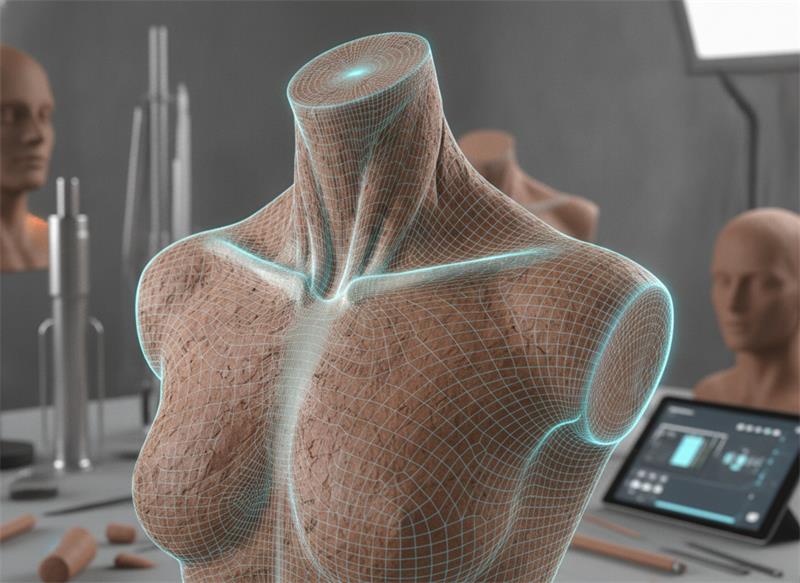
Following the definition of the posture, the sculptor either proceeds to modeling in clay or designing using the high-definition computer model. While being ignored most times, this step happens to be the most technical and emotional of the stages in creating custom mannequins.
Prototype molds reveal truths hidden by drawings. A neckline that feels refined in two dimensions may appear too tight when rendered in three. A hip angle that reads dynamic in concept might compete with the placement of a handbag. The revision cycle here is the ultimate filter between professional execution and rushed mass production. Surface quality is also finalized at this stage—decisions on whether the form should wear a raw, concrete texture, a high-gloss finish, or a matte, velvet-like coating that absorbs boutique lighting rather than reflecting it harmfully.
A well-executed mannequin concept can elevate the perceived value of a product, not just by holding it in place, but by reinforcing the brand’s visual identity. The finish of the form is as much a character as the product it displays, shaping how customers see, feel, and engage with what you’re offering.

Phase Three: Spatial Balance and Lifespan
While the design phase of the custom mannequin is completed with delivery of the form, the last and ultimate stage is achieved during installation, which includes the establishment of spatial harmony between the mannequin and the environment. In this regard, many retailers do not account for how the footprint and balance point of the mannequin may impact customer flow and interaction.
With an accurately crafted mannequin form, you have an opportunity to establish natural flow interruptions, making the customers stop and interact with important visual areas, while ensuring their vision is unobstructed. It is all about rhythm and balance between the space and the mannequin. Finally, you have to make sure that the material of your mannequin will be able to withstand the environmental conditions in your shop. Humidity, UV rays, and varying temperatures can negatively impact both resin stability and durability of the painted surface. This is something you will gain from the custom mannequin design process.
When your mannequin forms are installed with professional skills, you will get elements that will stay in place for quite a long period of time without losing their appearance and structural integrity.

Invisible ROI: Quantifying the Effectiveness of a Thoughtful Form
What is the ROI on mannequins? Don’t just look at the numbers and measurements. Measure how long people stand around the visual zones. See how many times clothes on the forms have been returned compared to clothes hung up traditionally. Companies that think strategically about their displays know that a well-designed form creates longer visibility and decreases the need for mark downs to preserve the perception of quality in the collection.
It is important to understand that a mannequin is more than just an object that holds merchandise. If you have the right form, then you can instill exclusivity into the shopping experience, clearly visualize the collection and even help to direct where the eyes of customers should focus.
FAQ
How long will a mannequin design process usually last?
It takes up to 10 to 16 weeks from brief development until a prototype is created. This timeline depends on sculpting difficulties and the need for a certain surface finish of the mannequin. Shortening the process negatively affects its form accuracy and its ability to produce retail impact.
When can the bespoke creation of mannequins be considered as such?
A bespoke creation implies not only individual sizes and formats. The proportions, posture, and finishes should all fit with the branding and specific spatial conditions of your store.
Is it necessary to make mannequins with bespoke design for each retail concept?
This is necessary if your brand needs a unique form language or material finish that is critical for you. The general form usually ruins the overall image since it lacks the ability to create the desired spatial narrative and retail positioning.
Can bespoke forms of mannequins be adjusted seasonally or with each new product rotation?
Yes, it is possible because a professional custom mannequin design includes elements that allow changing the form according to the requirements of the display concept.
What is the one thing that is always ignored when building a tailor-made mannequin?
Finish of the material under your specific lighting circumstances. Resin that has a warm feel and looks beautiful under 3000K store lighting might come off as cold and uninviting in natural light from LED bulbs. Custom mannequin design process makes sure that no matter whether in the digital or physical world – your mannequins will have the same level of presence.
Now, examine the way your existing display currently looks. Can you say with confidence that it reflects the values of your brand properly? It is possible that you are missing something crucial in how you approach mannequin design. Custom mannequin design process should be considered a non-negotiable part of any branding process. If you truly understand that every form in the store affects the perception of your product, you need to think about your mannequins differently.
CONTACT US
ART WING Display Mannequin, a China manufacturer of high-end-mid mannequins.
We dedicated to innovative design and focus on producing high-quality display production.
QUICK LINKS
PRODUCTS
ABOUT ART WING
SERVICE

Tel: +86-0769-33218711
E-Mail: info@ysydisplay.com
Add: A1#807, Tianan cyber building, Huangjin Road, Nancheng, Dongguan, China 523000.
Copyright © 2026 DongGuan Art Wing Display Co., Ltd | All Rights Reserved
Hello, please leave your name and email here before chat online so that we won't miss your message and contact you smoothly.