
Tel: +86-0769-33218711
E-Mail: info@ysydisplay.com
Add: A1#807, Tianan cyber building, Huangjin Road, Nancheng, Dongguan, China 523000.


If you've sourced mannequins for a retail chain, you know the material isn't a footnote — it's the foundation. Pick wrong, and six months later you're getting calls about chipped shoulders and faded finishes. Pick right, and those same mannequins look sharp through hundreds of outfit changes.
Three materials dominate: fiberglass, ABS plastic, and polyresin. Each behaves differently under real store conditions. Here's what actually matters after the PO is signed.
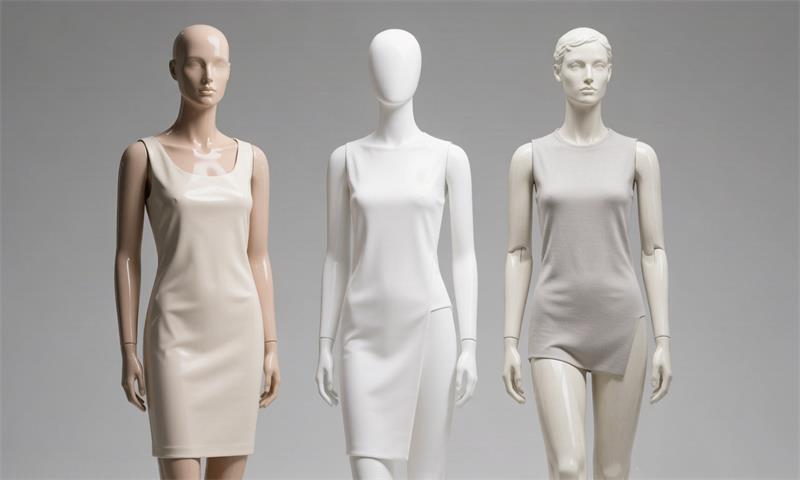
Let's skip the catalogue talk. A mannequin carries your brand's visual identity. The material you choose decides:
Longevity — How long it survives daily handling in a busy store, not on paper but in practice.
Appearance — Matte, glossy, textured, skin-like. The material sets the ceiling on all of it.
Weight — That hits your shipping bill and your staff's backs.
Detail capture — For luxury and high-fashion, this one's non-negotiable.
Total cost of ownership — Not the unit price. The real number over three to five years.
A cheaper mannequin that needs replacing every eighteen months often costs more than a premium one that lasts five. The material is the math.
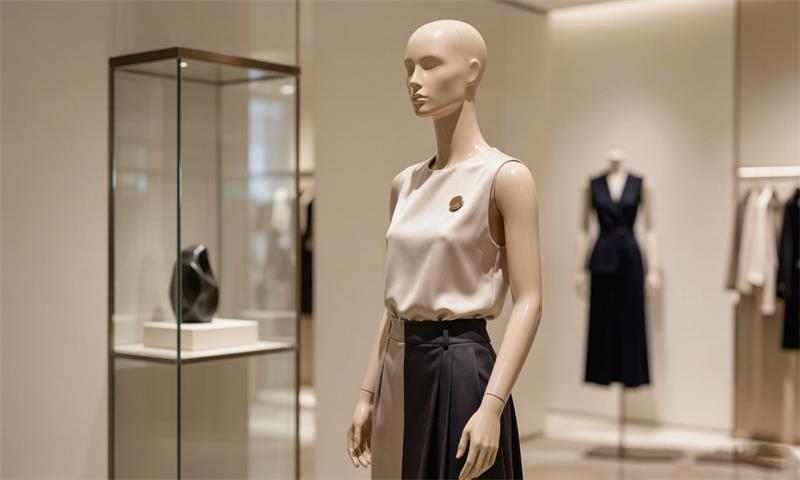
Fiberglass has been the industry benchmark for decades, and honestly, there's a good reason. It's built from layers of glass fiber bonded with polyester or epoxy resin — the result is a rigid, high-strength shell that's tough and long-lasting.
A full-body fiberglass form typically weighs 8 to 15 kg. Not featherweight. But that weight is part of what gives it the premium feel. Touch one and it feels cool and solid. Customers register that heft without knowing why. They just feel the quality.
Paint grabs onto fiberglass exceptionally well — photorealistic skin tones, blush effects, dead-matte to high-gloss finishes
Hard, smooth surface that holds up beautifully under display lighting
Structurally robust with a long service life
Luxury boutiques where display quality directly shapes brand perception
Window displays that need to catch light from every angle
Department store anchors — mannequins that stay in place for months
Cosmetic and jewelry displays demanding flawless surface finish
Higher unit price, heavier shipping weight, and yes — it chips if you drop it hard enough. Repairs are possible but require skill. For brands that rotate displays constantly, the handling risk is real.
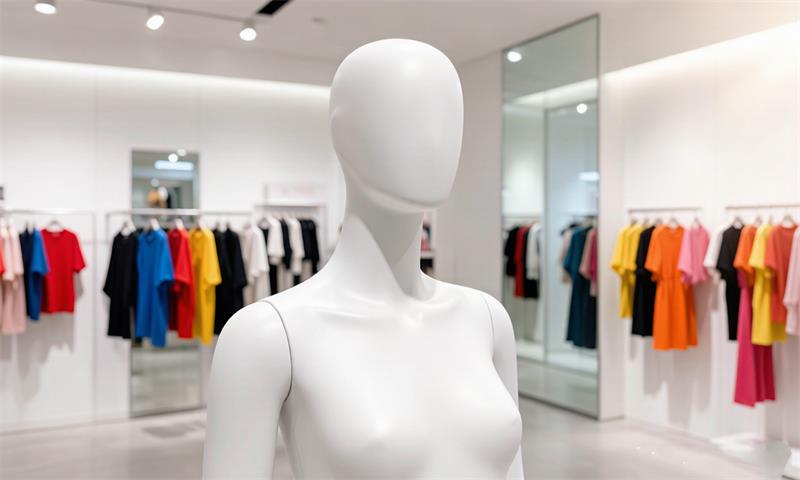
ABS (Acrylonitrile Butadiene Styrene) powers most mass-market and mid-range mannequins today. Injection-molded, lightweight, impact-resistant. That manufacturing approach changes the economics dramatically.
A full-body ABS mannequin typically weighs 4 to 8 kg — roughly half the weight of a comparable fiberglass piece. That weight saving compounds fast across multiple store locations, shipping containers, and annual replacement budgets.
Excellent impact resistance — ABS flexes rather than cracks under daily abuse
Lightweight, making it easy to move, restyle, and ship
Lower per-unit cost and lower total landed cost thanks to lighter freight weight
Fast-fashion chains with high mannequin turnover and frequent restyling
Multi-location retail where shipping and logistics eat a real chunk of the budget
Pop-up stores and temporary displays that need durable, portable fixtures
Children's and juniors' sections — the lighter weight is a genuine safety advantage
ABS doesn't love heat. Park one in direct sunlight for months and warping becomes a real possibility. The injection process also caps the level of fine anatomical detail you can get. Over time and heavy use, micro-scratches show up more readily on ABS than on fiberglass.
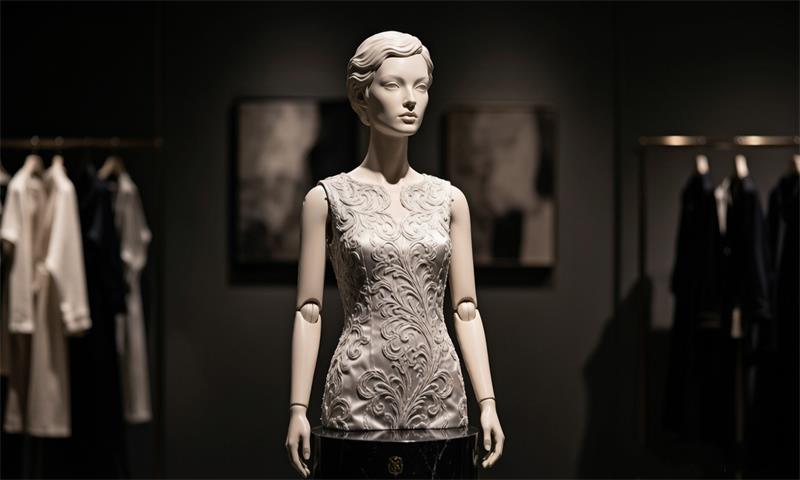
Polyresin is what you reach for when the other two materials simply can't deliver the level of detail you need. It's cast — not injection-molded. Liquid resin pours into silicone molds and captures everything: facial features, vein lines, muscle definition.
Full-body polyresin mannequins are the heaviest at 10 to 20 kg. But that density gives them a stone-like, cool feel that nobody can fake. It mimics the thermal quality of ceramic or marble.
Unmatched sculptural detail — the finest facial and anatomical accuracy of any mannequin material
Accepts paint beautifully, achieving truly lifelike appearances
Subtle surface porosity that yields a natural, skin-like texture
Haute couture and designer flagship stores demanding museum-grade presentation
Realistic, lifelike mannequins for high-end bridal and formalwear
Artistic displays where the mannequin itself is the statement piece
Museum and gallery installations where detail trumps portability
Brittle under hard impact. Drop a polyresin mannequin on concrete and you're not fixing a chip — you're sweeping up pieces. Shipping is expensive. Not ideal for brands that shuffle displays around every season.
| Property | Fiberglass | ABS Plastic | Polyresin |
|---|---|---|---|
| Weight (full body) | 8 – 15 kg | 4 – 8 kg | 10 – 20 kg |
| Surface finish | Smooth, glossy or matte | Smooth, consistent | Stone-like, subtle porosity |
| Impact resistance | Good — can chip | Excellent — flexes | Poor — can shatter |
| Detail capability | High | Moderate | Highest |
| Heat resistance | High | Low – moderate | Moderate |
| Unit cost | High | Low – moderate | Moderate – high |
| Best for | Premium/luxury brands | Mass-market, multi-location | Couture, art, bridal |
I've seen too many buying decisions made from spec sheets. Here's a simpler way to think about it.
Your brand lives or dies on a polished, premium look.
Mannequins stay in fixed displays for extended periods.
Surface finish and paint quality are non-negotiable.
You can absorb the higher per-unit cost and shipping weight.
You operate multiple store locations and need consistent looks at scale.
Mannequins get moved, restyled, and rotated constantly.
Shipping and handling costs are a real budget line item.
Heat exposure (sunny windows) is manageable or minimal.
Your brand is luxury, couture, or art-driven.
Realistic anatomical detail is what sets you apart.
Display quality matters more than portability.
Mannequins are treated as permanent fixtures, not movable props.
Brands that do this best mix materials strategically. Fiberglass in flagship windows. ABS in fitting rooms and high-traffic zones. Polyresin for the hero piece by the entrance. The material follows the display strategy, not the other way around.
Which mannequin material is the most durable?
ABS plastic takes the most abuse. It flexes rather than cracks, and daily handling barely fazes it. Fiberglass is structurally strong but will chip if knocked hard. Polyresin is the most delicate — handle with care.
Why are fiberglass mannequins more expensive than ABS?
Fiberglass requires far more hands-on labor — laying glass fiber layers by hand, then detailed hand-finishing on every surface. ABS gets injection-molded in an automated process, which drives down per-unit cost. The premium price reflects superior surface quality and greater detail capability.
Can ABS mannequins look as premium as fiberglass?
Honestly? Not quite. Good ABS with quality molds can look very solid, but it won't match the paint depth, surface adhesion, or that cool, heavy feel of a well-made fiberglass piece. For most mid-market applications the gap is acceptable. For luxury positioning, fiberglass or polyresin remains the standard.
What's the best material for e-commerce product photography?
Fiberglass is the most common choice — its smooth, reflective surface and consistent paint finish photograph beautifully under studio lights. ABS is a practical alternative when you're shooting high volumes and cost per unit matters more than pixel-level perfection.
How should I factor shipping costs into my decision?
Weight differences are significant. A container of ABS mannequins may hold 30–50% more units than fiberglass because of lower per-unit weight. For international sourcing, calculate total landed cost — unit price plus freight, duties, and insurance. Ex-factory price alone will mislead you. ABS typically wins on landed cost; fiberglass and polyresin win on what actually shows up in the store.
There's no universal best mannequin material. There's only the best material for your brand, your retail format, and how your team actually operates day to day.
Fiberglass gives you the premium feel. ABS gives you scale and durability. Polyresin gives you artistic detail that's hard to get any other way.
Start with a simpler question than a spec sheet: what do these mannequins need to communicate, and for how long? Answer that honestly, and the material choice takes care of itself.
Contact our team for material samples and a customized quotation tailored to your brand's specific requirements — not a one-size-fits-all catalogue price.
CONTACT US
ART WING Display Mannequin, a China manufacturer of high-end-mid mannequins.
We dedicated to innovative design and focus on producing high-quality display production.
QUICK LINKS
PRODUCTS
ABOUT ART WING
SERVICE

Tel: +86-0769-33218711
E-Mail: info@ysydisplay.com
Add: A1#807, Tianan cyber building, Huangjin Road, Nancheng, Dongguan, China 523000.
Copyright © 2026 DongGuan Art Wing Display Co., Ltd | All Rights Reserved
Hello, please leave your name and email here before chat online so that we won't miss your message and contact you smoothly.