
Clothing Boutique Display Ideas: How to Present Garments That Sell
A clothing boutique display is a planned presentation of garments, accessories, and styling cues inside a store or window, built to help shoppers read an outfit at a glance and want to try it on. It is more than neat folding. A good display sets a focal point, builds a color story, and guides the eye from the sidewalk to the rack. For boutique owners and visual merchandisers, the display is the quiet salesperson working every hour the door is open.
Shoppers decide fast, and they decide with their eyes. The sections below walk through what a strong boutique display does, how to build one with real garments, which form or mannequin to style on, and how to keep the presentation fresh through the season.
What Does a Strong Clothing Boutique Display Actually Do?
A strong display does three jobs at once: it stops the scroll of a passing shopper, it explains the garment without a word, and it points the shopper toward the product to buy.
The case rests on how people shop. Studies of in-store behavior show that about 80% of shoppers base their buying decisions primarily on what they see, and well-executed window displays can lift foot traffic by roughly 23%. In apparel retail, mannequins and forms are repeatedly tied to sales lifts of around 66% versus garments left on hangers alone. The takeaway is simple: a styled garment is not decoration, it is a selling tool.
A boutique display earns its space when it meets four tests. It shows the outfit, not just the item. It places the hero at eye level. It keeps a clear sightline from the entrance. And it leaves enough empty space that the eye knows where to land.
How Do You Build a Garment Display That Sells?
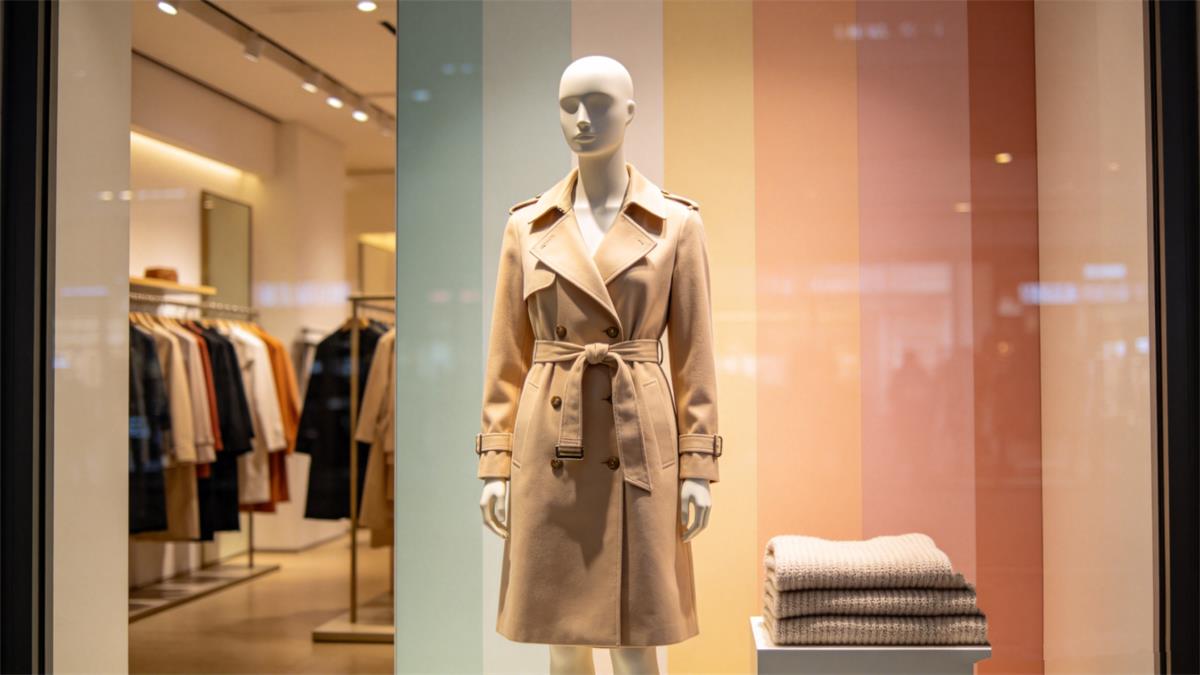
Start with one hero garment and build outward. Pick the piece you most want to move this week, dress it on a form or mannequin, then add one or two supporting items that complete the look. A single, readable story beats a crowded table every time.
The table below compares the three core ways to present a garment, and when each one pulls its weight in a boutique.
| Method | Best for | Visual strength | When to use it |
|---|---|---|---|
| Dressed form or mannequin | Full outfits, new arrivals, hero pieces | Shows fit, drape, and styling together | Window, entrance, and any "shop the look" moment |
| Folded on table or shelf | Knits, denim, stacks of basics, color runs | Invites touch, shows range and volume | Mid-floor tables, alongside the matching form |
| Hung on wall or rack | Edits, seasonal color stories, easy browsing | Shows the line at a glance, saves floor space | Perimeter walls, capsule collections |
Use all three in one zone and you get depth: the form shows the outfit, the fold shows the range, the wall shows the story. A color story ties them together. Choose two or three tones that sit well together, then repeat them across the form, the fold, and the wall so the eye reads one coherent message.
Which Mannequin or Form Should You Style Clothes On?

The right body depends on the garment and the boutique concept. A flowing dress reads best on a female form with arms; a tailored jacket reads best on a structured male block; a children's line needs a kids form sized to the range. A dress form works when you want to show fit and fabric without committing to a full figure.
The comparison below maps form type to the garments it presents best.
| Form type | Presents best | Boutique fit |
|---|---|---|
| Female mannequin | Dresses, blouses, full outfits | Women's apparel, occasion, contemporary |
| Male mannequin | Suits, shirts, outerwear | Menswear, streetwear, tailoring |
| Kids mannequin | Children's sets, uniforms | Family, children's, schoolwear boutiques |
| Dress form | Tops, garments focused on fit and drape | Small spaces, workroom-to-floor styling |
| Torso or abstract form | Accessories, layered looks | Jewelry, scarves, editorial vignettes |
Match the form to your core customer, not to the sample you happen to own. A contemporary women's boutique does well with a size 10 to 12 female form, while a bridal or occasion store may prefer a slim size 2 to 4 form with arms to show drape. The closer the form is to your real buyer, the more the clothes look like they fit.
How Do You Style Clothes on a Mannequin for a Boutique?

Styling is where a garment either sells or stalls. Build the look the way a customer would wear it, then refine for the sightline.
Begin with pose and proportion. A relaxed, natural stance reads as approachable; an active pose reads as energetic. Add one layer, one accessory, and one point of contrast, then stop. Shoppers should read the story in about two seconds. Light the form with a warm spotlight at roughly 45 degrees and raise it to eye level on a low pedestal so the outfit meets the gaze of a passing shopper.
Use the scorecard below to check a finished mannequin before the store opens.
| Check | Pass signal | Fix if failing |
|---|---|---|
| One clear hero | A single garment leads the eye | Remove extra pieces fighting for attention |
| Eye-level focus | Outfit sits at shopper gaze height | Raise on pedestal or lower the rail |
| Tight color story | Two to three repeating tones | Pull out off-story colors |
| One supporting prop | A bag, shoe, or flower, not a pile | Reduce to a single cue |
| Clean sightline | Visible from entrance and window | Move blockers, open the path |
Rotate the look every one to two weeks. Regulars stop noticing a static form, and fresh styling is the simplest way to make the store feel alive.
What Layouts Show Clothes Best in a Small Boutique?

Small footprint boutiques, often under 1,000 square feet, win or lose on layout. The right plan draws shoppers past the highest margin items and keeps the floor open enough to browse. Five proven layouts appear often in retail practice: straight (fixtures along both walls with a clear center aisle), loop or racetrack (a defined path around the room), angular (racks angled at 45 degrees for a curated feel), grid (gondola runs for product-heavy stores), and free-flow (organic fixture mixing for high-end curation).
The garment-display layer sits on top of the plan. Wherever the layout puts a stopping point, place a dressed form or a folded feature. Keep your strongest visual merchandising near the entrance and the back-right area, since most right-handed shoppers look there first. Use wall space aggressively with slatwall or gridwall so the floor stays open, and let a single mannequin near the window act as the hook that pulls people inside.
How Often Should You Rotate Boutique Clothing Displays?
Cadence keeps a display working. A window should change with the season and with each campaign, while in-store features can rotate every one to two weeks. The goal is a reason to return: a regular who saw the window last week should see something new this week.
Tie rotation to the retail calendar. Back-to-school peaks in August, Halloween lands at the end of October, Black Friday closes November, and Christmas drives December. Planning a display six to eight weeks ahead means the props, garments, and forms are ready before the rush, not during it. Even outside the holidays, a monthly theme (a color, a fabric, a capsule) gives the floor a reason to feel different each visit.
Can Sustainable Display Choices Attract Boutique Shoppers?
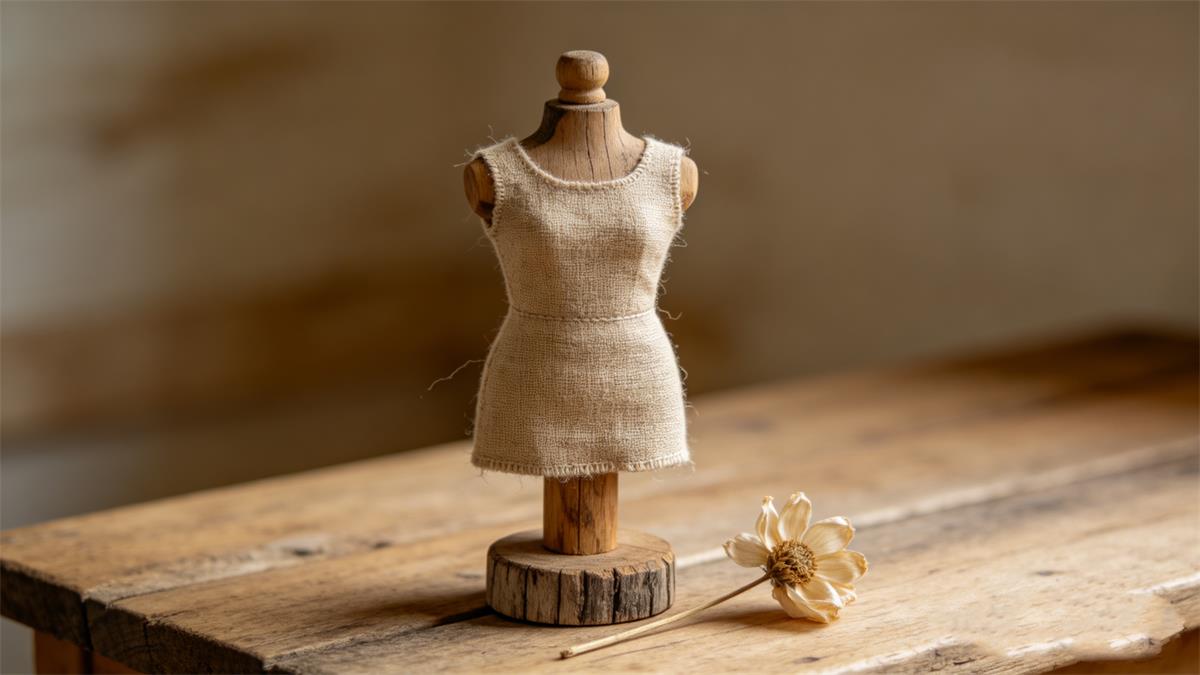
Sustainable choices belong in a boutique display as a quiet signal, not a lecture. A linen-covered form, a reclaimed wood base, or a modular build that survives a store move all read as considered and cared-for. Shoppers notice the material story without being told.
The demand is real. Market research on mannequin and form usage finds that about 46% of consumers prefer shopping in stores that showcase sustainable mannequins, and roughly 58% of global fashion retailers are moving toward recyclable or biodegradable forms. For a boutique, the move can be small and still land: choose one reclaimed base, one natural-fabric cover, and keep forms in service longer through modular parts. Sustainable is a supporting note here, not the search target, because the search demand for it as a primary phrase is thin. Show the materials, skip the sermon.
Frequently Asked Questions
How do you display clothes in a small boutique?
Start with one hero garment on a dressed form or mannequin near the entrance, then build a tight color story around it with folded pieces on a table and a matching wall edit. Keep aisles open, place your strongest visual merchandising at eye level and in the back-right area, and let one window form act as the hook that pulls shoppers inside. Rotate the look every one to two weeks so regulars keep noticing.What type of mannequin is best for a clothing boutique?
Match the form to your core customer and the garments you sell most. A female form presents dresses and blouses, a male block presents suits and outerwear, and a kids form fits children's lines. Use a dress form when you want to show fit and fabric in a small space, and an abstract torso for accessories and editorial vignettes. The closer the form is to your real buyer, the more the clothes look like they fit.How should you display a dress so it sells?
Dress the gown or dress on a female form with arms so the drape reads, then add one accessory and one point of contrast and stop. Light it with a warm spotlight at about 45 degrees and raise it to eye level on a low pedestal. Keep a tight two- or three-tone color story and make sure the form is visible from the window and the entrance so the outfit meets the shopper's gaze in two seconds.Do clothing displays actually increase sales?
Yes. In-store behavior studies show about 80% of shoppers base buying decisions primarily on visuals, and window displays can lift foot traffic by roughly 23%. In apparel retail, mannequins and forms are tied to sales lifts around 66% compared with garments left on hangers. A styled garment turns a single item into a story shoppers read faster than a hanger, which is why forms stay a core retail tool as online shopping grows.How often should a boutique change its window and in-store displays?
Change the window with each season and campaign, and rotate in-store features every one to two weeks. Plan holiday displays six to eight weeks ahead so props and garments are ready before the rush. A monthly theme built around a color, fabric, or capsule gives the floor a fresh reason to visit, and regulars respond to the sense that something new is always on show.About the Author
Brook Chen is a Visual Merchandising Specialist at awmannequins.com. With over 8 years of experience designing window and in-store displays for retail brands across the US, Canada, and Australia, she helps boutiques and stores translate seasonal concepts into store-ready merchandising.
Ready to build your next display? Explore the female mannequins, male mannequins, kids mannequins, or the full dress form collection to find the form that fits your store and your season.