Tel: +86-0769-33218711
E-Mail: info@ysydisplay.com
Add: A1#807, Tianan cyber building, Huangjin Road, Nancheng, Dongguan, China 523000.


Choosing the right men mannequins is one of the most direct ways to shape how customers perceive your apparel line. Whether you're dressing suits, athleisure, streetwear, or denim, male mannequins influence silhouette, storytelling, and the overall professionalism of your showroom. From the manufacturing side, I’ve seen how materials, hardware choices, and finishing techniques directly affect durability and display performance — and those are the details that most online product pages rarely explain.
This guide walks through everything you should know before buying men mannequins, based on real factory experience and years of working with fashion retailers and importers.
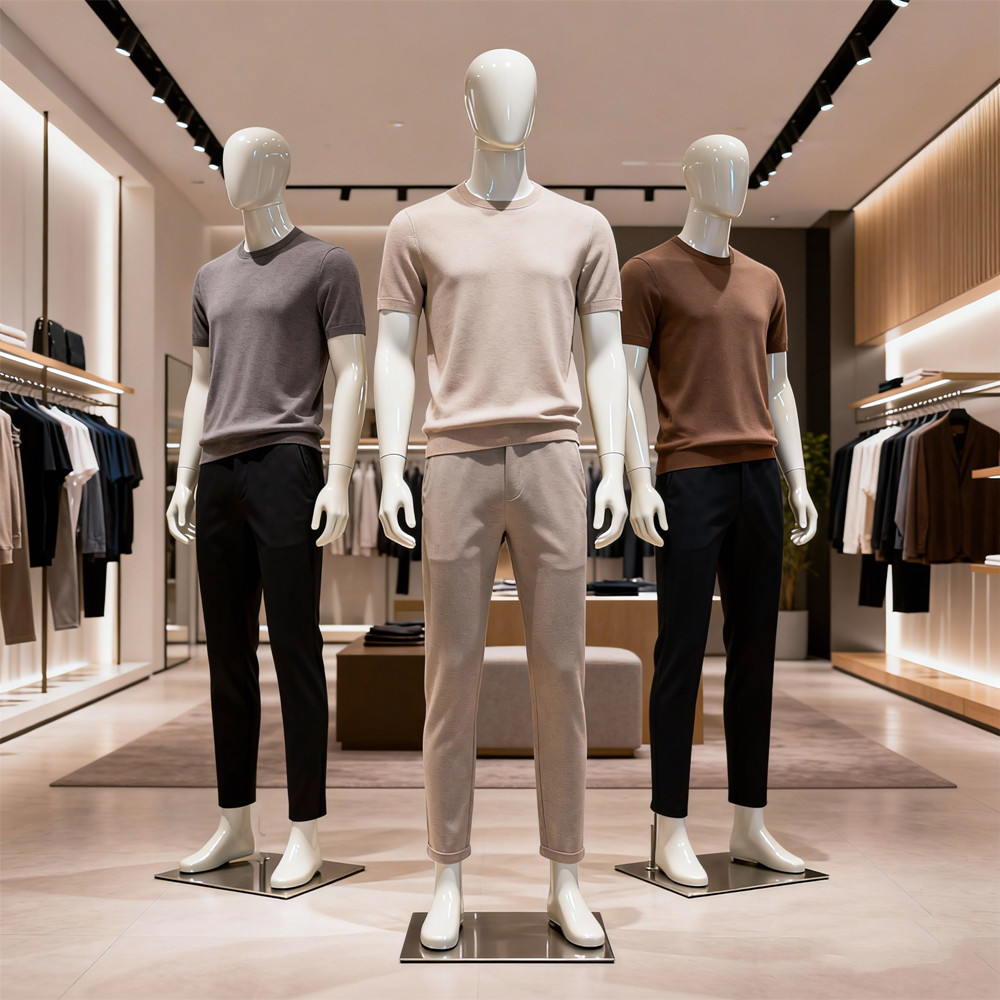
What Men Mannequins Are Used For — and Why They Matter
In retail, men mannequins serve two purposes: communication and conversion.
They instantly demonstrate fit, posture, and style, something hangers simply can’t achieve. In VM planning, mannequins anchor full-body look displays, help set store rhythm, and guide customers’ visual flow.
From the factory’s perspective, male mannequins are among the most demanding forms to mold and finish — especially when the buyer needs sharp muscle definition or clean suit-ready proportions. These details directly impact how garments drape on the body.
Types of Men Mannequins Commonly Used in Retail
Different stores need different silhouettes and constructions. The standard categories include:
1) Full Body Fiberglass Men Mannequins
Most common in mid-high-end retail
Sharp body definition
Stable, long-lasting
Ideal for suits, jackets, denim, display windows
Fiberglass allows clean sanding of edges like jawlines, ankles, and fingers — something plastic cannot achieve at the same level.
2) Plastic (PE/PP) Men Mannequins
Cheaper, impact-resistant
Slightly bulkier forms due to plastic blow-molding limits
Popular in budget chains and busy store environments
Though cost-effective, they usually sacrifice fine sculpting.
3) Flexible or Action-Pose Men Mannequins
Used for sportswear or dynamic window displays
Often polyurethane or elastic internal structure
More expensive, niche use
4) Abstract, Headless, or Egg-Head Men Mannequins
Common for modern and minimalist retail layouts
Easier for mixed-brand displays (no facial style restrictions)
Key Features Buyers Actually Care About
When buyers compare men mannequins, price is rarely the real deciding factor. The practical considerations are:
Proportion & Fit
Suit brands need wider shoulders and cleaner straight legs; sports brands need more muscular legs and balanced V-shape torsos.
A badly proportioned form can make even premium clothing look “off.”
Stability & Hardware
The most reliable setup is:
Stainless steel calf rod + optional foot rod
Reinforced metal insert inside the lower leg
Weighted iron base (8–12 kg for adult males)
Weak or thin hardware is the #1 cause of breakage in shipping.
Surface Finish
Professional finishes include:
Matte or silk-matte automotive paint
Hand-sanded joints and edges
Anti-scratch top coatings for dark colors
In production, small imperfections around the shoulders and waist must be re-sanded and spot-filled before painting; otherwise, the final finish shows tiny waves or pinholes.
Wig or No Wig
Headless = modern + zero maintenance
Abstract = artistic, minimal
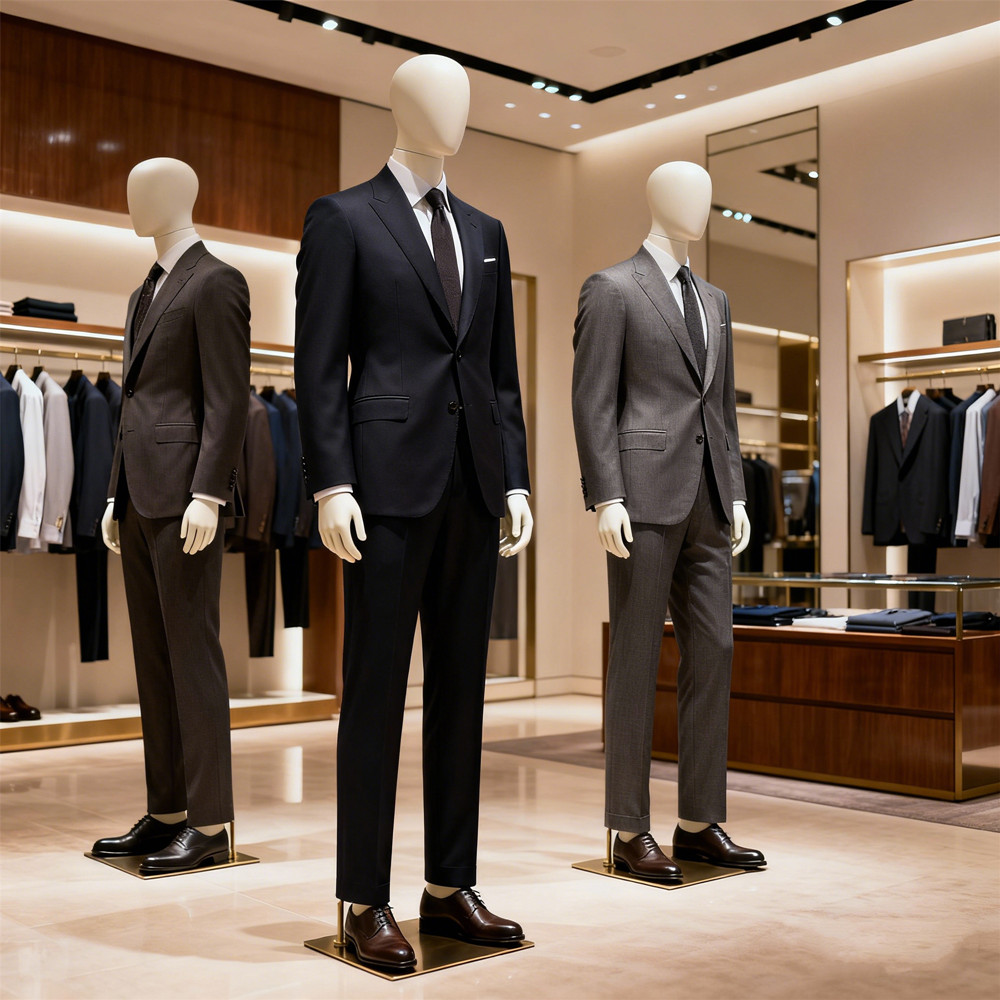
Realistic = best for suits, luxury, or character-focused displays
How Men Mannequins Are Manufactured (Factory-Realistic Notes)
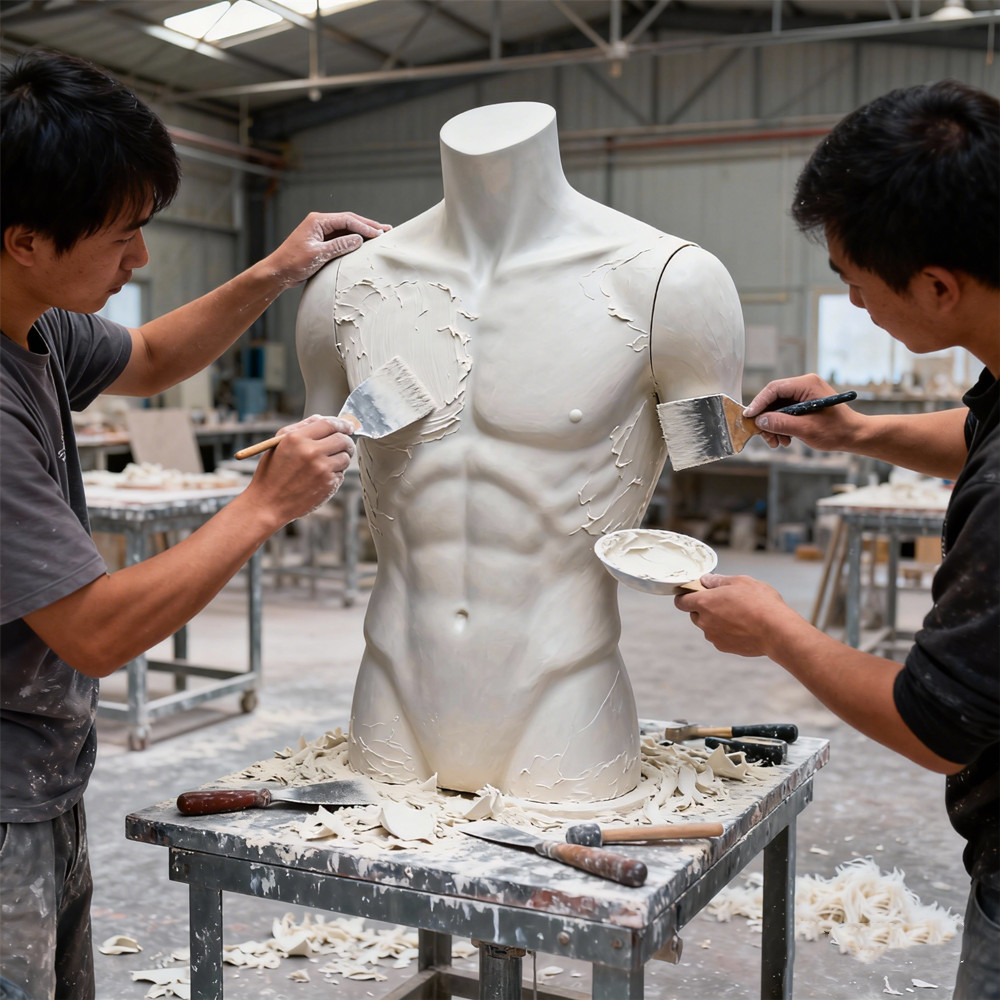
Fiberglass Shell Production
Men mannequins are produced using multi-part molds. Gel coat is applied first for smoothness, then fiberglass layers are laminated. After curing:
Excess fiberglass is trimmed
Edges are sanded
The body is refined using automotive putty
For muscular male forms, sculpting teams spend more time on transitions around the torso and shoulder blades; these areas show the most under store lights.
Hardware Installation
During assembly:
The metal leg insert is drilled precisely
Alignment is checked using a fixture to prevent leaning
Magnets for detachable arms are adjusted to ensure clean positioning
A slight misalignment can cause rotation or imbalance on the base.
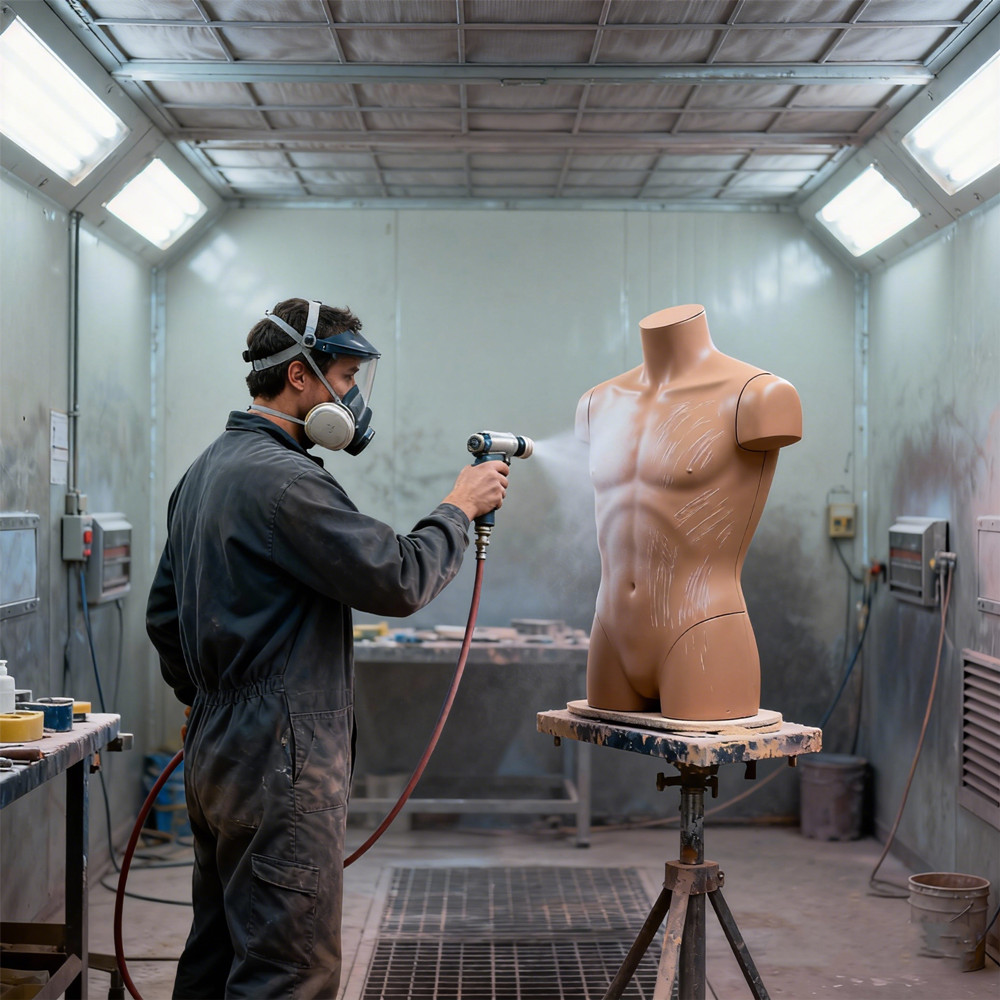
Painting & QC
Painting involves:
Primer coat
Wet-sanding
Color coat
Clear topcoat (matte preferred for men mannequins)
QC inspectors typically check:
Joint alignment
Standing stability
Paint bubbles, dust spots, or hairline scratches
Clean fit of foot/hand pegs
Packaging
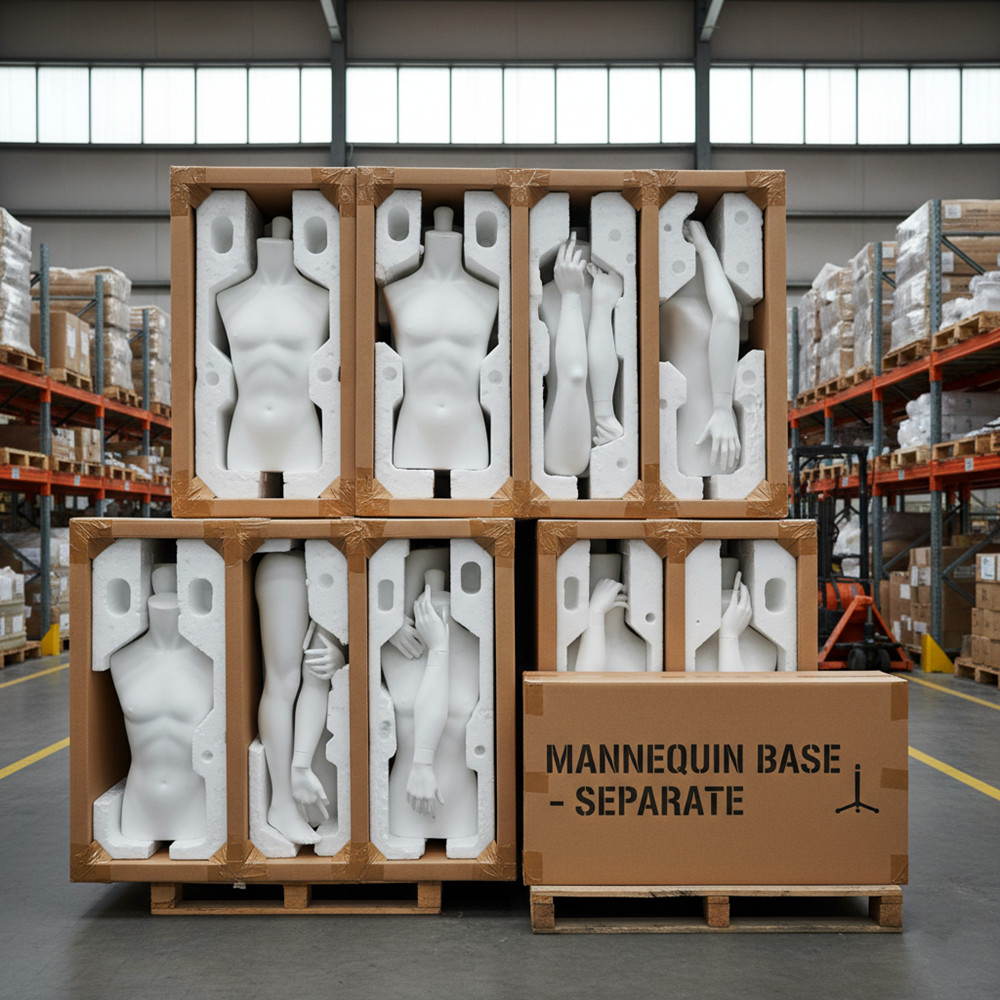
For export:
Each part is wrapped with PE foam
Reinforced carton edges
Head packed separately
Carton volume usually 0.18–0.28 CBM per set
Importers often underestimate how carton volume affects freight — it matters more than the unit price for large orders.
Common Buyer Mistakes (and How to Avoid Them)
1) Choosing the Wrong Pose
A casual bent-leg pose looks great in streetwear but makes it difficult to display formal trousers. Straight-leg forms are the safest for multi-season use.
2) Focusing on Price Instead of Hardware
A cheaper mannequin with weak hardware costs more in breakage claims and replacement bases.
3) Ignoring the Finish Level
Shiny finishes highlight flaws. Matte hides them and looks more premium for menswear.
4) Overlooking Repairability
Fiberglass can be repaired easily; plastic usually can’t.
How Men Mannequins Are Used in Real Retail
A few insider notes from working with VM teams:
Suit stores prefer slightly “taller and slimmer” proportion mannequins to give a premium silhouette.
Sportswear displays need dynamic poses but still want stable metal rods, not ankle rods (too fragile).
Denim brands often choose realistic hands that can hold accessories like caps, belts, or tote bags.
Window displays love headless versions because they avoid mismatched facial styles across stores.
Customization & Branding Options
Buyers can customize almost every aspect:
Pose, height, and body shape
Surface finish (matte, gloss, textured, metallic, cement style)
Realistic makeup or abstract head shapes
Wig colors
Removable or magnetic arms
Logo printing on bases
Private mold development (MOQ usually 20–50 sets, depending on complexity)
Factories usually create a clay model → fiberglass master mold → production molds.
Packaging, Shipping & Logistics Considerations
For international buyers:
Carton Volume
A single male mannequin typically occupies:
0.20–0.28 CBM per full set
20GP usually loads 70–110 sets
40HQ loads 180–260 sets
Protection
Better factories:
Add foam blocks around the shoulders and hands
Reinforce the base separately
Use double-wall outer cartons for long-distance ocean freight
Assembly Guide
Most men mannequins take 1–2 minutes to assemble:
Body → legs → rod → base
Arms attach via magnets or pegs
How to Choose the Right Men Mannequin (Expert Recommendations)
Choose fiberglass if:
✔ You need sharp body lines
✔ Your clothing is mid- to high-end
✔ You want long-term use
Choose plastic if:
✔ Budget is your priority
✔ Store traffic is heavy
✔ You need impact resistance
Choose headless/abstract if:
✔ You run multi-brand stores
✔ You want a minimal look
✔ You prefer zero maintenance
Choose realistic male mannequins if:
✔ You display suits or premium menswear
✔ You want strong customer relatability
FAQ About Men Mannequins
1. Are fiberglass men mannequins easy to repair?
Yes. Small cracks or chips can be repaired with putty and repainting. Plastic mannequins are harder to repair.
2. What is the standard height for male mannequins?
Most are 185–190 cm, but custom heights can be produced.
3. How long does production usually take?
Regular orders take 20–35 days, depending on quantity and finish complexity.
4. Can men mannequins be produced in custom poses?
Yes, but custom molding requires additional cost and development time.
5. Do mannequins come with both calf rod and foot rod?
Most factories offer both, but the calf rod is far more stable.
6. Can bases be customized?
Absolutely — color, shape, logo printing, and material options are available.
Conclusion
Men mannequins are more than store fixtures — they’re silent salespeople. The right form enhances your garments, strengthens brand storytelling, and creates a cleaner retail environment. When chosen carefully and sourced from a factory that understands proportion, finishing, and hardware, a good male mannequin can serve your store for years.
If you need help choosing the right style or want to develop a custom men mannequin line, feel free to ask — I’m always happy to share practical guidance.
CONTACT US
ART WING Display Mannequin, a China manufacturer of high-end-mid mannequins.
We dedicated to innovative design and focus on producing high-quality display production.
QUICK LINKS
PRODUCTS
ABOUT ART WING
SERVICE

Tel: +86-0769-33218711
E-Mail: info@ysydisplay.com
Add: A1#807, Tianan cyber building, Huangjin Road, Nancheng, Dongguan, China 523000.
Copyright © 2026 DongGuan Art Wing Display Co., Ltd | All Rights Reserved
Hello, please leave your name and email here before chat online so that we won't miss your message and contact you smoothly.