
Tel: +86-0769-33218711
E-Mail: info@ysydisplay.com
Add: A1#807, Tianan cyber building, Huangjin Road, Nancheng, Dongguan, China 523000.


Roaming the crowded wholesale market of Yiwu or through the industrial alleys of Guangdong, you would see various mannequin manufacturers, all making sumptuous promises of their so-called superior products. So many alternatives can make your judgment very tough. I have been working with mannequin suppliers in China for nearly ten years, and I can say that finding the right supplier goes beyond mere checklisting: it is an intuitive grasp of the fine balancing act of quality, communication, and cultural differences that spell the success of any international manufacturing partnership.
The Chinese mannequin industry has transformed tremendously since its origin in the early 2000s. From being one that produced basic fiberglass models, it has grown into a mature ecosystem producing products along an enormous spectrum from hyper-realistic silicone figures to avant-garde abstract designs that could compete for a place in any contemporary art museum collection. This evolution is part of the changing face of Chinese manufacturing from the era of pure mass production to an increasingly sophisticated, design-conscious output.
The Manufacturing Landscape
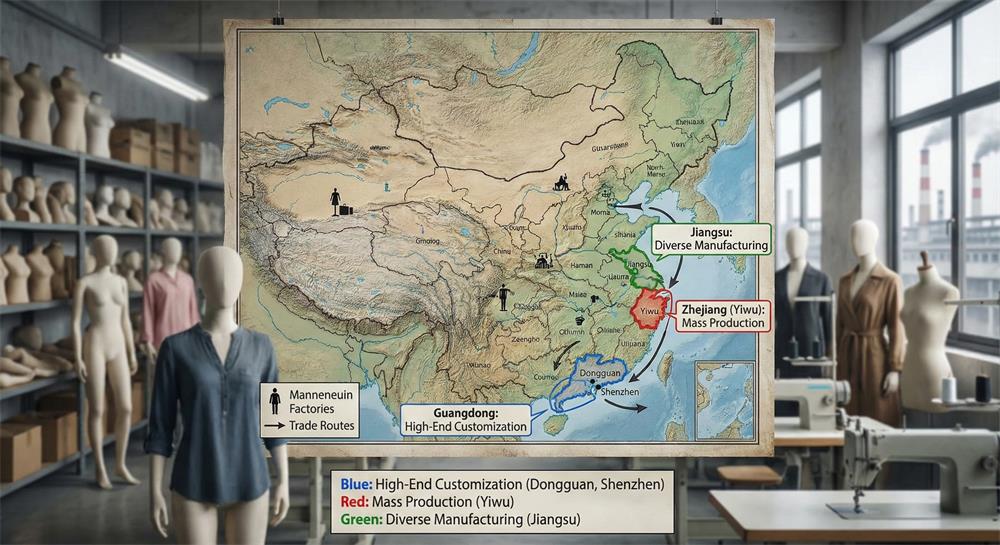
Mannequin manufacturing in China is concentrated in three provinces: Guangdong province (centered in Dongguan and Shenzhen), Zhejiang province (mainly in Yiwu), and part of Jiangsu province. Each area has its particularities and price positions. For their part, Guangdong manufacturers tend to make custom, high-end mannequins for international luxury brands. Yiwu, quite the opposite-it is renowned mainly for its small commodities market-is an expert at mass-producing standard mannequins at a really competitive price. Jiangsu manufacturers tend to find themselves in between, producing good quality at reasonable prices and offering a modicum of customization.
Another typical pitfall many buyers unconsciously fall into assumes that all Chinese manufacturers work uniformly. When, in fact, the gap can be as wide as the distance between a corner bakery and an industrial bread-making factory between a small family-owned workshop in Yiwu and a relevantly equipped factory in Dongguan. Both trade-offs have pros and cons and require an in-depth contemplation on their fit to your needs.
I kind of remember visiting a Dongguan factory that had just invested in 3D body scanning technology. It was able to customize mannequins through real human models with millimeter-level precision. Not far away, another factory producing standard styles was still using regular molds that were made several design decades ago-and by now they really are decades-old. This doesn't mean one approach is right or wrong, merely that it all depends on your requirements.
Quality Considerations
There are various levels of quality; it is not merely the end product that matters concerning how the mannequin appears. Quality includes material selection, structural soundness, surface finish quality, and durability; it includes the life of the product. The materials of choice among manufacturers across the industry are fiberglass (the most common), polyurethane, polystyrene, and the environment-friendly alternatives-i.e., recycled plastics and biodegradable composites-are increasingly gaining acceptance.
Fiberglass is, for good reason, still the industry standard. It is tough, fairly lightweight, and molded into nearly anything. But one fiberglass type may not be better than another. Top-end manufacturers use automotive-grade fiberglass with appropriate ratios of resin; low-priced producers may employ cheap and inferior materials that will eventually turn brittle. These types of variations are not immediately apparent; they become visible when the products are used for months.

I have always felt that one important aspect of quality discussion is that reputable manufacturers are willing to discuss the source and processes of their raw materials. They will show you the materials and explain the molding methods and quality control processes. On the other side, less reliable suppliers do tend to avoid these questions or give vague responses. When a manufacturer seems reluctant or unwilling to talk about their materials or processes, it usually works as an indicator for you.
The surface finish is another sign of quality. Mannequins of an excellent grade undergo multiple rounds of sanding, priming, and finally painting. Great manufacturers apply automotive-grade paints and coatings that resist chipping and fading. They may even offer specialized finishes, such as matte, glossy, metallic, or textured finishes, where the effects would surely add to the visual effects on display.
Communication and Cultural Considerations
When working with Chinese manufacturers, nothing matters more than communication-and nothing has greater potential for misunderstanding. The obvious hurdles are language, but cultural expressions make this even more complex, often tripping up Western buyers.
According to Chinese business culture, personal relationships (guanxi) are more important than the efficiency of a transaction. Meaning straight to price negotiation without first establishing rapport ends up producing worse results. It has been my experience that manufacturers who spend time learning about your business, ask about your market, and want to develop long-term partnerships tend to yield better results than those who launch right into quoting prices straight away.
Email communications with Chinese manufacturers are usually not the same as the business correspondence of the West. Their replies can sound vague or even optimistic. To a manufacturer, "no problem" doesn't usually mean they understand your requirement. I learned to follow with specific questions and ask for photos or samples of confirmation.
WeChat is the main channel of communication with Chinese businesses. Email is, of course, proper for formal exchange, while WeChat is for immediate resolution and relationship-building. Good manufacturers tend to keep using WeChat for their client communication, implying they are more responsive and easier to work with. Among my best supplier relationships were forged after hashing production problems and solutions over WeChat late at night.
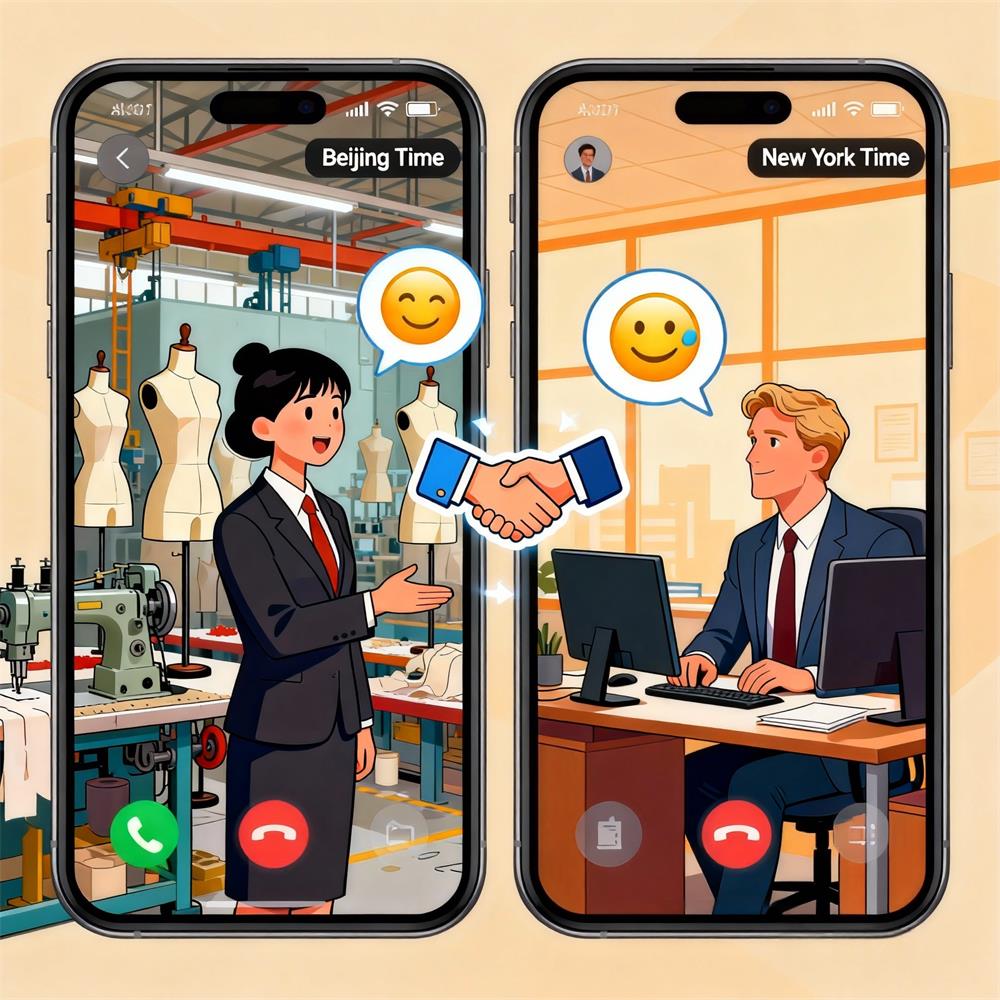
Time zones are the next challenge. All of China observes a single time zone, which is called Beijing Time and usually varies around 12-13 hours ahead of US Eastern Standard Time. An urgent email sent in your morning might arrive in their evening off-hours. Grasping and respecting this difference in schedules by properly timing the communication shows the professional consideration a Chinese partner will appreciate.
Factory Visits and Verification
In-person factory visits are irreplaceable, although I recognize it is not always outside reality. However, factory visits should not only focus on production floors but different aspects of worker to management relationships; layouts and conditions of working areas; and age and maintenance of machines. Sometimes an old machine in excellent order may testify to being a manufacturer that considers quality more than appearance.
One visit during factories in Guangdong was impressive in terms of detail and orientation. Despite the auto machines for production, every mannequin would still be finished by hand. While inquiring about why, the owner replied that some things people have to touch before they can reach that level of quality demanded by very high-end clients. Quality, even over matters of efficiency and cost-effectiveness, was declared in their loyalty to craftsmanship.
If you cannot visit in person, ask for a virtual factory tour. Legitimate factories should be willing to share detailed videos or set up live video calls showing their facilities. Be suspicious of things that only show finished products or stock photos. Request real access to particular parts. For example, the molding workshop, painting room, quality inspection station, and packaging area.
Another reassurance gives third-party verification services. SGS, Bureau Veritas, or TÜV, among others, have factory audits and quality inspections. They add expenses, but in large orders or new supplier relationships, they prove priceless. Some manufacturers are already accredited by those institutions, which indicates that they subscribe to worldwide standards.
Pricing Dynamics and Hidden Costs
Prices for mannequins produced in China can start from $50 for the simple ones and go over $500 for high-end custom ones. Knowing what makes such price differences can really prevent being overpaying or falling for what sounds to be an offer too good to be true.
Material prices are mostly at the base level, but labor, finish quality, and packaging, along with the manufacturers margin, are really what distinguish the prices. If prices quoted by manufacturers are way below the market rates, the price is most probably cut through less quality material or rushed production. Sometimes buyers got mannequins at 30% below market price but their hold times would not last for more than several months, or they come damaged because of poor packaging.
First time importers got caught off their guard more often by hidden costs. In addition to unit price, one would need to think about mold fee for custom designs ($500 to $5,000), sample fees and shipping, ocean freight due to their bulky size, tariffs and customs clearance, quality inspection fees, and some buffers for exchange rate movements.
Payment terms matter as well. Normally a reputable manufacturer would ask for 30-50% down payment and the rest to be paid before the product is shipped. Be careful of factories that require full advance payment or provide soft terms. One would be a standard 30% deposit and 70% before shipment; this balances risk for both sides.
Some factories have different pricing brackets depending on the amount ordered, but not all such brackets have been opened to customers. I have been successful in negotiating better rates by committing liberal annual volumes instead of focusing on single orders. This also encourages consistent quality levels for factories.
Customization Capabilities
As a result of retailers seeking exclusive visual merchandising solutions, the ability to customize mannequins increasingly gains importance. Depending on the manufacturer's inclination, the level of customization can vary from pose adjustment to full bespoke contracts.
Basic customization would cover aspects like choice of one of the preset poses; choice of colors or finishes; adding or taking away body parts; or making some slight changes in size. Most manufacturers would not find these minor changes quite a burden financially. However, true customization in the sense of unique poses, specific features on the face, or special body proportions increasingly relies on the designer's capability and flexible manufacturing.
I worked once with a manufacturer that had sculptors create mannequins from sketches and, at times, verbal descriptions. They had a series of mannequins in yoga poses, embodying the essence of the flow and balance associated with yoga practice. This level of artistry is rare, but it demonstrates what can be achieved at the highest level.
Digital design capabilities are increasingly becoming the dividing line between forward-thinking and backward-thinking fabricators. Those that use CAD and 3D modeling are capable of providing exact previews with modifications before even the physical mold is created. This technology reduces time taken for development and limits costly mistakes.
Sustainability and Ethical Considerations
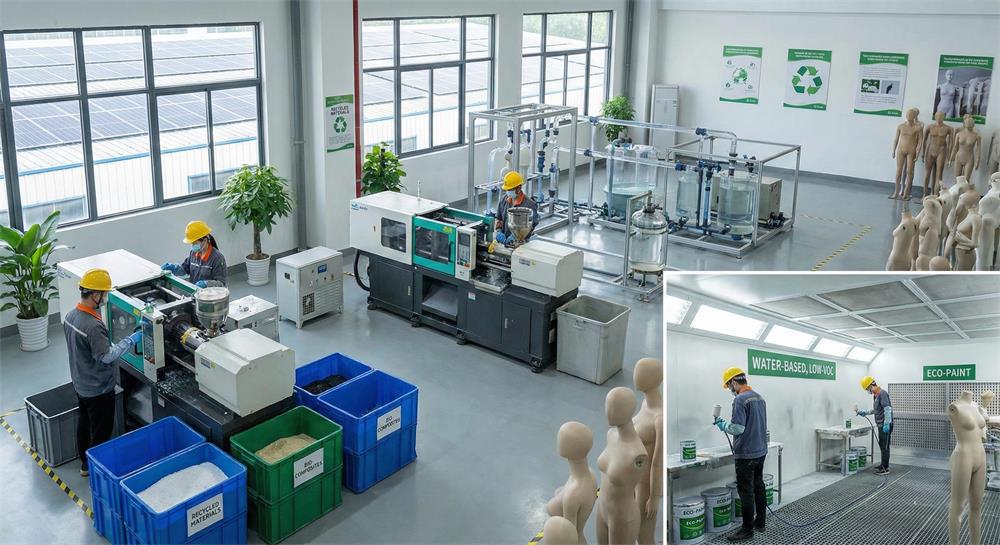
Consciousness about sustainable practices is finally trickling into mannequin production. Some progressive manufacturers in China produce eco-friendly products made from recycled materials using water-based paints and sustainable packaging. A handful have even obtained ISO 14001 certification for environmental management system standards.
During a recent visit to a factory, I found it impressive that one manufacturer had invested in a closed-loop water recycling system for its painting process and had solar panels to provide power for part of the facility. Such investments are usually closely correlated with overall operational excellence—manufacturers intent on sustainability typically apply the same forward-looking approach to products and customer service.
It is also worth examining labor issues. Those with good reputations provide good working conditions, fair pay, and safe equipment. Although monitoring these on a remote basis is not easy, certifications like SA8000 or BSCI provide a measure of assurance. Manufacturers that take pride in their work culture will be open to discussing the benefits given to their employees and might take you to meet some of their long-term staff.
Building Long-Term Partnerships
The most successful mannequin sourcing relationships evolve out of transactional arrangements into true partnerships. This change does not happen overnight, but through patient and ongoing communication, reciprocal respect, and collaborative problem-solving.
A partnership I am most proud of began on uncertain ground with the first order suffering from quality issues. Instead of immediately migrating to another supplier, we opted to work jointly with the one to rectify the issues. The manufacturer even had its quality-control manager travel to our warehouse to inspect the goods personally. This commitment to resolving issues set the groundwork for an eight-year relationship, surviving several adversities including trade wars and pandemics.
Apart from placing orders, constant communication further strengthens the ties. Manufacturers understand better any market feedback, trend projection, or merchandising challenge and thus are in a better position to help. Many of my suppliers have developed into good sources of industry intelligence, alerting me to new materials, technologies, or design trends emerging in China.
Be cautious with exclusive distribution agreements. Although exclusive designs or territorial rights may safeguard a competitive advantage, they also limit flexibility. My preference is to have non-exclusive agreements, clearly defining who owns what design and which territory in the market.
Technology and Innovation
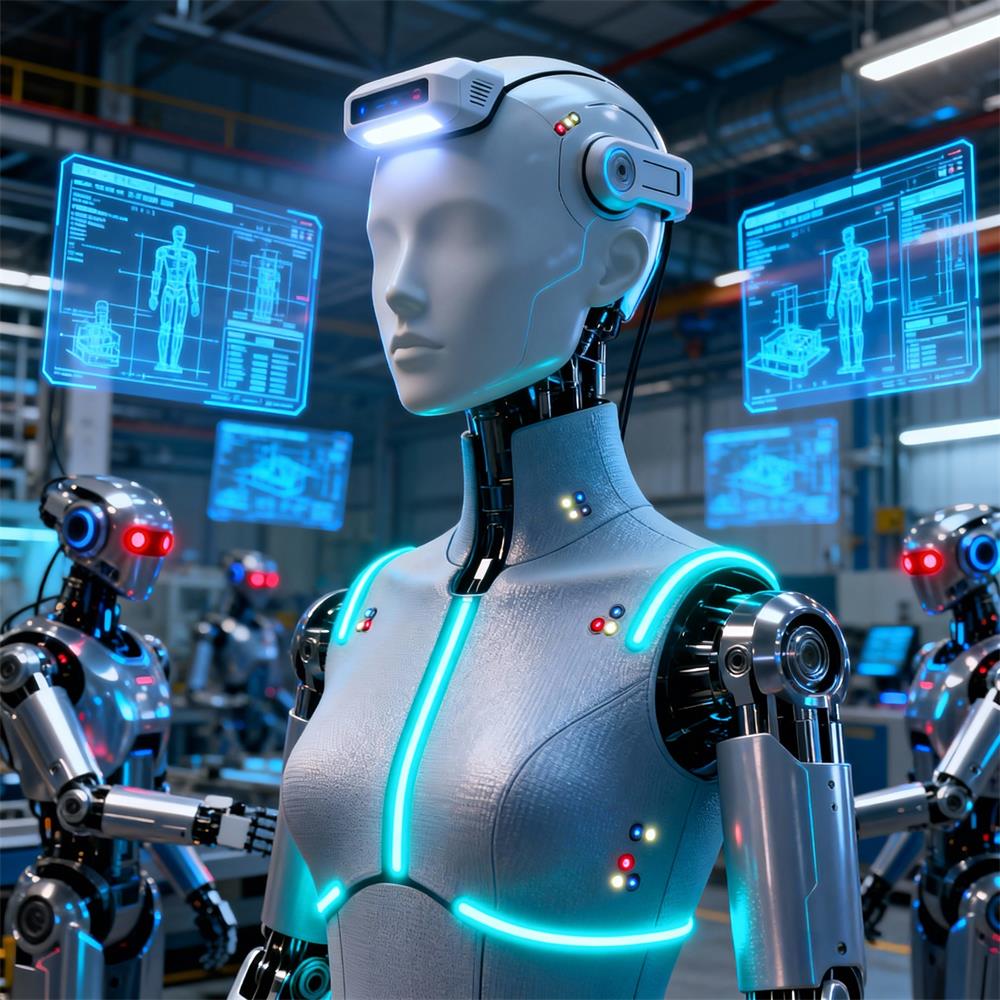
The mannequin business is one perhaps seen as traditional but is increasingly emerging into technologies by Chinese manufacturers. Some, on the other hand, go further and take in smart mannequins, with embedded sensors or simple LED lighting systems, or even rudimentary robotics for mobile displays.
One fascinating development I have recently witnessed is an innovative way of using sustainable materials such as mushroom-based composites or agricultural waste. Though still experimental, this only shows that Chinese manufacturers are not merely on the trend but are actually pulling the trend forward.
Virtual showrooms have matured vastly, especially post-COVID. The better ones are equipped with 360-degree product views, AR visualization tools (to place mannequins in your space), and comprehensive spec sheets. While these tools cannot be fully substituted for sampling physical products, they greatly ease the selection process.
Making the Final Decision
More often than not, the ultimate decision is based on some judicious trade-offs between many properties that two or more manufacturers may present. The lowest price almost never equal best value, while the highest price often includes features you never wanted. I have used a weighted scoring system that assigns different weights for product quality (40 %), communication and length reliability (25 %), price competitiveness (20 %), and innovation/customization capabilities (15 %).
Evaluate analytically, but trust your gut. That instinct that says, "I don't think it would be comfortable working with them'' during negotiations becomes truer the moment money comes into play. Likewise, manufacturers who genuinely contributed toward your success with their advice and were honest about your pricing can be a good point to pursue.
Place small trial orders in the beginning with new suppliers to evaluate potential. Ordering 500 mannequins at the start is risky. A batch of 50 will allow you to assess quality, communication, and delivery reliability while maintaining shareholders' value. Most of the manufacturers would grasp the attractiveness of such orders and reduce their pricing accordingly.
Remember, selecting a mannequin manufacturer is not just about finding a firm that can fabricate some display figures. It is all about finding a partner who understands your brand vision, delivers good quality time and again, and then grows with you.
The real opportunity arises from China's mannequin manufacturing industry for a retailer willing to invest time into seeking out a partner. Knowing the market terrain, putting quality ahead of price, and building genuine relationships will take you towards establishing reliable suppliers who not only assist you in visual merchandising but also offer economical pricing. Patience and cultural sensitivity are demanded during the entire process, but once you reap the benefits, they will be realized in product quality and business relationships.
References:
China Light Industry Federation. 2022 Annual Report on China's Mannequin Manufacturing Industry. Beijing: China Light Industry Press, 2022.
Dickson, Marsha A., and Mary A. Littrell. Social Responsibility in the Global Market: Fair Trade of Cultural Products. Thousand Oaks: SAGE Publications, 1999.
Gao Yongqiang. Manufacturing Excellence in China's Display Industry. Shanghai: Fudan University Press, 2021.
International Trade Administration. "China - Trade Regulations and Standards." trade.gov/country-commercial-guides/china-trade-regulations-and-standards.
Li Wei and Dennis Wei. The Evolution of Chinese Manufacturing: From Workshop to Smart Factory. Singapore: World Scientific Publishing, 2020.
Ministry of Commerce of the People's Republic of China. "Guiding Principles for Foreign Trade in Display Equipment." english.mofcom.gov.cn/article/policyrelease/questions/202103/20210303041289.shtml.
Peng, Mike W. Global Business. 4th ed. Boston: Cengage Learning, 2019.
State Administration for Market Regulation. "National Standard for Mannequin Manufacturing GB/T 23345-2021." std.samr.gov.cn/gb/search/gbDetailed?id=71F772D8A5B5D3A7E05397BE0A0AB82A.
Wang, Jici, and Xin Tong. Industrial Clusters in China: The Low Road and High Road in Cluster Development. London: Routledge, 2018.
World Trade Organization. "Technical Barriers to Trade: Specific Trade Concerns Database." wto.org/english/tratop_e/tbt_e/tbt_e.htm.
CONTACT US
ART WING Display Mannequin, a China manufacturer of high-end-mid mannequins.
We dedicated to innovative design and focus on producing high-quality display production.
QUICK LINKS
PRODUCTS
ABOUT ART WING
SERVICE

Tel: +86-0769-33218711
E-Mail: info@ysydisplay.com
Add: A1#807, Tianan cyber building, Huangjin Road, Nancheng, Dongguan, China 523000.
Copyright © 2026 DongGuan Art Wing Display Co., Ltd | All Rights Reserved
Hello, please leave your name and email here before chat online so that we won't miss your message and contact you smoothly.