Tel: +86-0769-33218711
E-Mail: info@ysydisplay.com
Add: A1#807, Tianan cyber building, Huangjin Road, Nancheng, Dongguan, China 523000.


The Silent Playwright: Elevating Brand Experience Through Strategic Mannequin Storytelling
Key Strategic Insights
Elegant store design requires more than premium materials; it demands a sophisticated narrative framework. Utilizing purposeful mannequin storytelling acts as an architectural anchor, turning standard retail square footage into an immersive brand experience. By moving away from generic, mass-produced figures and investing in bespoke, sculptural display forms, luxury and heritage brands secure deep customer engagement, solidify store positioning, and preserve long-term asset equity.

The Atmospheric Tension of Le Marais
Step into an avant-garde boutique nestled within an 18th-century courtyard in Le Marais, Paris. The immediate impression has nothing to do with signage or explicit marketing. Instead, the narrative is felt through a solitary, abstract display form positioned precisely where a shaft of natural afternoon light breaks across the stone floor. It stands poised, draped in asymmetric raw silk, conveying a mood of quiet rebellion.
This is the core of visual storytelling retail.
Modern premium commerce is defined by a sharp macro tension: the constant friction between instant, algorithmic digital convenience and the consumer’s deep, visceral need for physical immersion. When a transaction can happen in a single click, the physical storefront can no longer function as a mere storage space for inventory. It must become a sensory sanctuary.
At the heart of this physical curation is a dedicated mannequin strategy. It is the unspoken scriptwriter of the interior environment, a critical tool that shapes brand experience, optimizes store design, and directly commands high-value customer engagement.
The Structural Columns of Visual Curation
1. Somatic Coding: Posture as the Silhouette of Identity
A display form is never a neutral object; it is a physical mirror for the consumer's aspirations. In high-street environments, display figures often mimic the rapid, hyper-kinetic postures of street culture—leaning, lunging, or mid-stride. This choice aims for immediate, literal relatability, signaling fast-moving trends and accessible pricing.
[High-Street Rhythm] Kinetic Clusters ──> Rapid Visual Scans ──> Transactional Urgency
[Premium Curation] Monolithic Form ──> Spatial Deceleration ──> Brand Affiliation
When advising heritage houses, my guidance points away from the literal. True luxury requires a degree of artistic abstraction. Elongated silhouettes, featureless faces, and understated, classical stances remove the distracting noise of passing micro-trends.
This stylistic distance encourages affluent consumers to project their own curated lifestyles onto the form. The posture implies permanence. By altering the physical stance, you shift the customer’s internal calculation from buying a temporary garment to acquiring a piece of design history.
2. Choreographing the Threshold: Spatial Pacing and Narrative Nodes
The placement of display forms dictates the physical cadence of the customer journey through a flagship location. High-volume environments use forms as immediate visual blockades, clustering them in aggressive "tribes" right at the entryway. This setup breaks the pedestrian's walking momentum, forcing an immediate scan of the latest commercial release.
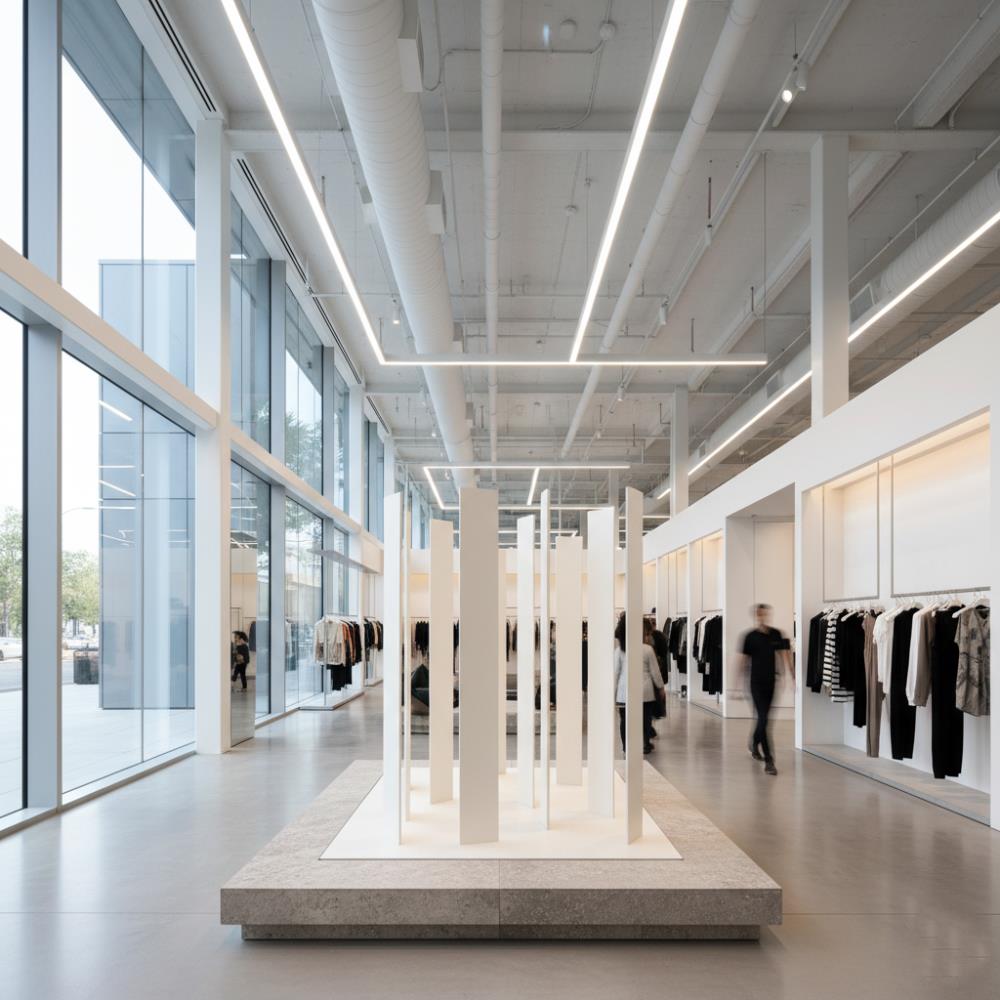
Premium store design, by contrast, treats physical space as a luxury asset. Here, display forms serve as elegant punctuation marks that guide a slower, deliberate exploration of the boutique.
Placing a solitary, beautifully finished form at a natural turning point or deep within an intimate salon creates a narrative node. This layout respects the customer’s time and intelligence, transforming a routine retail visit into a journey of discovery.
3. Light and Surface Materiality: Eliminating Cognitive Friction
The true test of a narrative display strategy happens when the store's lighting hits the surface of the form. The interaction between a mannequin’s finish and the architectural lighting layout can completely alter the perceived value of the apparel.
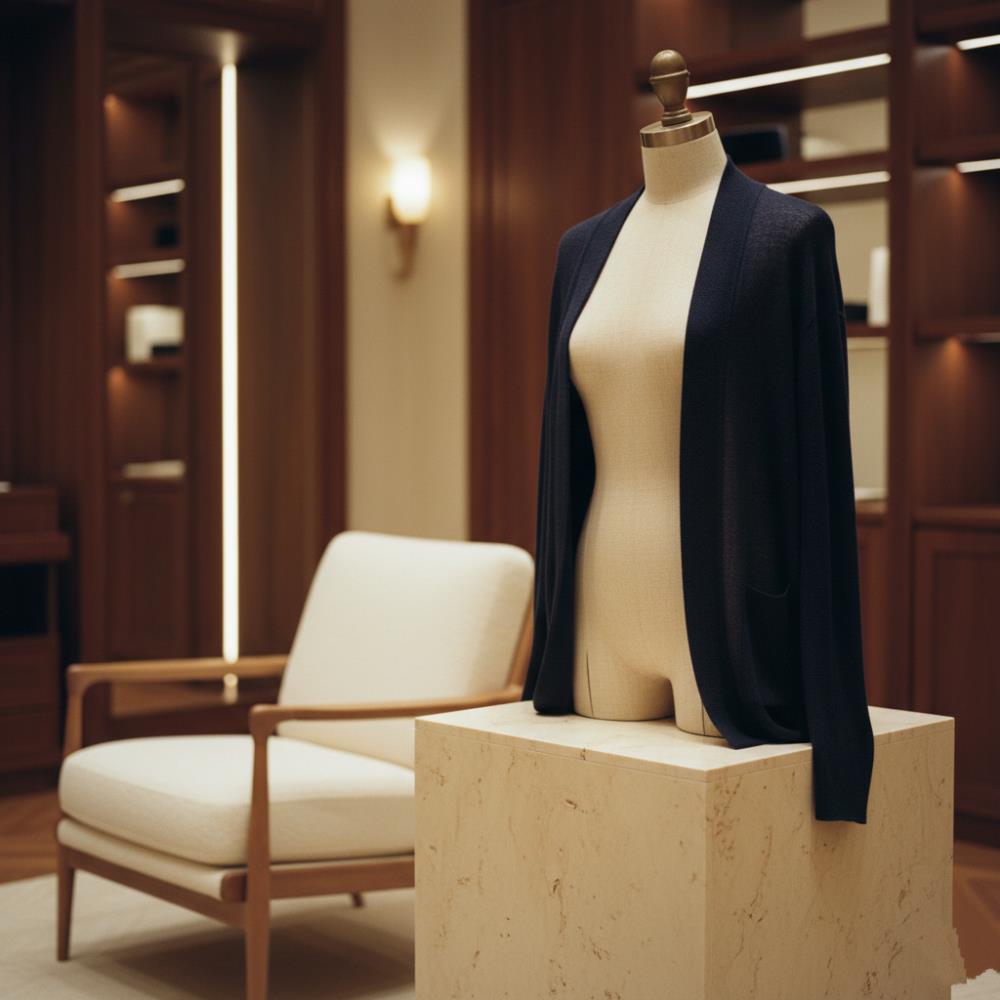
Chalky Mattes and Velvet-Flocked Textures: These surfaces excel at absorbing light, making them essential for historic, low-ceilinged European boutiques where natural light is limited. They eliminate distracting glare, allowing the fine details of custom tailoring or intricate knitwear to remain the focal point.
Translucent, Pearlescent, or Raw Earth Finishes: These variations belong in the soaring, high-ceiling flagship volumes typical of North American shopping districts. They require scale. Under massive skylights or grand glass facades, these finishes catch shifting daylight, bringing a natural, fluid energy to large open spaces.
An incorrect pairing creates immediate visual friction. A cheap, highly reflective glare under premium spotlights instantly detracts from a garment’s craftsmanship, weakening the premium environment you are trying to build.
Field Observations: The Silk Transition
A premium brand operating out of a historic townhouse recently faced a common visual merchandising challenge. They were transitioning their central salon from heavy, structured winter tailoring to a fluid spring collection of ultra-lightweight silks. Using their existing, rigid display forms, the results were static; the delicate silk hung flat, stripped of its life and movement.
The solution required re-engineering the structural anchor of the presentation.
We introduced custom-sculpted, semi-abstract forms with a subtle, forward-leaning torso alignment and a matte, low-friction composite finish. This adjustment allowed the fluid fabrics to drape naturally and react to the boutique's ambient airflow. Instantly, the presentation shifted from a flat product display to a captivating story of weightless elegance.
The Strategic Curation Matrix
Visual Element | High-Velocity Commercial Form | The Heritage Architectural Anchor |
Strategic Focus | Capture immediate, trend-focused foot traffic. | Cultivate long-term brand equity and prestige. |
Anatomical Style | Literal, expressive, and trend-specific postures. | Semi-abstract, minimalist, architectural lines. |
Surface Finish | High-gloss polymers, bold lacquered coatings. | Chalky mattes, linen wraps, organic textures. |
Spatial Arrangement | Concentrated groupings at main entryways. | Isolated, single focal points in intimate zones. |
Lighting Interaction | High-contrast, dynamic color-wash lighting. | Diffused, museum-grade accent spot illumination. |
The "Insider" Detail
A crucial detail that many retail managers overlook is the relationship between walking speed and eye-line height. On a busy high street where pedestrians move quickly, window forms must be elevated on platforms, with their eye-lines tilted slightly downward toward the sidewalk. This captures the eye of a fast-moving passerby within a critical three-second window.
Inside an intimate boutique, however, the pedestrian pace drops significantly. In these settings, the display form should stand directly on the floor at a true 1:1 human scale. This simple adjustment removes a physical barrier, making the space feel more accessible and encouraging customers to touch and feel the garments.
Executive Queries: Redefining the Display Asset
How does mannequin storytelling directly influence customer engagement metrics?
When your display forms align with your overall store positioning, they serve as an unspoken justification for your price architecture. Showing a collection on forms that reflect the brand's exact tailoring standards increases the perceived value of the product, which naturally drives up average transaction values and dwell time.
Why do standard, off-the-shelf options fail premium fashion retail store design?
Because they lack identity. A generic form cannot communicate the specific proportions, attitude, or cultural stance of a curated brand. Relying on standard options flattens your visual identity, reducing your physical real estate to a commoditized space that struggles to compete with online convenience.
How are Western sustainability mandates changing display asset investments?
With stricter circular economy frameworks expanding across Western Europe and North America, disposable, short-lived display elements are becoming a major liability. Premium brands are shifting toward high-integrity, durable craftsmanship. They treat these forms as capital assets that can be refurbished and repurposed across seasons, aligning directly with modern ESG expectations.
The Horizon
Physical retail is no longer about the simple distribution of apparel; it is about the preservation of brand mythology. Display forms are far more than simple utilities for hanging fabric—they are the quiet cultural ambassadors of a brand's heritage. Whether through the bold energy of an urban flagship or the measured silence of a luxury salon, a precise mannequin strategy transforms commercial real estate into a memorable brand destination.
CONTACT US
ART WING Display Mannequin, a China manufacturer of high-end-mid mannequins.
We dedicated to innovative design and focus on producing high-quality display production.
QUICK LINKS
PRODUCTS
ABOUT ART WING
SERVICE

Tel: +86-0769-33218711
E-Mail: info@ysydisplay.com
Add: A1#807, Tianan cyber building, Huangjin Road, Nancheng, Dongguan, China 523000.
Copyright © 2026 DongGuan Art Wing Display Co., Ltd | All Rights Reserved
Hello, please leave your name and email here before chat online so that we won't miss your message and contact you smoothly.