Tel: +86-0769-33218711
E-Mail: info@ysydisplay.com
Add: A1#807, Tianan cyber building, Huangjin Road, Nancheng, Dongguan, China 523000.


The Art of Spatial Disruption: Aligning Your Mannequin Strategy with High-Value Store Positioning
Key Strategic Insights
A refined mannequin strategy serves as a critical spatial anchor, converting physical retail volume into clear brand equity. While fast fashion relies on high-density, kinetic poses to mirror rapid digital consumption, premium heritage houses must treat display forms as long-term architectural assets. Opting for bespoke, sculptural silhouettes over commoditized options dictates real estate ROI and secures true demographic alignment.
The Silent Body Language of New Bond Street
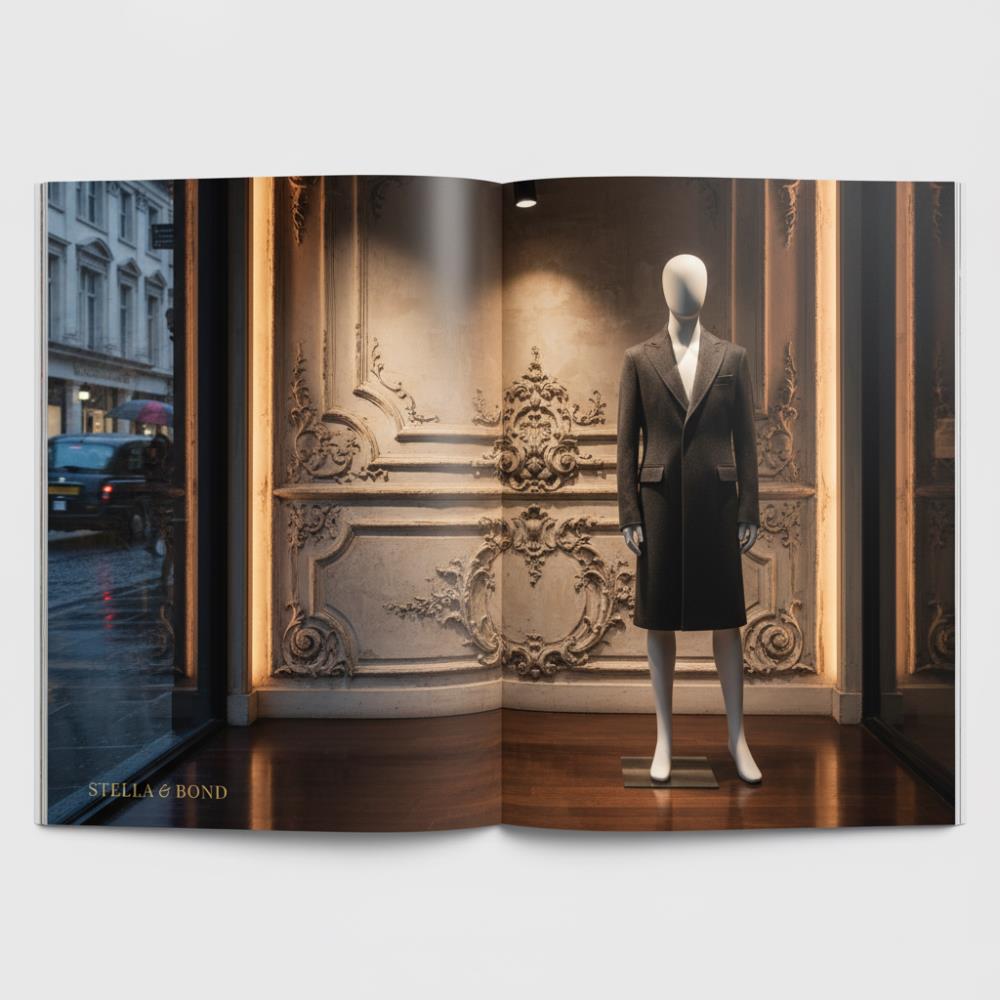
Walk down New Bond Street on a sharp autumn afternoon, and the deep, ideological split within modern fashion retail hits you before you even cross a threshold. It is written entirely in the somatic language of the windows.
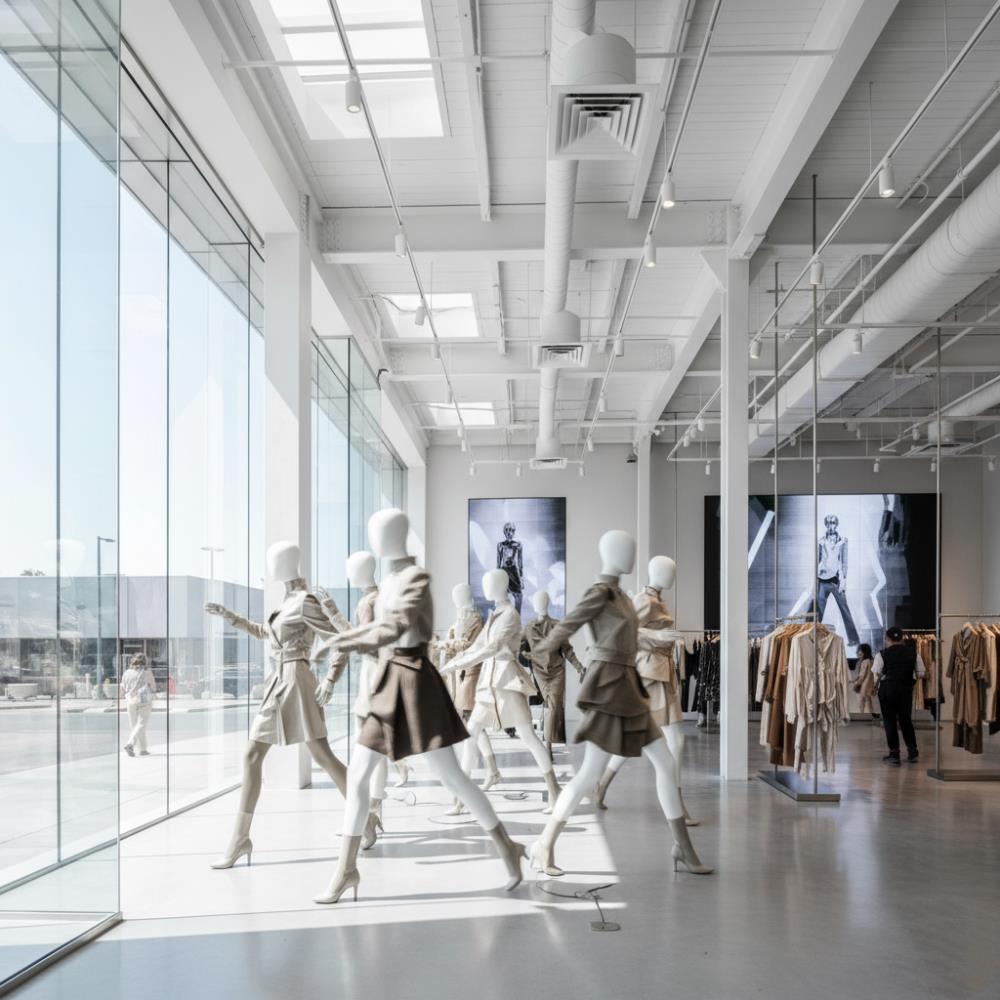
On one side of the pavement, high-street flagships scream for attention. Their windows are packed with dense, hyper-kinetic tribes of figures, twisted into aggressive postures that mimic the relentless velocity of an Instagram feed. They want transaction, and they want it now.
But take a few steps toward a heritage maison, and the atmosphere shifts completely. Here, you encounter a solitary, abstract form standing in quiet, museum-grade isolation. The lighting is low; the shadows are deliberate.
Why this drastic divergence? Because the physical storefront is no longer a place to merely stack inventory—e-commerce handles that with a double-tap. Instead, the brick-and-mortar space has become a sensory sanctuary where a brand's narrative DNA is physically engineered.
At the absolute center of this spatial curation is your mannequin strategy. It is the unspoken filter for your store positioning, the physical realization of your visual identity, and the quiet driver behind how the Western consumer values a garment.
The Real Mechanics of Display Architecture
1. Somatic Psychology: The Posture of Scarcity vs. The Tribe of Volume
Let’s be blunt: a display form is never just a clothing hanger. It is a mirror for the consumer's aspirations. In high-street fashion retail, those forms are styled to capture a fleeting cultural moment. They lean, they lounge, they stride—capturing a hyper-specific streetwear posture designed for instant relatability. The message? This look is accessible, it is current, and it belongs to the crowd.
[The High-Street Grid] High Density ──> Kinetic Groupings ──> Trend Accessibility
[The Luxury Vista] Visual Scarcity ──> Monolithic Silence ──> Generational Heritage
But when advising premium heritage houses, my recommendation shifts away from literal representation. True luxury requires abstraction. Elongated, featureless, or subtly sculpted silhouettes remove the noise of a passing trend, inviting the affluent consumer to project their own identity onto the form.
The stance is poised, classical, and understated. This subtle psychological distance shifts the customer's mindset from purchasing a seasonal item to investing in a piece of enduring fashion history. Is it relatable? No. Is it aspirational? Absolutely.
2. Choreographing the Floor Plan: Threshold Blocks and Spatial Sanctuary
The way you arrange these forms controls the physical cadence of the customer journey. High-volume retail branding lives or dies by immediate conversion. Therefore, forms are deployed as physical speed-bumps right at the entryway threshold. By grouping multi-figure compositions directly in the consumer's line of march, retailers break the walking rhythm, forcing an immediate interaction with the latest product drop.
Premium store design, however, views space as luxury itself. Here, display forms act as elegant punctuation marks guiding a slower, more deliberate exploration. A single, beautifully finished form positioned at a vista change or deep within a VIP salon creates a natural pause. This calculated layout respects the customer's intelligence and time, turning a simple commercial transaction into a journey of discovery.
3. Light and Surface Texture: Eradicating the Cheap Glare
The magic happens when the shadow falls just behind the silhouette. Yet, so many multi-million dollar flagships are ruined by a simple oversight: a mismatch between the mannequin's finish and the store's lighting architecture.
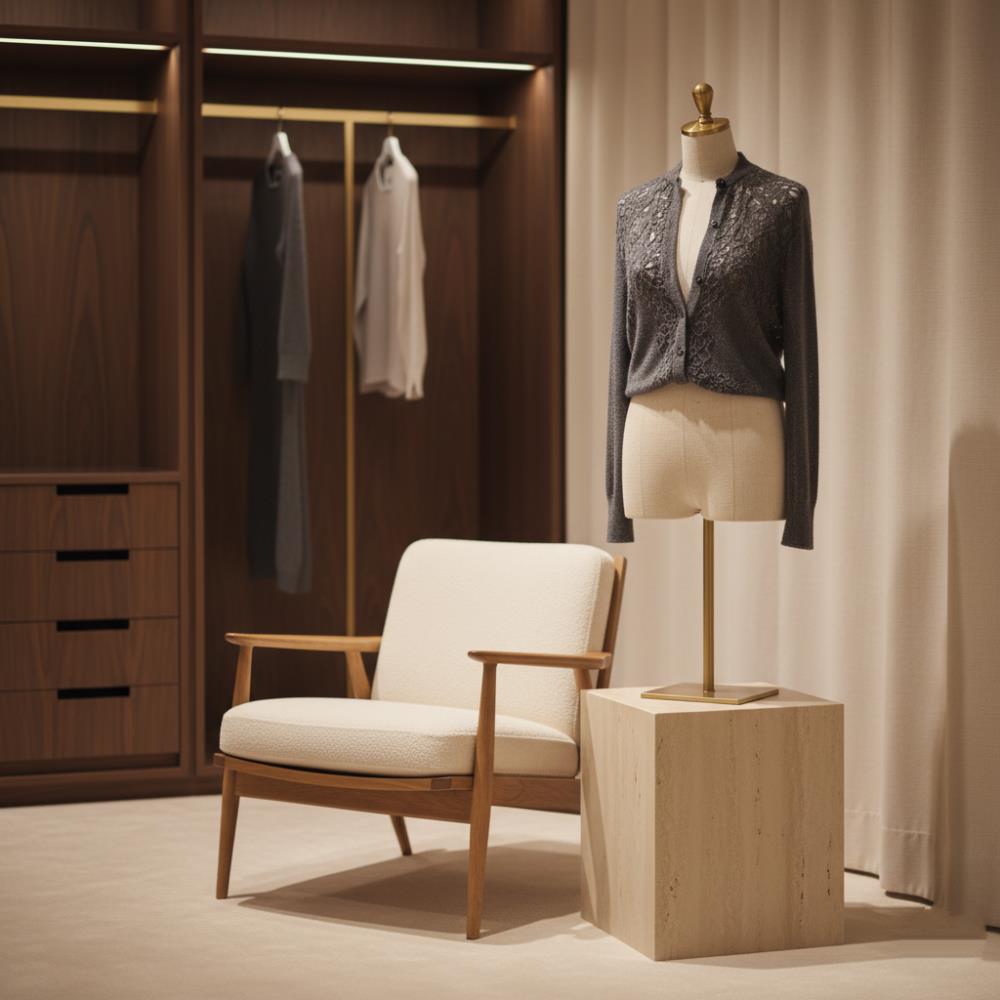
Chalky Mattes and Velvet-Flocked Textures: These surfaces are light-absorbers. They are essential when operating within the historic, low-ceilinged architectural spaces common in European shopping districts like Mayfair or Saint-Germain. Without natural ambient light, these textures absorb intense spotlighting, eliminating distracting glare and allowing the intricate details of high-end tailoring to speak for themselves.
Glossy, Lacquered, or Translucent Finishes: These belong in the expansive, high-ceiling volumes of North American retail districts. They need space to breathe. Under massive skylights or glass facades, these finishes catch shifting natural daylight, adding a dynamic, liquid energy to the environment.
Get this pairing wrong, and the illusion shatters. A cheap reflection under premium gallery lights instantly devalues a garment's craftsmanship, regardless of its actual price point.
Field Notes: The Mayfair Transition
Consider a problem I recently solved for a minimalist boutique transitioning its floor from heavy, structured winter shearling to ultra-fluid spring silks. They were using standard, rigid, off-the-shelf poses. When the silk dresses were draped, they hung like wet paper—lifeless, static, and completely stripped of the designer’s intended movement.
The fix wasn't changing the garments; it was re-engineering the structural anchor. We replaced the generic molds with custom, slightly elongated abstract torsos featuring a subtle forward lean. This structural shift allowed the silk to catch the store's ambient airflow, instantly restoring the narrative of weightless luxury.
The Curation Matrix
Strategic Vector | High-Velocity Kinetic Forms | Bespoke Sculptural Silhouettes |
Primary Intent | Capture immediate trend-driven foot traffic. | Cultivate long-term brand equity. |
Anatomical Ethos | Literal, expressive, and generationally urgent. | Semi-abstract, minimalist, and architectural. |
Material Tactility | High-sheen polymers, vivid lacquers. | Chalky matte composites, linen wraps, raw textures. |
Spatial Density | High-density entryway clusters. | Low-density, isolated focal points. |
Illumination Interaction | High-contrast, dynamic color-wash lighting. | Diffused, museum-grade accent illumination. |
The "Insider" De
Here is a detail that most retail managers completely overlook: the physics of pedestrian deceleration. On a high-traffic street, people walk fast. To catch their eye within a three-second window, window forms must be elevated on platforms, with their eye-lines tilted slightly downward toward the street.
But inside a luxury arcade, the pedestrian pace drops by half. In those environments, you place the forms directly on the floor at a true 1:1 human scale. By removing the physical platform, you remove the psychological barrier between the client and the garment, inviting tactile exploration.
Executive Queries: Redefining the Display Asset
How does a tailored display strategy show up in retail ROI?
When your display forms perfectly match your store positioning, they act as an unspoken justification for your price architecture. Showing a collection on forms that reflect the brand's exact tailoring ethos increases the perceived value of the product, which naturally drives up average transaction values.
Why do standard, off-the-shelf options fail premium fashion retail?
Because they lack identity. A generic form cannot communicate the specific proportions, attitude, or cultural stance of a curated brand. Relying on standard options flattens your visual identity, reducing your multi-million dollar physical real estate to a commoditized space that struggles to compete with online convenience.
How are Western sustainability mandates changing display asset investments?
With strict circular economy frameworks expanding across Western Europe and North America, disposable, short-lived display elements are becoming a major liability. Premium brands are shifting toward high-integrity, durable craftsmanship. They treat these forms as capital assets that can be refurbished and repurposed across seasons, aligning directly with modern ESG expectations.
The Horizon
Physical retail is no longer about the simple distribution of apparel; it is about the preservation of brand mythology. Display forms are not mere utilities for hanging fabric—they are the quiet cultural ambassadors of a brand's heritage. Whether through the loud, vibrant energy of an urban flagship or the measured silence of a luxury salon, a precise mannequin strategy transforms commercial real estate into an unforgettable brand destination.
CONTACT US
ART WING Display Mannequin, a China manufacturer of high-end-mid mannequins.
We dedicated to innovative design and focus on producing high-quality display production.
QUICK LINKS
PRODUCTS
ABOUT ART WING
SERVICE

Tel: +86-0769-33218711
E-Mail: info@ysydisplay.com
Add: A1#807, Tianan cyber building, Huangjin Road, Nancheng, Dongguan, China 523000.
Copyright © 2026 DongGuan Art Wing Display Co., Ltd | All Rights Reserved
Hello, please leave your name and email here before chat online so that we won't miss your message and contact you smoothly.