Tel: +86-0769-33218711
E-Mail: info@ysydisplay.com
Add: A1#807, Tianan cyber building, Huangjin Road, Nancheng, Dongguan, China 523000.


Retail Display Planning: Common Mistakes and Better Strategies
Introduction
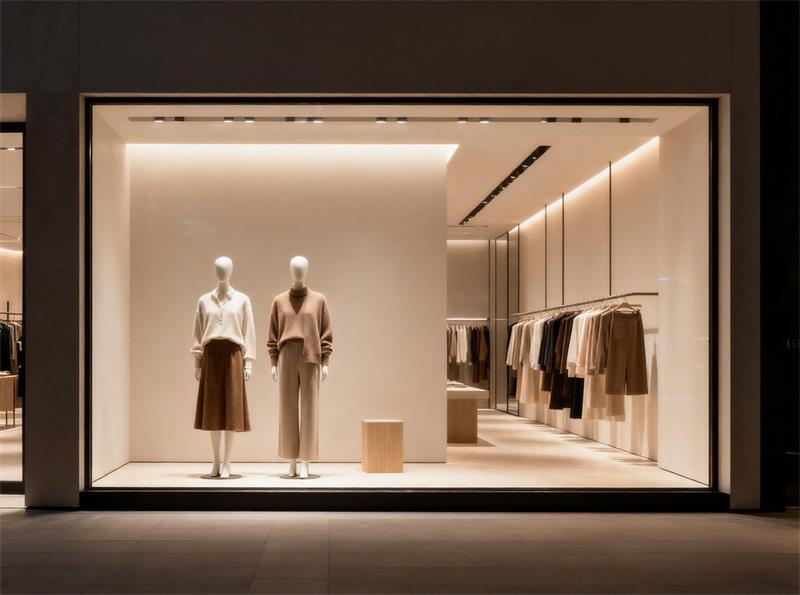
Retail displays rarely fail because of a single object in the store. More often, the problem begins earlier — during retail display planning.
A store might have beautiful lighting, well-designed fixtures, and strong collections, yet the display still feels confusing or unfinished. Customers walk through the space without immediately understanding what the brand is trying to communicate.
In many cases, this happens because displays were treated as short-term projects instead of part of a larger system.
Visual merchandising works best when displays support a long-term story. Campaigns change, collections evolve, and trends move quickly. But the visual structure of the store should remain stable enough to support those changes.
This is where thoughtful visual merchandising planning makes a difference.

Design Perspective
From a retail design perspective, display planning begins with structure rather than decoration.
Many brands focus first on the visual theme of a campaign — colors, graphics, seasonal messaging. Those elements matter, of course. But they sit on top of a deeper design framework.
That framework usually includes:
display zones
mannequin placement
lighting hierarchy
product flow
This often depends on the brand.
A luxury label may rely on spacious displays with fewer pieces per mannequin, creating a sense of calm and exclusivity. Fast-moving fashion brands may prefer denser displays that communicate variety.
The key is consistency.
When stores share a clear visual structure, customers immediately recognize the brand experience. Without that structure, even strong collections can feel visually scattered.
Display Strategy
A common retail display mistake is treating each campaign as a completely new project.
Retail teams build a display for one season, remove it a few weeks later, and start from scratch again.
Over time, this approach becomes inefficient and visually inconsistent.
A more effective store display strategy focuses on building systems that evolve.
Consider a store scenario.
A fashion retailer launches four seasonal campaigns each year. Instead of rebuilding the entire display every time, the visual team designs a central mannequin platform that remains in place throughout the year.
Each campaign refreshes the display with:
new styling
updated accessories
subtle lighting adjustments
The structure stays the same.
Customers see something fresh each season, but the store retains a recognizable rhythm.
Lighting changes the effect more than people expect. Even small adjustments can dramatically alter the mood of a display.
Store Environment
Retail spaces behave differently depending on their environment.
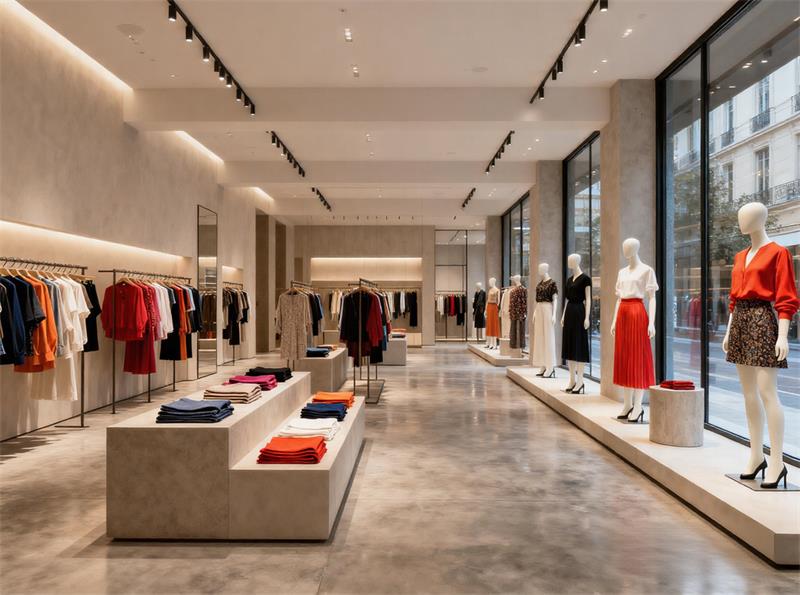
A flagship store on a busy shopping street must capture attention instantly. A boutique inside a mall may rely more on interior storytelling once customers enter the space.
Store layout makes a difference.
Narrow stores often benefit from vertical displays that guide customers through the space. Wider stores may create visual islands — clusters of mannequins and merchandise that anchor different zones.
Display height matters more than expected.
When mannequins are slightly elevated, they remain visible even when the store becomes crowded. This is easy to overlook during planning, but it can significantly influence how displays perform during peak hours.
Environmental factors — lighting, ceiling height, traffic flow — should always guide display planning decisions.
Material Considerations
Materials play a subtle but important role in retail display systems.
Displays that last multiple seasons tend to support more consistent store environments. Visual elements that deteriorate quickly or require constant replacement can disrupt the overall experience.
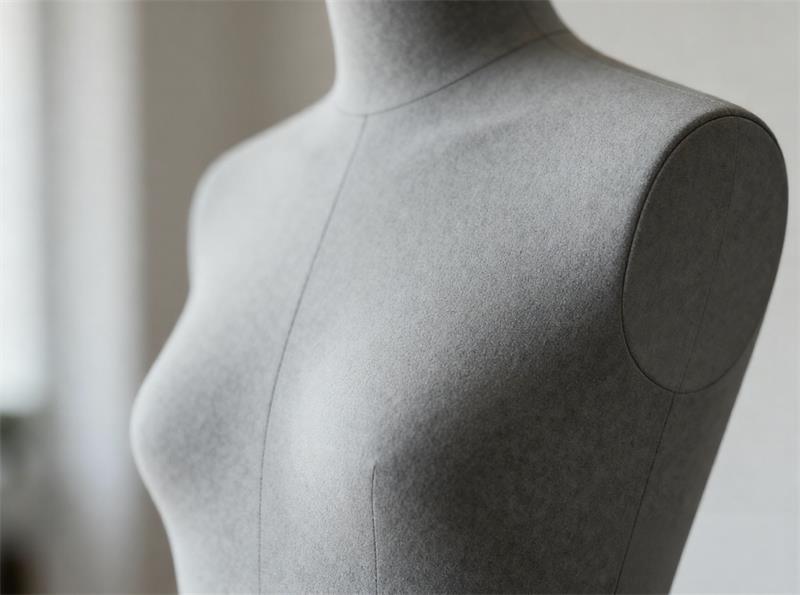
Mannequins, for example, often remain in use for several years. Some brands choose fiberglass mannequins because they maintain surface finishes well under retail lighting and frequent styling changes.
But materials alone do not solve planning problems.
What matters more is how display elements integrate into the overall store design. Durable elements simply make long-term planning easier.
Sustainability
Sustainability has become a natural part of retail display planning.
Seasonal campaigns once encouraged frequent display replacement. Today, many brands are shifting toward systems that can evolve over time.
Instead of building entirely new displays each season, visual teams reuse core structures and refresh them through styling and lighting.
This approach supports sustainable retail displays in several ways:
fewer materials are discarded
visual consistency improves
store teams spend less time rebuilding displays
Interestingly, these environmental benefits often align with better design outcomes. Displays that evolve gradually tend to feel more refined than those constantly replaced.
Practical Tips
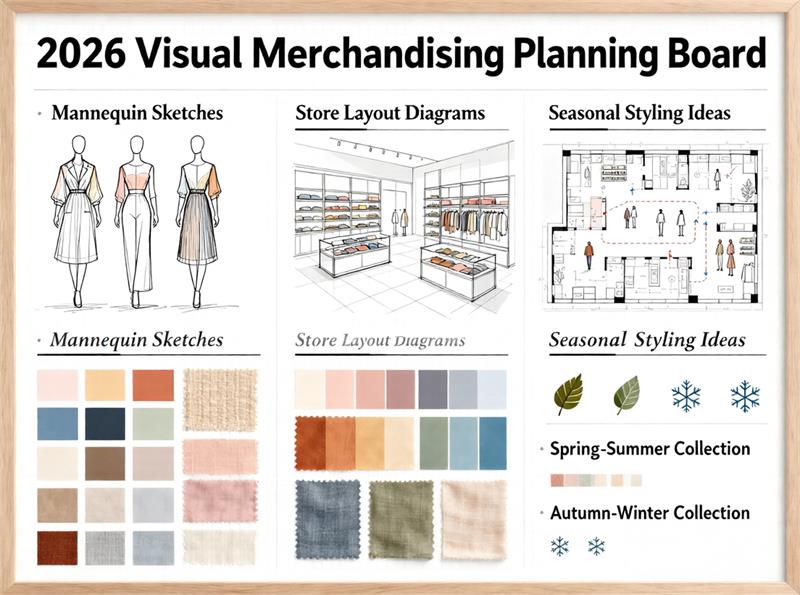
Retail teams developing stronger visual merchandising planning strategies often follow a few practical principles.
Start with a display framework.
Define permanent zones for windows, entrances, and central displays.
Think in systems rather than campaigns.
Displays should support multiple seasonal stories.
Observe customer behavior.
Customers rarely move through stores exactly as designers expect.
Test lighting in real store conditions.
Lighting changes the visual impact dramatically.
Document display guidelines.
Clear instructions help maintain consistency across multiple stores.
These practices may seem simple, but together they form the foundation of successful retail display systems.
Conclusion
Strong retail displays rarely happen by accident.
They emerge from thoughtful retail display planning that considers design, customer movement, and long-term store evolution.
Campaigns still matter. They bring energy and creativity to the store environment.
But when those campaigns exist within a clear visual framework, displays become easier to maintain and more impactful for customers.
In many ways, the best retail environments balance two forces: structure and change.
The structure remains consistent.
The story evolves.
FAQ
What is retail display planning?
Retail display planning is the process of organizing store displays strategically, ensuring visual elements work together to communicate brand identity and guide customer attention.
What are common retail display mistakes?
Common retail display mistakes include focusing only on short-term campaigns, ignoring store layout, and failing to create consistent display systems across locations.
How can brands improve retail display planning?
Brands can improve display planning by developing long-term visual merchandising systems, defining display zones, and adapting displays to store environments.
Why are retail display systems important?
Retail display systems provide structure that allows seasonal campaigns to evolve while maintaining visual consistency across the store.
CONTACT US
ART WING Display Mannequin, a China manufacturer of high-end-mid mannequins.
We dedicated to innovative design and focus on producing high-quality display production.
QUICK LINKS
PRODUCTS
ABOUT ART WING
SERVICE

Tel: +86-0769-33218711
E-Mail: info@ysydisplay.com
Add: A1#807, Tianan cyber building, Huangjin Road, Nancheng, Dongguan, China 523000.
Copyright © 2026 DongGuan Art Wing Display Co., Ltd | All Rights Reserved
Hello, please leave your name and email here before chat online so that we won't miss your message and contact you smoothly.